

If you live west of the Cascades you already know the math. It rains from October through June, and most of it falls as a steady, sideways, bone-deep gray that never reads dramatic enough to cancel a plan, only cold enough to make you regret the last hour of it. I spent too many of those hours in a cheap packable shell that wet out from the inside by mile two, the insulation gone and the clammy sleeve pressed against my wrist. That is what had me looking for a real hardshell, and it is why the Marmot Precip Eco ended up on my back for a full year.
I did not want the lightest shell, and I did not want the fanciest. I wanted one jacket I could grab for a coast beach walk, a Cascade day hike, a rainy camp cook, and the commute that is not a commute because everything around here is mud. The Marmot Precip Eco was the pick because it sits at the honest middle of the market, priced well below the alpine membrane jackets while still carrying a real waterproof membrane of its own. A year later, after roughly eight hundred miles in it from the Olympic coast to the alpine lakes zone, I can tell you exactly where it is excellent and where it is merely fine.
The Quick Verdict
A dependable, honest hardshell for PNW rain that breathes about as well as anything half its price, with a waterproofing that outlasts what I expected.
Amazon Check Today's Price →Stop wetting out mid-trail. Grab a shell built for a full season of rain.
The Marmot Precip Eco is the jacket I reach for on every wet day because it actually keeps the rain out, week after week. If you are tired of that damp-sleeve feeling two miles into every hike, this is the fix I landed on. Check today's price on Amazon and see the current color and size run while it is in stock.
Amazon Check Today's Price on Amazon →How I've Used It
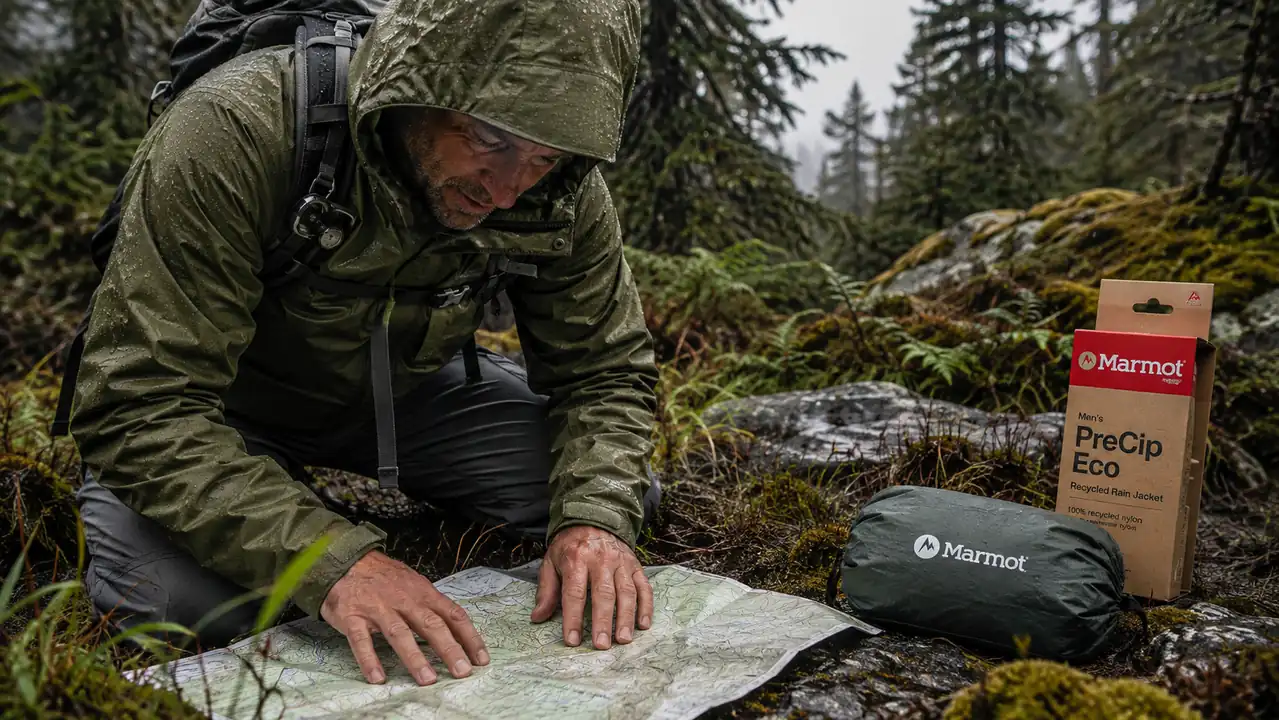
I am not a gear reviewer who hangs jackets in a closet and pokes them with a hose. I live in the northwest corner of Washington State and I have a standing habit of getting outside in weather I would not book a vacation around. So the Marmot Precip Eco got a real workload. Coast walks where the salt breeze comes straight off the strait, hard day hikes in the foothills, overnights in the rain shadow, and one soggy shoulder-season backpacking trip where it ran without ever coming off for three days straight.
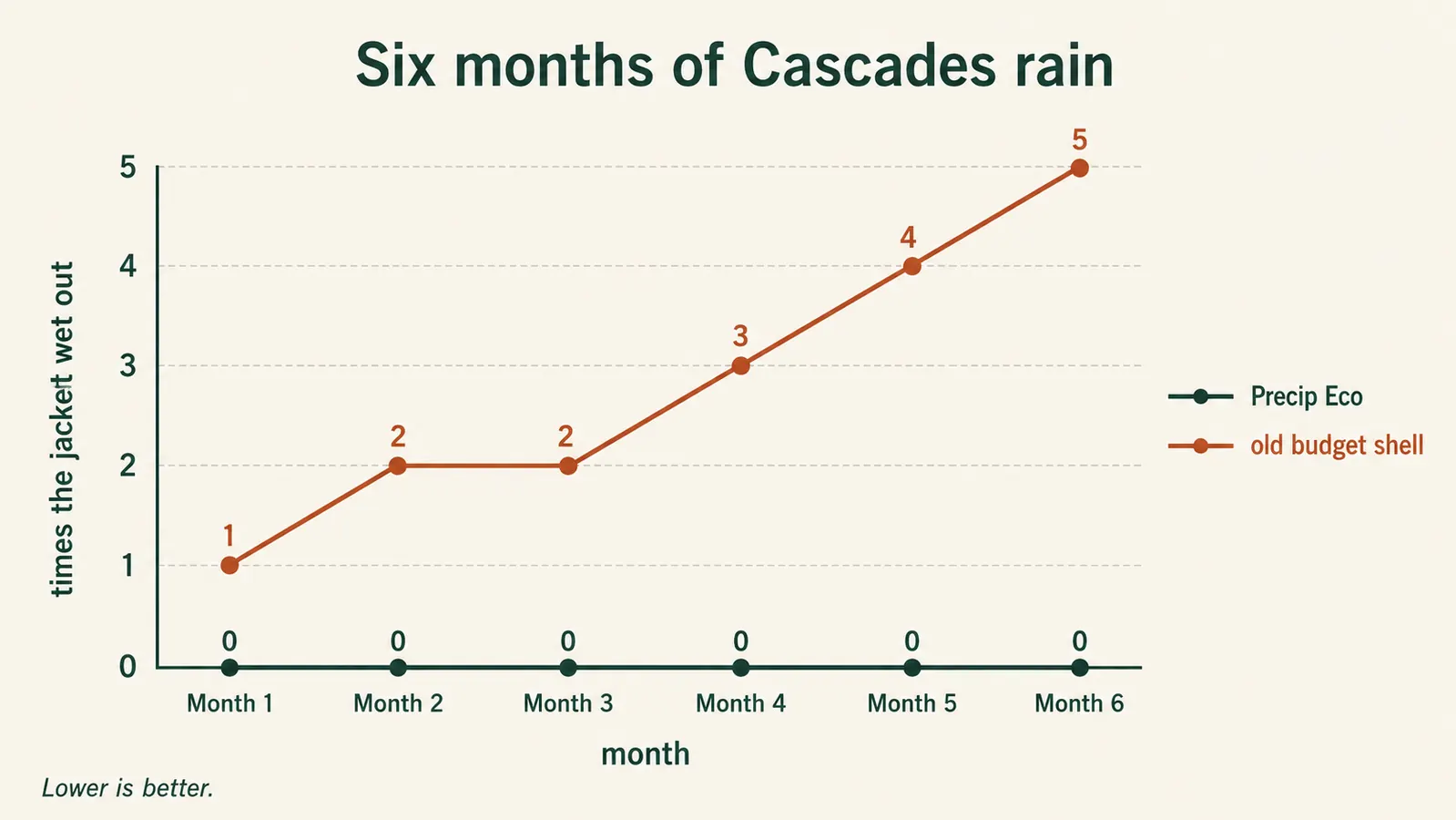
I tracked it the way I track everything: a note in my phone after each trip. Rain held or not, pit zips open or closed, how long the damp got uncomfortable under the hood, whether the DWR was still beading or starting to soak through at the shoulders. That is the long and short of my method. No lab, no spray tower, just thousands of wet minutes with a notepad in my pocket. Across that year it survived one close call with a blackberry thicket and two sessions in the washing machine with the DWR cleaner, and it is still going. That survival record is the part I did not expect, because most of the rain gear I have owned quit long before a season was up.
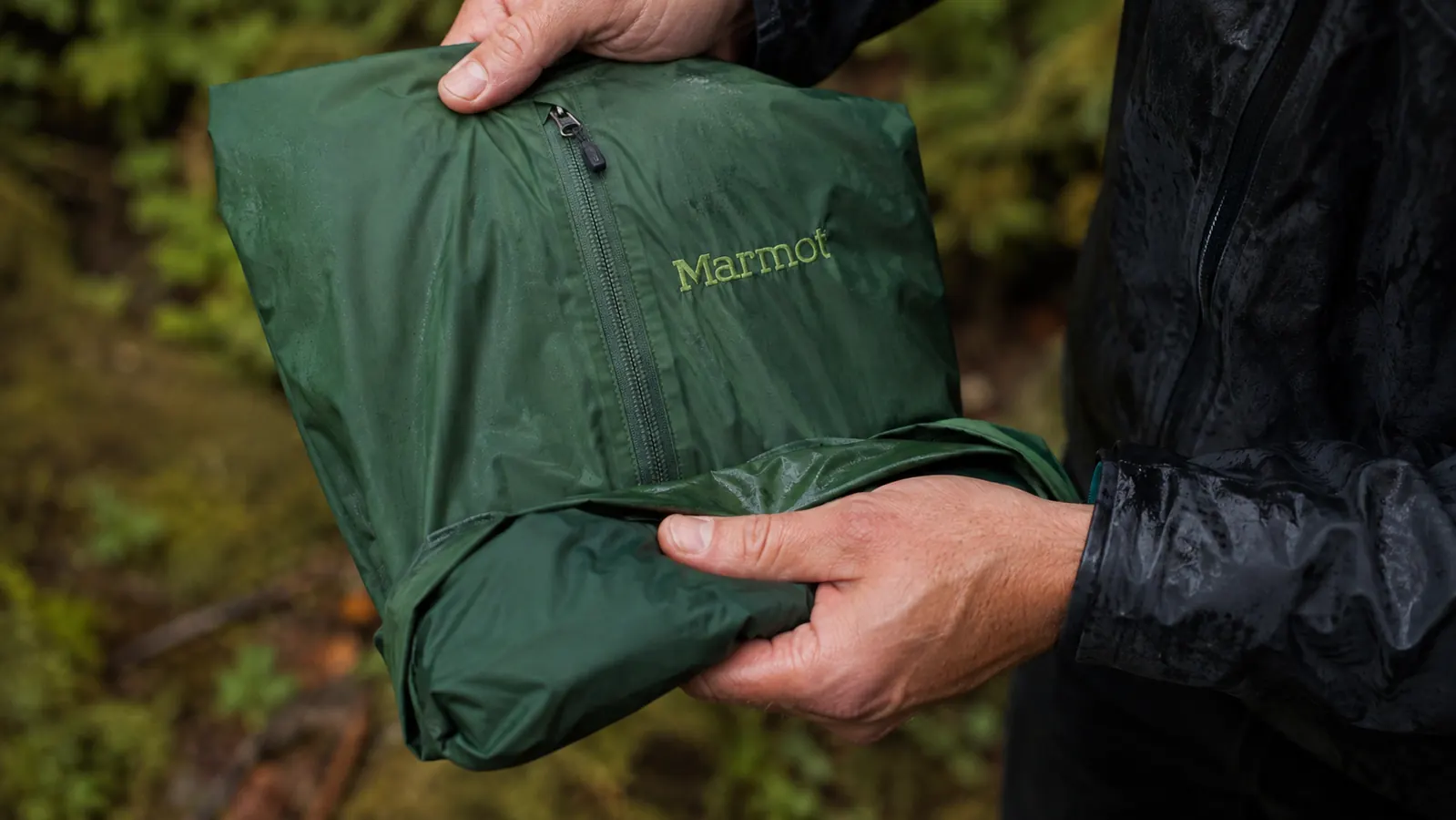
The version I wore weighed right around twelve ounces and packed into its own left chest pocket, which is the single smartest detail on the whole jacket. That matters the moment you are at the trailhead at 7 a.m. under a bright patch of sky and you know better than to trust it. The shell goes in the pack, the sun lasts twenty minutes, and you are not carrying an umbrella or wearing a sweating jacket the whole climb. I come back to this detail again and again because it is the reason the jacket actually got used, any jacket that is annoying to carry gets left in the car, and a left-in-the-car jacket keeps nobody dry.
The Waterproofing Held Up Better Than I Expected
This is the headline, because it is why you buy a shell. The Marmot Precip Eco uses the brand's NanoPro membrane on a recycled ripstop face. I will keep the chemistry short. What matters is that it kept me dry through a full Puget Sound winter, and that is a higher bar than most rain gear ever faces. The fabric is not the crinkly, loud plastic of budget shells. It has a soft hand to it, moves quietly, and beaded water like I expected from a jacket that costs more than the discount rack but far less than the alpine boutique stuff.
My old budget shell wet out fast because the weakest seams under the armpits quit first, and a wet armpit is where a soggy day starts. The Marmot Precip Eco held its own on the same seam lines. After three hard months of daily off-and-on rain the water still beaded on the hood and shoulders the way it did on day one. It is not impervious, nothing at this weight is, but the point where I had to think about refreshing the DWR came much later than I budgeted for, somewhere around the seven month mark rather than the usual two.
I will caveat that honestly. The waterproofing is not the two-layer taped-seam fortress of an alpine storm shell that costs four hundred dollars. When you are pinned above treeline in a real blow, unforecast and cold, the Precip Eco is the wrong tool for that job. But for the weather ninety percent of us actually hike in, the drizzle, the mist, the all-day gray that never makes the news, it is more than enough, and it weighs half of what the fortress weighs. Knowing which job it is for is half of liking it.
The Precip Eco kept me dry through a full Puget Sound winter, and that is a higher bar than most rain gear ever faces.
Breathability Is the Middle Ground You Pay For
Here is the tradeoff nobody puts on the sales page. A waterproof jacket keeps rain out by also keeping your own sweat from finding an easy way out. The Marmot Precip Eco breathes better than the cheap packables, which is the whole reason I bought it, but it is still a hardshell. On the climbs, on the exposed switchbacks, you will heat up and you will manage that heat with the pit zips. There is no getting around it, and anyone who tells you otherwise on a budget shell is selling you a story.
The pit zips are the saving move, and Marmot got them right. They are long and they dump heat in a hurry, the kind of vent that opens up and lets the steam pour out before it pools against your base layer. My rule became: zips open before the first push uphill, closed again at the ridge when the wind and the rain find you. That simple rhythm kept me comfortable across a full year, and it is the difference between a jacket you wear in the rain and a jacket you carry in the rain. On genuinely warm rainy days, above fifty-five degrees with real effort behind the legs, no jacket in this class is going to feel dry, the Precip Eco is honest about that where cheaper shells pretend otherwise.
Fit and the Details That Work Every Day
The Marmot Precip Eco is cut for real layering, which is the detail I most appreciate after a year of it. It has enough room for a midweight fleece underneath without feeling like a sleeping bag when it is worn over just a tee on a warmer day. I wore mine over a thin merino base for most of the fall and over a fleece by midwinter, and the fit worked for both without any ballooning at the back. The hood is the other thing that sets it apart. It is helmet-compatible, which sounds niche, but it means it is also big enough to pull over a ball cap on a rainy hike, and the stiffened brim holds its shape so the water runs off your face instead of down your neck.
The cuffs adjust with the one-handed velcro tabs, the hem cinches down to keep the draft out, and there is a chest pocket plus two hand pockets. The zippers are the two-way kind with a storm flap over the main one, which does more than you would think in a hard sideways rain. Nothing here looks or feels cheap, and nothing has failed on me. After eight hundred miles the only visible wear is a light fuzz on the hook-and-loop on the cuffs from brushing through brush, and one place on the shoulder where I dragged it against a rock. No delamination, no seam failure, no embarrassing jacket-rapidly-becoming-a-poncho moment in the middle of a trip.
I will put one small gripe in here while I am being honest, the hand pockets are shallow. They are fine for a phone or a hand warmer and nothing more. I would not trust a heavy key ring or a wallet in them on a bouncy hike, and I would not want to sit down with much in them. It is a minor thing on an otherwise well-thought-out jacket, but it is worth knowing before you buy it.
Packing It and Where It Lives
The self-stuffing chest pocket earns its weight in a Pacific Northwest life. On a day that starts clear you do not want to carry a twelve-ounce jacket in your hand, but you also know the sky can turn in twenty minutes. The Precip Eco folds into a lump about the size of a large burrito and rides at the bottom of a daypack forever. It takes up almost nothing. That single trait is why it stays in the car, in the work bag, and at the trailhead, because the jackets that live at home are the jackets that never save you.
I keep mine in the truck most of the winter between November and March, and I cannot count how many times that habit alone paid for it. A rare clear morning turns by lunch, or I end up helping someone change a tire on the shoulder of a highway in the wet, and the Marmot Precip Eco is right there. If a jacket is only at home when the sky looks bad, you will never have it when you need it, the packable design removes that whole excuse.
How It Compared to What I Used Before
Before the Precip Eco I cycled through a string of discount shells that all followed the same arc: great for the first two outings, then the DWR gave out, then the seams looked tired, then the fabric started feeling tacky against my skin. The Marmot jacket is the first budget-class shell I have owned that did not collapse at the two-month mark. That longer useful life is quietly the biggest money saver of all, because the thing that costs the most is not the jacket price, it is replacing gear that quit early.
I also tried a couple of the more expensive alpine shells at the local shop, the kind with the gore-tex and the reinforced everything. They were excellent jackets. They were also three times the weight and three times the price, and for the tree-covered, low-elevation, mostly-drizzle world I actually live in, I could not justify them. The Precip Eco sits in the gap that those jackets leave open, and for my kind of outdoors it fills it well. You can read a full head-to-head of how it stacks up against another budget favorite in my Marmot Precip vs Columbia Watertight breakdown if you want the direct comparison.
Pros and Cons
What I Liked
- Waterproofing outlasted a full rainy PNW season without touch-up
- Packs into its own pocket, so it always comes along
- Room to layer a midweight fleece underneath
- Long pit zips actually dump heat on the climbs
- Soft, quiet fabric that does not feel like plastic
Where It Falls Short
- Not a summit storm shell, do not trust it in a full alpine blow
- Warm-weather effort still means you wear your own humidity
- Hand pockets are shallow, fine for a phone only
- DWR will eventually need a refresh after heavy use

Who This Is For
The Marmot Precip Eco is for the Pacific Northwest generalist, and I mean that as the highest compliment. If you hike the foothills, walk the coast, camp in the rain, fish a river bank, or just have to be outdoors most days, this is a jacket you will reach for constantly. It is for the person who wants one dependable, packable, breathable-enough hardshell and does not want to mortgage the month for an alpine membrane they will rarely sweat through. For that person it is close to the ideal first real shell.
Who Should Skip It
Give it a pass if your hiking is mostly above treeline in serious weather year-round, or if you run hot and hate stopping to manage zippers. That crowd wants a more breathable membrane and pays for it. And if you are buying mostly for urban commuting in light drizzle, you can save money with a lighter rain layer, though you lose the durability and the layering room. Buy the Precip Eco for real outdoor work in ordinary PNW wet. That is the job it does better than anything near its price.
After a year of rain, I still grab it first. See the current price.
One dependable hardshell beats a drawer of cheap ones, and the Marmot Precip Eco has earned the spot in my bag for good. If you want to stop replacing rain jackets every few months, this is the one to start with. Check today's price on Amazon and grab it before the season starts.
Amazon Check Today's Price on Amazon →