
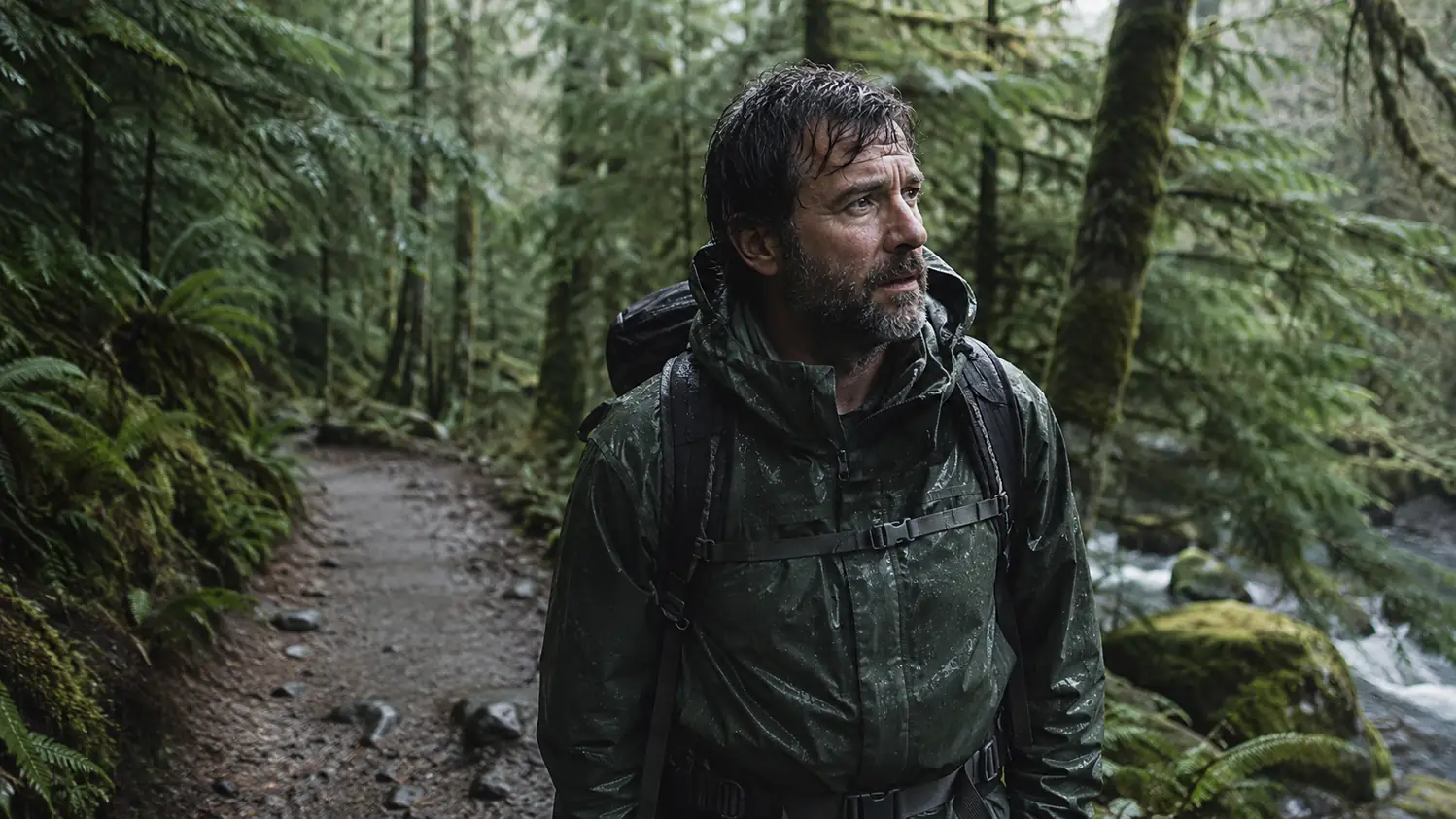
The most common mistake I see on a rainy Cascade trail isn't wearing the wrong jacket. It's wearing too much jacket, too soon. People pull their hardshell on at the trailhead, hike one mile uphill, and by the time they crest the ridge they're soaked from the inside out. Then the real rain starts, and there's nowhere for that moisture to go. They spend the next five hours cold and damp inside a shell that is doing its job perfectly. That isn't the shell's fault. It's the layering.
Here's the thing I've figured out after too many wet weekends: a hardshell is a roof, not a radiator. It keeps weather out, but it will never keep you warm by itself. So all-day rain only works if you treat the whole system, the layer under the shell, the timing of when the shell goes on, and the decision about when to open it back up. This is the setup I use, and it's built around one dependable shell, the Marmot Precip Eco, that has ridden on my back through a full wet Pacific Northwest season. Here's each layer, in the order I actually put it on.
Start with a shell you trust not to wet out by noon
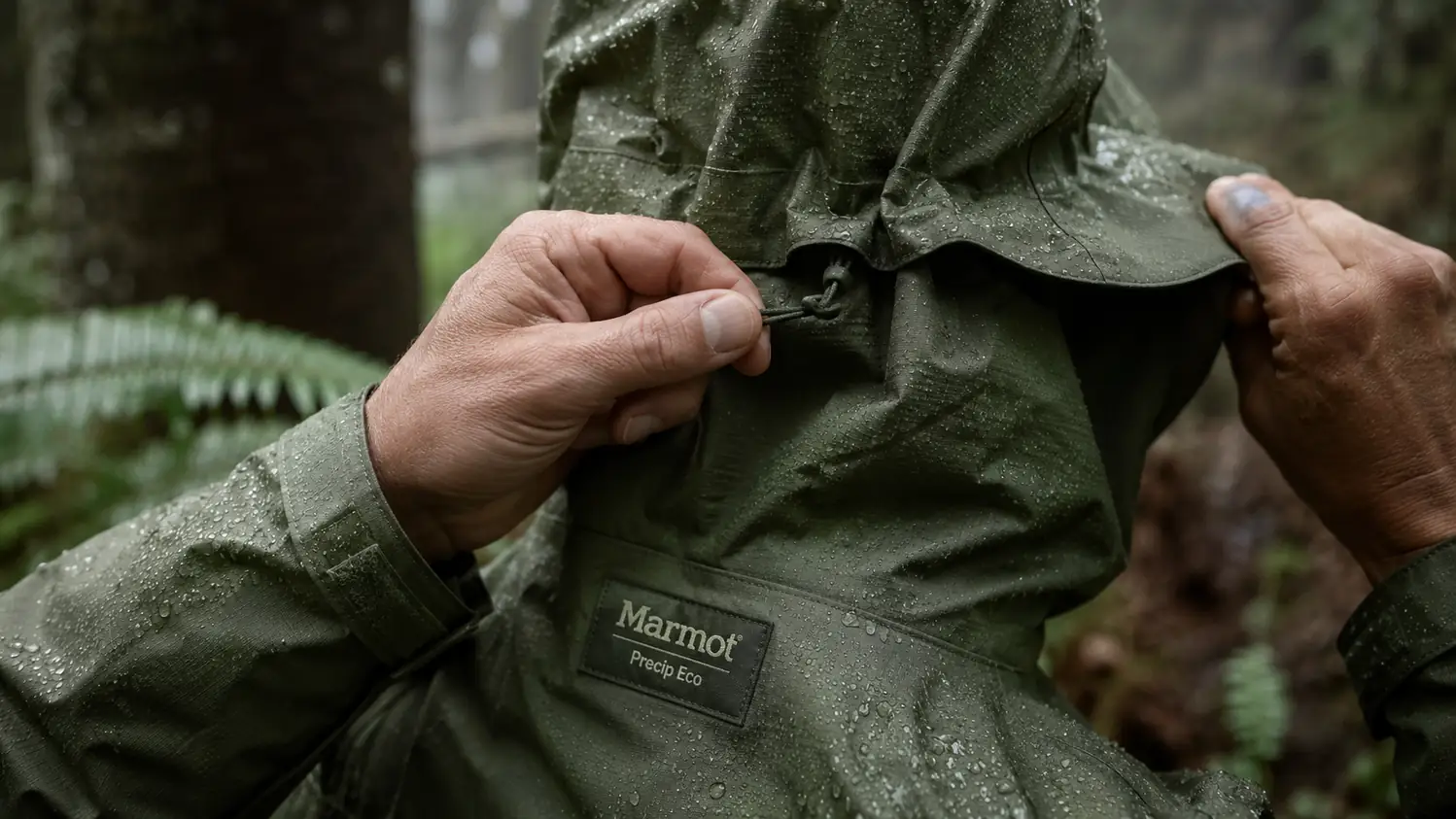
Every good layering system from here depends on the hardshell holding up its end. The Marmot Precip Eco is the jacket I reach for when the forecast is one solid line of rain, because it keeps the weather out and breathes just enough to work with the system below it.
Amazon Check Today's Price on Amazon →Step 1: Start Skin-Tight and Never Cotton
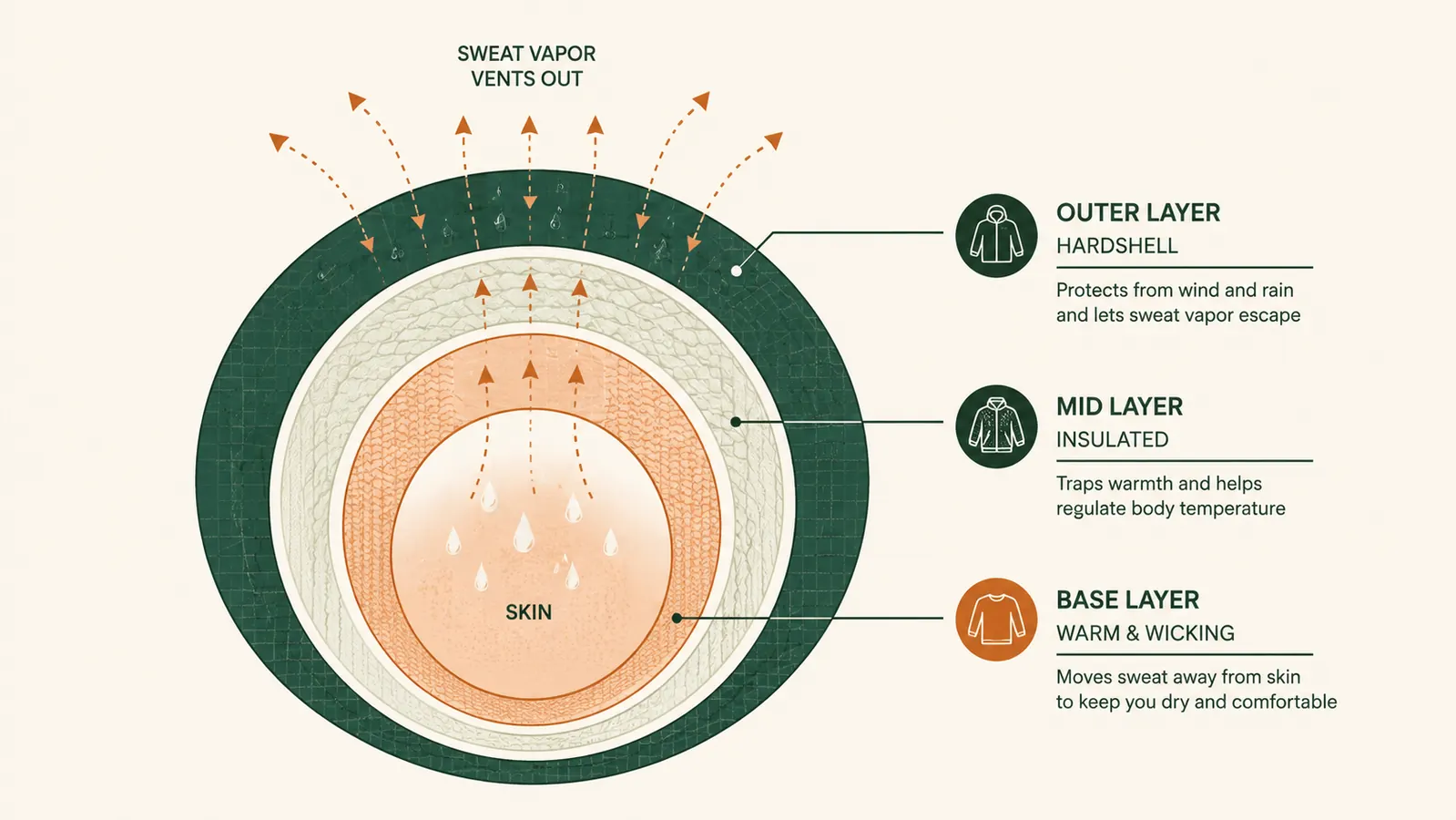
The base layer is the only layer that actually touches your body, so it has one job: move sweat away from your skin before it can cool you. In all-day rain that job matters even more, because you won't get a dry break to change. I wear a thin merino or synthetic long-sleeve, snug but not tight. Merino handles a wet chill better than anything I own, stays warm even when damp, and doesn't smell after three days on the trail, which is worth something on a longer trip.
Cotton is the thing to leave home. A cotton tee in Pacific Northwest rain is a sponge against your skin. It holds moisture, it gets heavy, and it turns the exact wrong moment, when you stop moving, into a cold crash. I've got a whole drawer of cotton shirts that no longer come with me. If there's one rule in the whole system, this is it, and it's the rule people break first.
Merino versus synthetic is a real choice, and I don't mind either way. Synthetic dries faster and costs less, so it's my pick for a short weekend where I know I can wash and dry my layers. Merino is warmer per ounce when damp and is what I reach for on multi-day trips where a drying line in camp is a dream. Both beat cotton by a mile. All I actually need from the base is moisture that moves away from skin and dries overnight, because in all-day rain you'll be pulling it back on damp some mornings and that has to be okay.
Step 2: Add a Mid Layer You Can Actually Swim In
Above the base goes the layer that carries the warmth. But here's the trap: if the mid layer is too hot, you cook inside the shell, dump heat, and soak your base in a matter of minutes. The instinct to over-insulate on a cold, wet day is strong, and it is wrong every single time. I've been the person shivering at the summit inside a shell full of my own sweat, and it's a miserable place to learn this.
You want a mid layer you could climb a hill in without the shell and not boil. A light fleece or a thin active-insulation layer is the sweet spot. Here's the test I use: if I can move briskly with just base and mid on and stay comfortable, that layer is right. If I'm sweating before I've hit the first switchback, it's too much, and I swap it before I leave the parking lot.
A word on the puffy coat, since everyone asks. An insulating puffy jacket is the warmest layer per ounce you can carry, and it has a real place in this system, but it is not a mid layer for moving. It's for the static moments, camp dinner, a cold summit lunch stop, the long waits when you're standing still. If you climb in it, you'll cook, soak your base, and undo the venting rhythm that's doing the real work. I use mine like a camp blanket and keep it in the pack on the move. On the uphill, the fleece or active mid is what earns its keep.
Step 3: Know When the Shell Goes On and Off
This is the move everyone gets wrong. The hardshell doesn't go on at the trailhead and stay on all day. It goes on when the weather actually demands it, and it comes off the moment you're generating enough heat to overwhelm it. Treat it like a switch in your pocket, not a permanent fixture of your outfit.
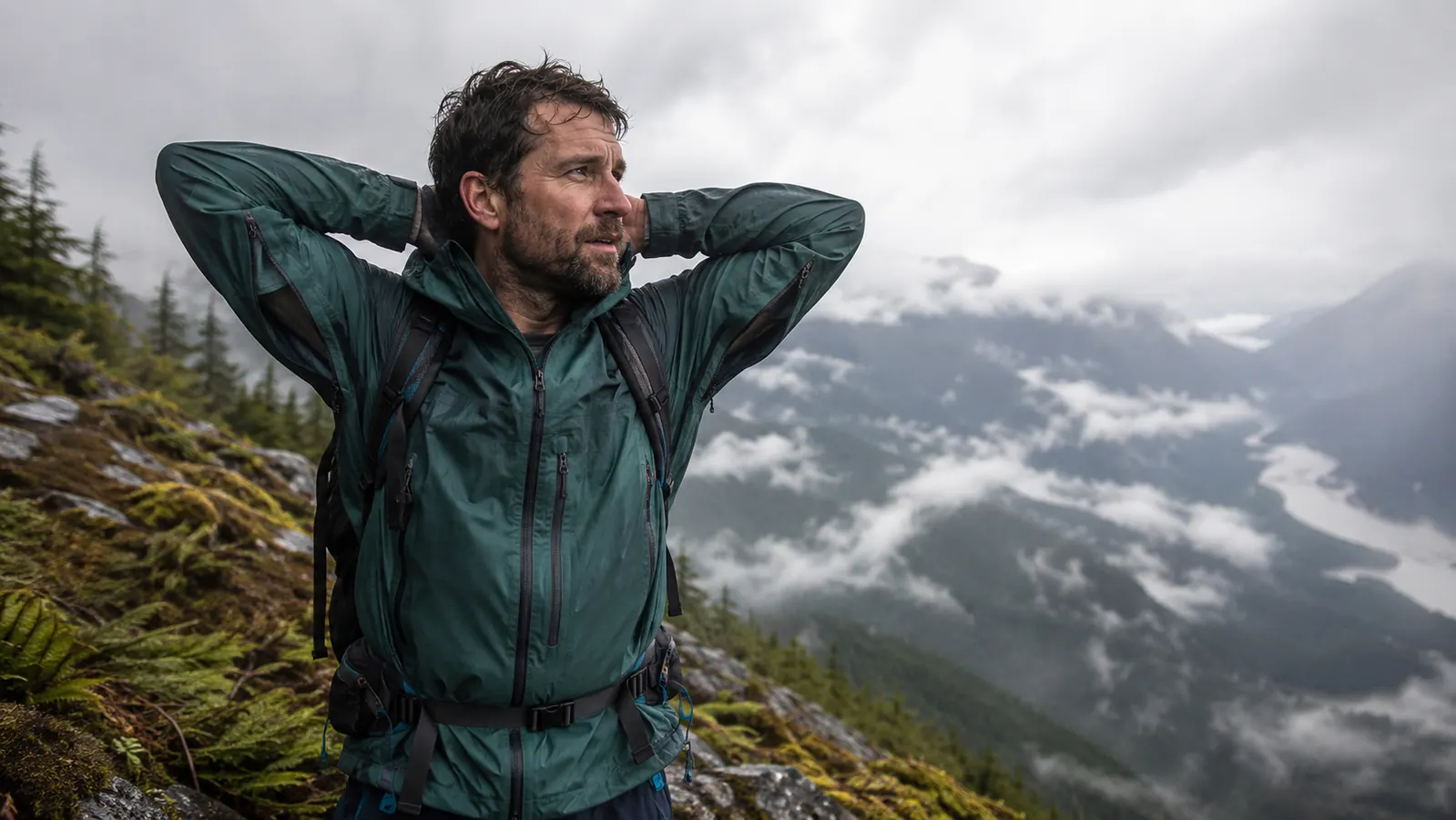
On a typical wet PNW day I start in base and mid, dry and unzipped, and let the breeze find me. The shell goes on when the rain picks up or the wind hits at elevation. The moment I start a sustained climb, the pit zips open, or the shell comes off entirely and goes in the pack. The rhythm is the whole game, and it takes a mile of walking before it stops feeling like fussing and starts feeling like second nature.
Here's the part that trips up the most people: the shell also earns its keep as a wind layer long before a drop falls. A hard breeze on an exposed ridge strips heat through your mid layer twice as fast as rain does, so I zip up on wind even when the sky is clear. Getting the shell on and off by what the weather is actually doing, rather than on a schedule, is the whole trick. Most days in this part of the state, by the time I'm back at the truck I've had the thing on, off, and back on again four times.
Step 4: Dress the Shell for What It's Actually For
The shell's job is weatherproofing, so the fit and features matter more than the fabric weight. I want a hood I can cinch down with a stiff brim so rain stays off my glasses, cuffs that seal against my gloves, and pit zips for the warm climbs. A shell that flaps in the wind or lets water run down the back of my neck has failed its first test, no matter how waterproof the tag claims.
The Marmot Precip Eco nails the details that matter in this climate. The hood adjusts well, the pit zips open when I need an escape valve, and it packs small enough that I've stopped arguing with myself about whether to bring it. On days when I only half expect rain, I carry it anyway, because the one day you don't is the day the weather turns. That lesson only needs to cost you one long, wet afternoon before it sticks.
Size is the sleeper detail nobody warns you about. If my hardshell fits snug over a bare shirt, it's a wrestling match over a fleece, and I'll skip zipping it properly at the exact moment it matters. I'd rather swim a little in a dry shell than fight a tight one in a downpour. Most makers, Marmot included, cut a shell to go over a thin mid layer. When you're trying one on, layer your mid underneath, raise your arms overhead, and check that the hood doesn't drag at the back of your neck. The few minutes of testing save you a miserable hours-long lesson.
Step 5: Manage Sweat Like It's the Forecast
Here's the uncomfortable truth nobody puts on the gear tag: most of the moisture you feel inside a hardshell on a wet day is you, not the rain. You're the one producing the water, and the shell keeps it in. So the single biggest skill in all-day rain is learning to vent. Everything up to this point has set you up for this one habit.
I open the pit zips on any sustained climb. I drop the front zipper a few inches. I lower the hood during the hard work and cinch it back up the second I stop. When I pause for a break, on goes the mid layer or the puffy, zip everything shut, hood up. It becomes a reflex. Done right, you come off the trail warm and only damp at the small of your back, which is the most honest version of dry you're going to get in the Pacific Northwest.
Be realistic about the goal, because the right goal is what holds the whole system together. In a day of real rain, nobody comes off the trail bone-dry, and pretending otherwise just leads to disillusionment with good gear. The aim here is a specific, reachable outcome: warm where it counts, with the moisture managed well enough that you stop before you're cold, not after you're soaked. That modest target is the difference between a soggy shivering hike you remember for the wrong reasons and a long, steady day in the rain you end up enjoying for what it is.
What Else Helps
A few non-obvious things make the whole system work better. Waterproof and breathable are two separate promises, and even a good shell like the Precip Eco has a ceiling. Once you're hammering hard enough, no membrane will out-sweat you, so the answer is often to slow the effort, not to add another layer. Adjust your pace to the rain instead of fighting it, and you'll stay drier than any fabric upgrade could make you.
Also carry a spare dry base layer for camp. That thin film of sweat on your skin will feel like ice the moment you stop moving, and a dry shirt is worth more than a dry jacket at the end of the day. A thin neck gaiter and a spare pair of liner gloves are cheap insurance too, and they pack flat enough that there's never a reason to leave them. And handle the layers as one system, not a pile. I keep my rain shell in the outer pocket of my pack rather than buried at the bottom, because fumbling for it in a downpour defeats the whole point.
If it sounds like a lot, it's really just a rhythm: start dry and quick, add warmth under a shell that only goes on when the weather earns it, and vent hard on the climbs. If you want the bigger case for why a hardshell earns a permanent spot in your pack, read this on what it does for Pacific Northwest hikers, and my full-season pressure test on the Precip Eco digs into the long-haul abuse.
You're the one producing the water inside that shell, not the rain. Learn to vent, and you come off the trail warm and only damp at the back, instead of soaked from the inside out.
The one shell that's been through the season with me
You can build this whole system around whatever hardshell you already own. If you don't have a good one yet, the Marmot Precip Eco is the jacket I trust when the forecast is one solid line of rain and the trail is all day. Reliable, packable, and it breathes just enough to work with the venting rhythm above.
Amazon Check Today's Price on Amazon →