
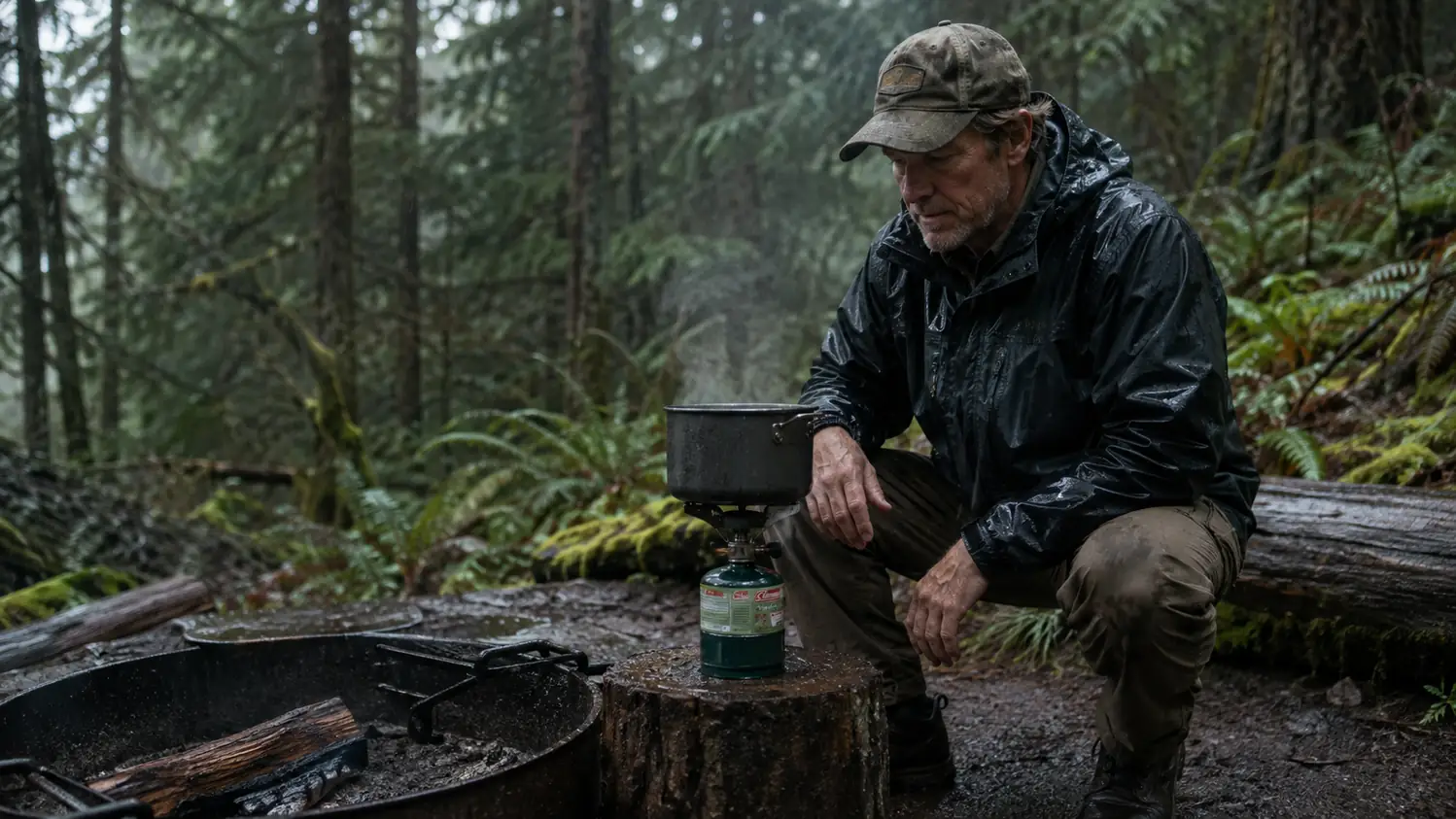
There is a specific sound a Pacific Northwest campfire makes in late October when it will not cooperate. Not the snap of dry fir. It is the hiss of wet bark steaming, the dull thunk of a tenth match, and the quiet resignation of everyone realizing dinner will be cold-ish and late. I cooked over fires for years because it felt like camping should smell like smoke. Then a rainy two-night trip in the rain shadow taught me that my romantic idea of campfire cooking was a receipt for soggy, hungry evenings. The Coleman BottleTop propane stove fixed it, and it has not left my kit since.
This is not a plea to abandon the campfire entirely. A fire is still the best thing for sitting around after dinner, for warmth, for the smell that makes a weekend feel real. But cooking on it, in this climate, is a losing bet more nights than not. A little stove is not romantic, and that is exactly why it wins. Here are the ten reasons a propane stove now beats campfire cooking for me in the PNW.
The Stove I Screw Onto a Bottle and Never Fight With
After a decade of coaxing wet wood to flame, a dependable propane stove is the single biggest quality-of-life fix I have made to camp cooking. The Coleman BottleTop is what I reach for on every trip now.
Amazon Check Today's Price on Amazon →It Cooks When the Wood Will Not Light
A Douglas fir log soaked through two weeks of rain will not dry out in the fifteen minutes you have before dark. I have stood in drizzle feeding pine needles to a stubborn flame more times than I care to count. The stove does not care about weather. Screw on a one-pound bottle, turn the valve, click once or twice, and you have a controlled 7,650 BTU flame in ten seconds while the fire ring sits there looking damp and unhelpful.
Boiling Water Goes From an Hour to Eight Minutes
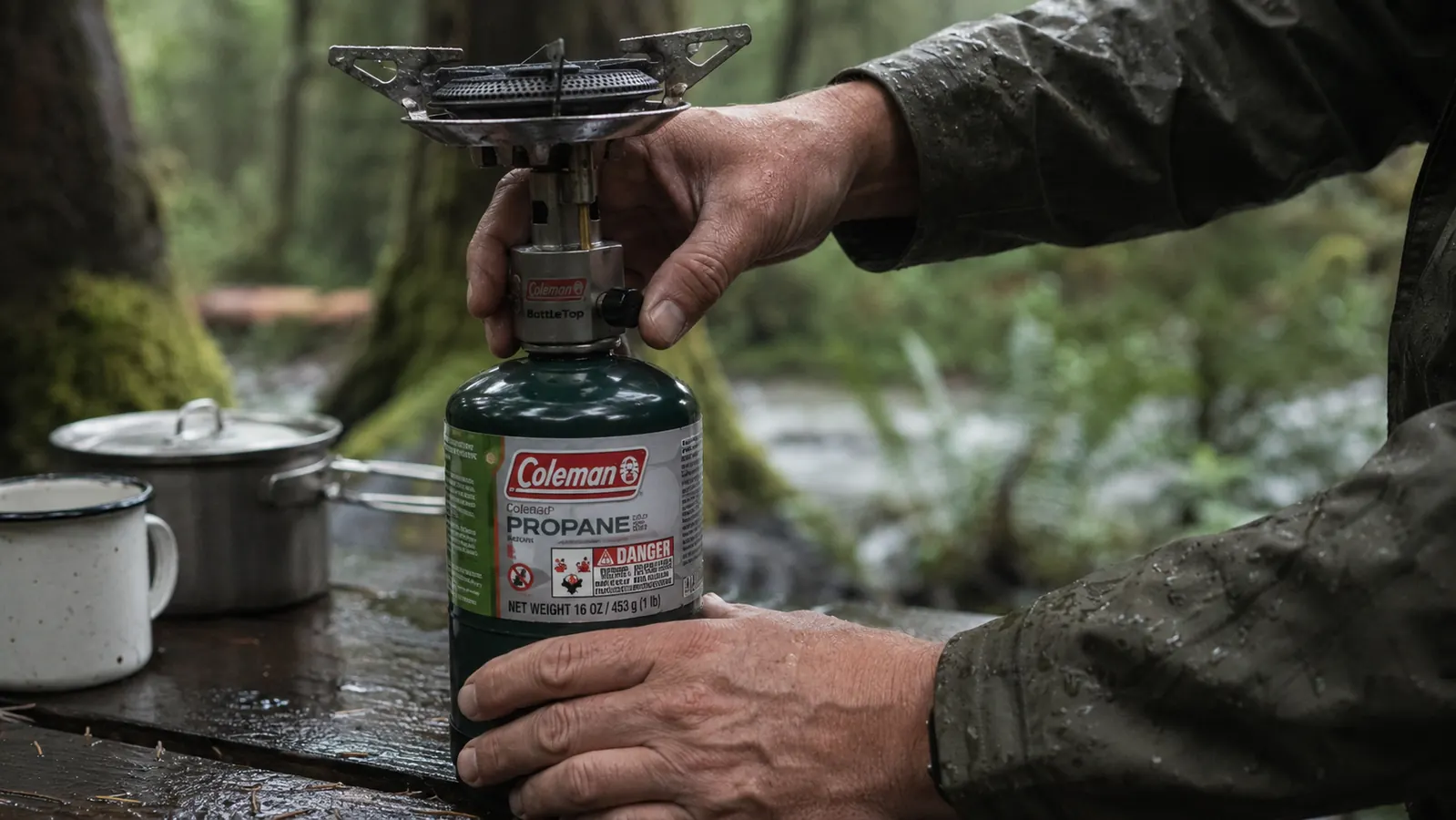
On a wet night, a real rolling boil over a campfire is a project that can eat the whole evening. You nurse it, add more wet wood, feed the wind, and hope. With the burner turned up, a quart of water is at a proper boil in about eight minutes. That is the difference between a freeze-dried breakfast eaten at dawn and one eaten before the day really gets going. For coffee, it is the whole ballgame.
No More Squinting Through Smoke to Check the Pot
A wind-driven campfire blows smoke directly into the face of whoever is stirring. It stings, it coats your food in ash, and it makes you cook blind, lifting the lid and guessing. A stove burns clean and low to the pot. You can actually watch your dinner, taste as you go, and stand wherever you are comfortable instead of bowing to the wind and the smoke plume.
The Flame Actually Stays Where You Point It
A campfire is a blunt instrument. Its heat wanders, shifts with every gust, and concentrates nowhere. That makes a decent sear or a steady simmer basically impossible. The stove gives you a fixed flame with a reasonable temperature range. You can slow-simmer a pot of chili or push it harder to crisp things. You are cooking, not herding fire.
It Works Under the Tarp and Even in the Truck Bed
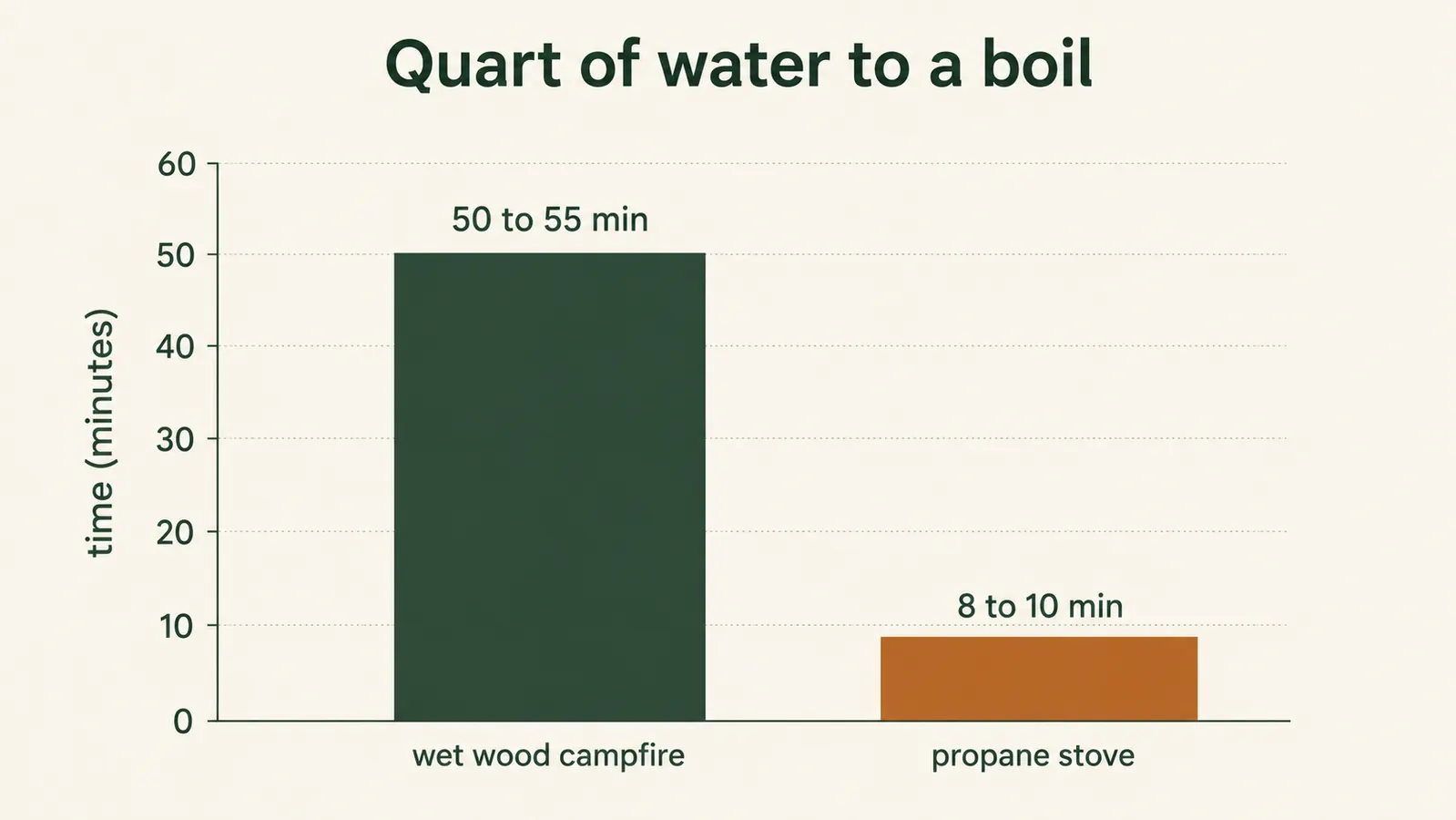
When the rain turns sideways, a wet fire ring is useless, and building an open fire in the weather is a misery. A small stove fits on a stump, a camp table, the tailgate, or under a tarp strung between trees. I have brewed coffee from inside the hatchback with the tailgate up while the rain hammered the roof. Fire cannot do that. The stove meets you where you actually are.
No Ash in the Eggs, No Pine Pitch on the Pan
Every campfire meal ends with grit. Embers jump into the eggs, needles land in the rice, and soot blackens the bottom of your favorite pot, a layer that takes real scrubbing to remove. A stove flame leaves nothing behind. Your cookware stays clean from one meal to the next, which means less pack weight in cleanup gear and better-tasting food.
It Works When Fire Bans and Burn Bans Are On
Late summer across the Cascades and the Olympic foothills, burn bans close big stretches of the backcountry to open fires. That used to mean cold meals or a full day of calories dropped. A propane stove is generally still permitted when campfires are not, because it has a shutoff and leaves no embers. In a dry year, the stove is the difference between a hot dinner and a sad one.
It Takes Up Less Space Than a Nest Egg of Firewood
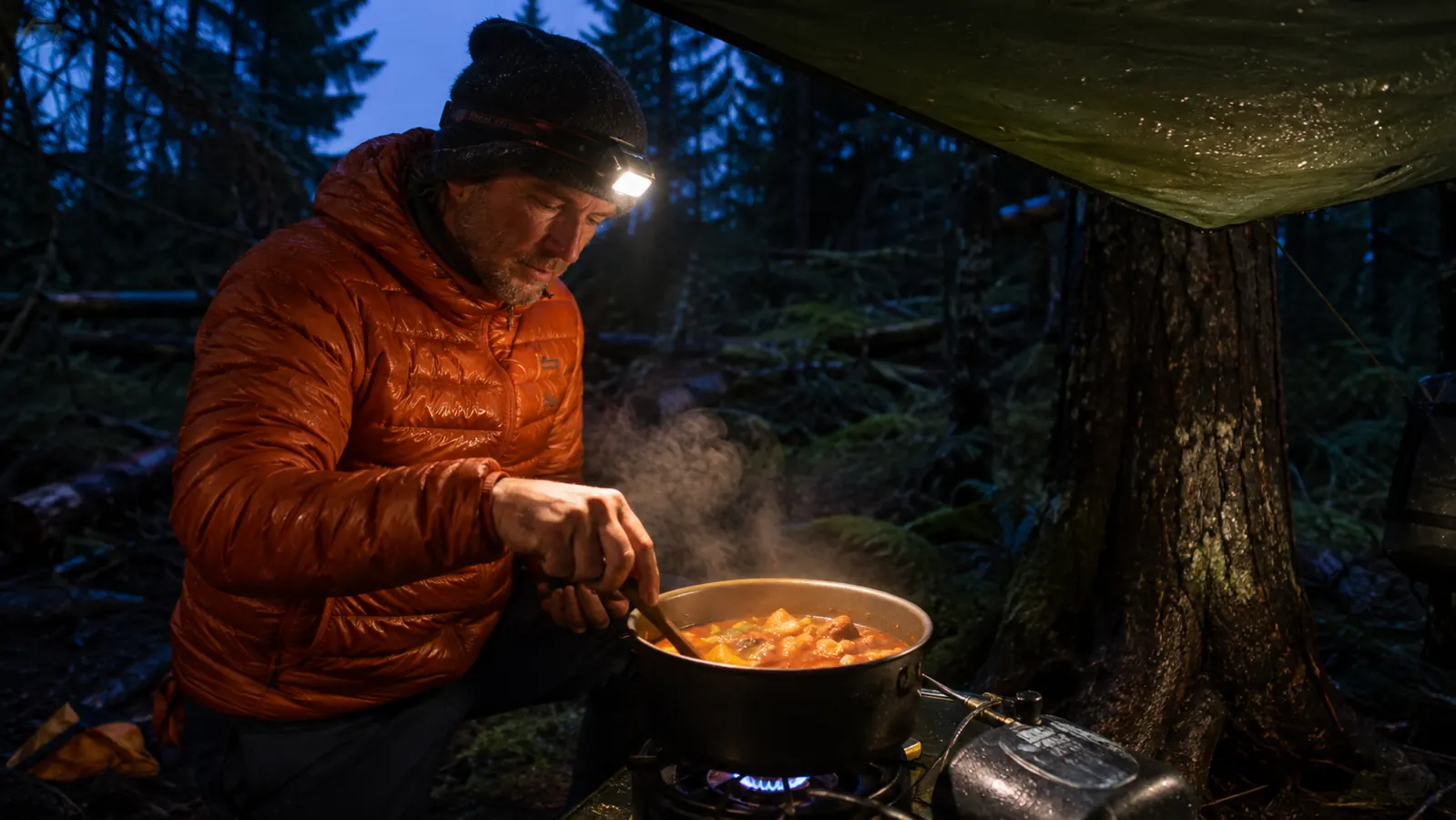
To bank on fire cooking you haul wood in, find drywood on-site, or split lumber you brought from home, all of which eats truck or pack space. One one-pound propane canister and a stove the size of a fist fits in a daypack side pocket. The whole cooking setup weighs about two pounds and vanishes into the kit until you need it.
The Flame Is Predictable Night After Night
I have run the same Coleman story as far north as the San Juans and down the coast, and the burner behavior does not change. Same knob, same hiss, same steady blue flame at altitude and in salt air. You build a reliable mental model of how long rice takes, when the water is ready, what setting keeps a stew at a whisper. That predictability is what makes camp meals feel routine instead of like campfire roulette.
It Leaves No Trace and No Wet Ring of Ashes
A cooking fire leaves a scar, even a careful one, and in a fragile alpine zone or a boggy riverbank it is the wrong mark to leave. A stove cooks without disturbing an inch of ground. You pack it out lighter than you packed it in, and the site looks like nobody was there except for the grass you flattened with your boots. That feels better every year as more people share the woods.
What I'd Skip
I would not recommend a propane stove to someone whose whole idea of camping is one overnight a year in a dry camp where firewood is supplied and the evenings are calm. In that situation the fire is the point, and the stove is an extra thing to carry. I would also skip it for true ultralight backpacking, where a tiny isobutane canister stove is lighter and smaller. This is a car-camp, base-camp, river-camp workhorse, not a peak-bagging tool. And it is not a full kitchen. One burner means one pot at a time, so plan for one-pot meals, which are honestly the best camp meals anyway.
In eight minutes, on a cold Wednesday night in a drizzle, the stove gave us boiling water and a hot dinner while the soaked fire ring we had coaxed for an hour never once caught. That was the night I stopped cooking on hope.
Make the Rain Your Problem, Not Your Cook's
You cook outside to be outside, not to wrestle wet wood in the dark. A dependable propane stove puts a hot meal in reach every single night, whatever the forecast says. The Coleman BottleTop is the one I trust, and it is a small, cheap fix that pays off every trip.
Amazon Check the Coleman BottleTop on Amazon →