
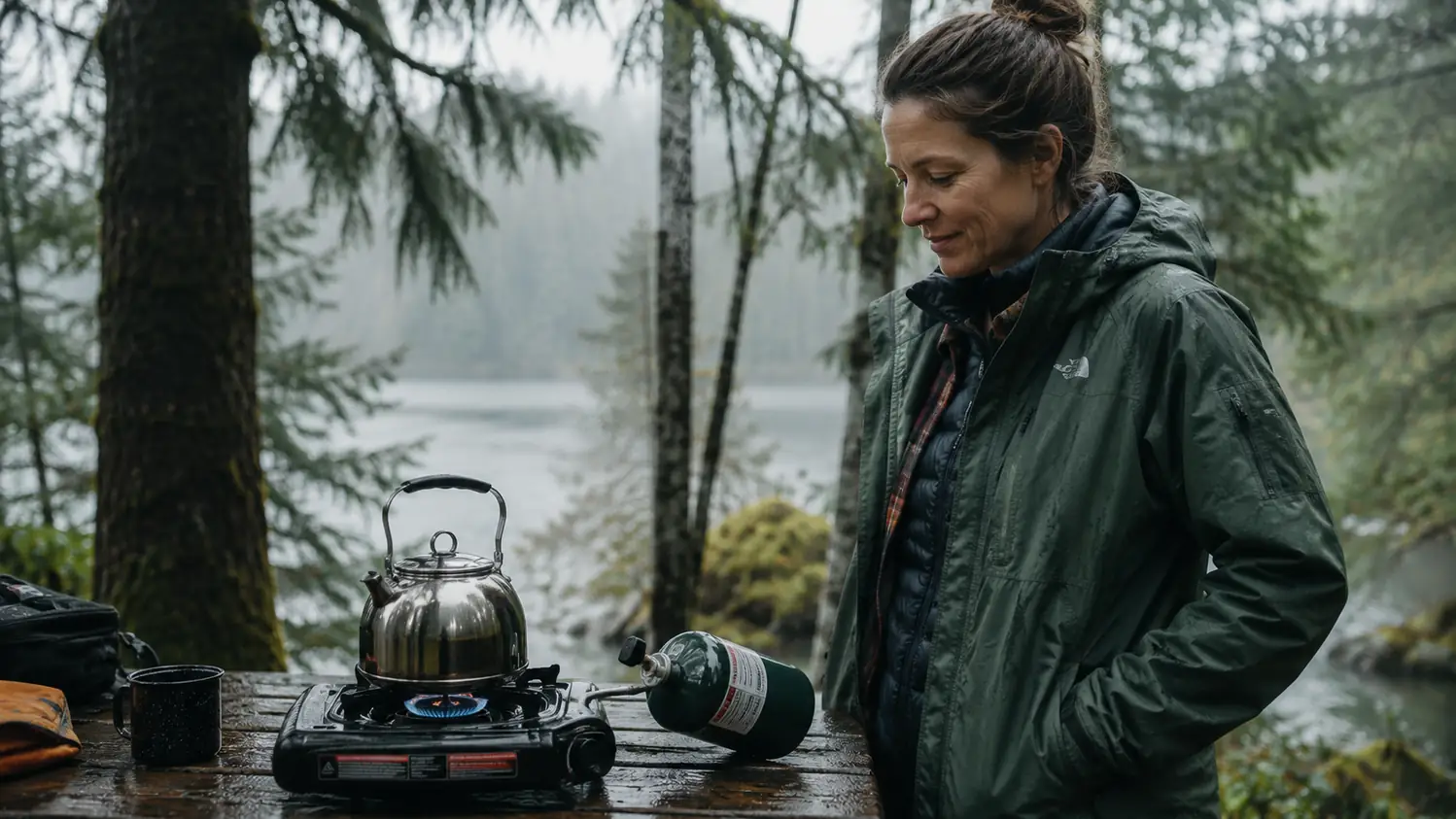
If you camp and cook in the Pacific Northwest like I do, you have narrowed the whole decision down to a single question: which single-burner propane stove do you screw onto the green bottle? Budget cooking live on two names. The Coleman BottleTop, the familiar 7650 BTU unit that has sat on a table next to cold pancakes in most campgrounds you have visited. And the Gas One, the leaner no-frills burner you see in the truck beds of people who cook harder than they shop. I have run both through a full spring of wet weekends, and they are not the same stove no matter how similar they look at a glance. Same canister thread, same basic footprint, same job on paper. But the way each one handles a gust off the water and the way each one holds a low flame turned out to be so different that I stopped thinking of them as interchangeable a long time ago.
The short answer, since nobody wants to read four paragraphs to find out which to buy: the Coleman BottleTop is the stove I keep. It throws more heat into a chill, it shrugs off the wind better, and its quiet simmer range makes cooking real food feel normal instead of like you are fighting a rocket. The Gas One is genuinely cheaper up front, and for the occasional car camper who only boils water it is a perfectly honest way to save a few dollars. But if you cook anything with an ounce of care, spend the extra and get the Coleman. Everything below is the road I took to that answer, so you can see whether your style of camping matches mine before you spend anything.
| Coleman BottleTop | Gas One Stove | |
|---|---|---|
| Burner power | 7650 BTUs, hot and dependable | Variable by model, generally a step lower |
| Build feel | Denser steel, tighter seams | Lighter, feels thinner in hand |
| Simmer control | Fine enough for sauce and rice | More all-or-nothing |
| Wind handling | Better shielding around the flame | Reasonable but easier to blow out |
| Weight | Heavier by a real margin | Lighter, easier to toss in the truck |
| Price | Higher, and worth it for regular cooks | Lower, the budget play |
Where the Coleman Wins
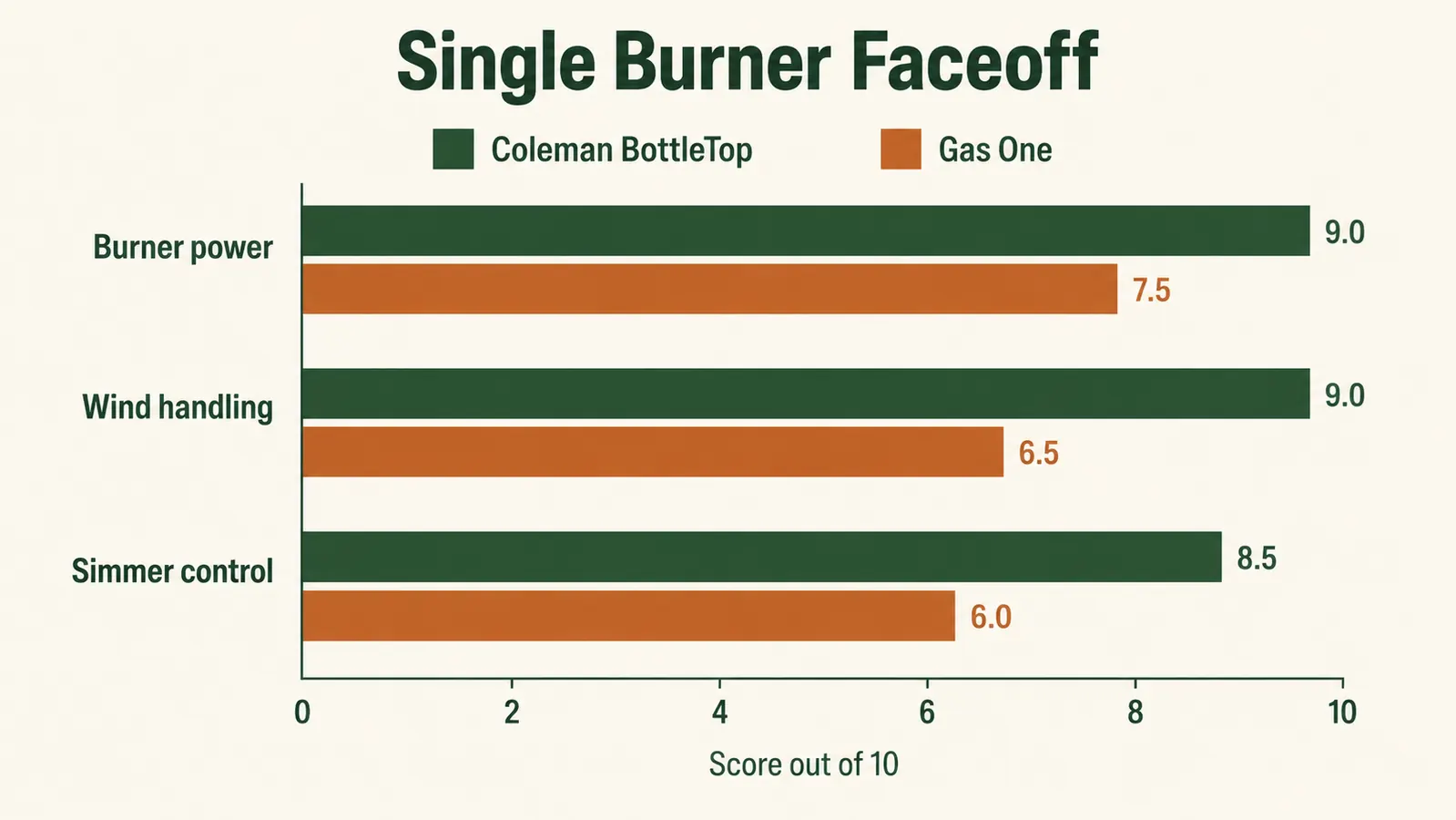
The power gap shows up the minute you touch it on a cold morning. The Coleman BottleTop runs a genuine 7650 BTUs, which is the difference between waiting two watches for a big pot of pasta water on a misty dawn and actually having it rolling before your hands stop shaking. I cook for two adults and a hungry dog, and a one-pot dinner that takes twenty minutes on a tired budget burner takes about fifteen on this one. That does not sound huge until you are standing in the rain willing the thing to hurry, or until the weather has turned and every extra minute with the lid off means a cold dinner.
The bigger win is the wind. The BottleTop's burner has a squat stainless shield around it that keeps the flame in its seat even when the breeze comes off the Sound. On a blustery cook site near the water I watched the Gas One gutter and flare repeatedly while the Coleman held a steady flame through the same gust. In the Pacific Northwest, where drizzle and a steady breeze are the default spring forecast, that single difference is the whole review. A stove you have to baby in a normal wind is a stove you will stop using, and the Coleman does not ask that of you.
And then there is the simmer. Cheap single burners tend to be either roaring or off, which is fine for boiling and useless for everything else. The Coleman's valve actually works across its range. I have held rice and a thin tomato sauce near a low flame without scorching, and made a respectable pot of morning coffee instead of camp-style sludge. When the only heat source is a one-burner bottle-top, that control window is what lets you call it a kitchen instead of a heater. It is the measure I came back to all season, because it is the one thing I could not throw money at and fix later.
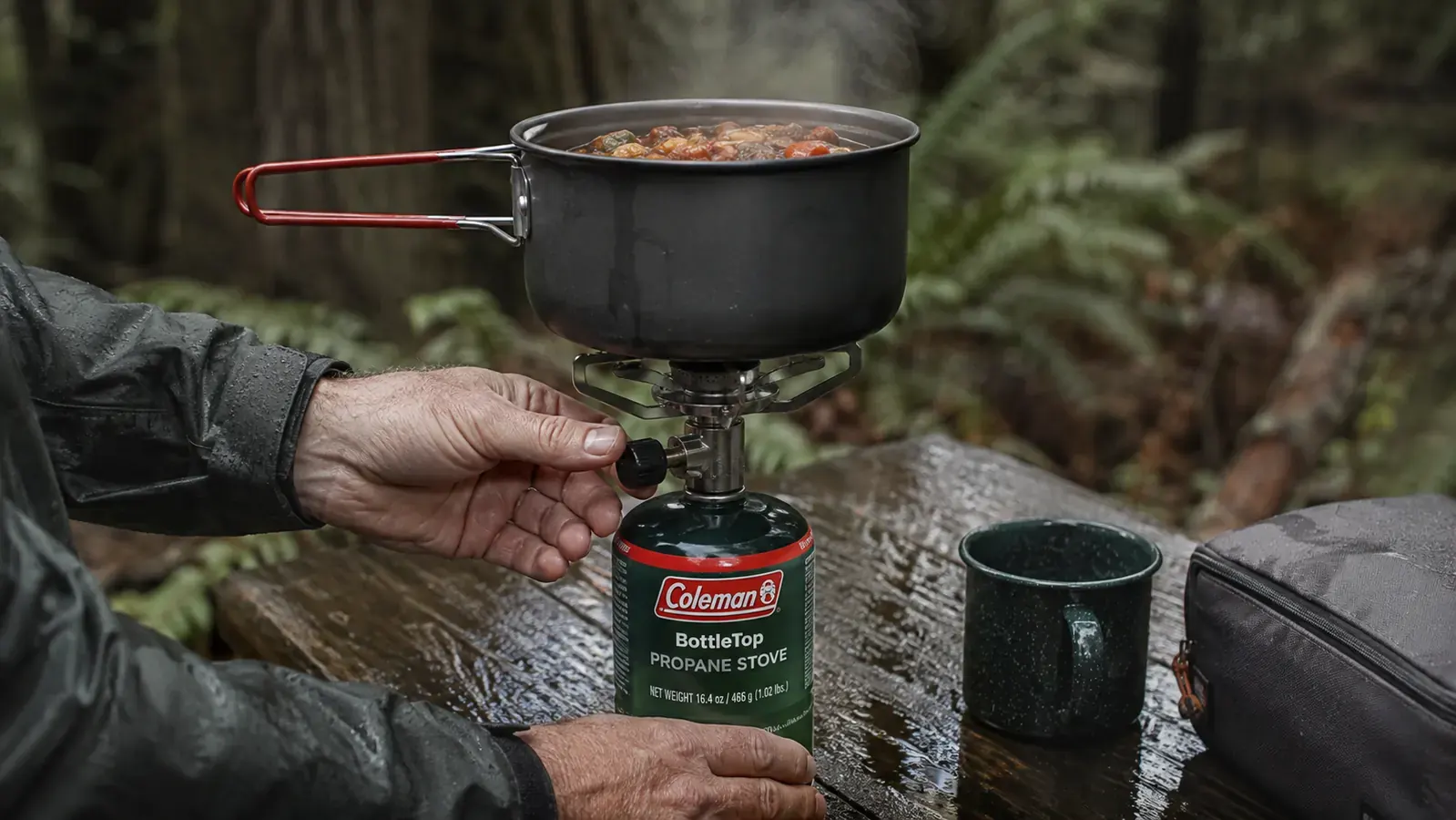
Head to Head: Wind Resistance, the Match That Decides It
I want to isolate the wind test on its own, because in this corner of the country it decides more than any other number on the box. A calm July trip flatters any stove, and both of these will boil water on a still day. The real world here is a gravel bar with a breeze off the river, a ridgeline camp in the alley between two peaks, or a beach cook where the salt wind never fully goes quiet. On all three of those I pointed each burner into the same gust and watched what the flame did. The Coleman twisted and leaned but held. The Gas One flickered, dropped low, and at the worst moment died back to a blue ghost you had to relight with a lighter and wait for again.
That is not a knock on the Gas One so much as a description of what its lighter construction buys you. A thinner burner head and a shorter shield mean less mass to hold the flame steady, so a hard puff steals more of its heat. You can manage it, you can turn the stove so the wind hits the back, you can rig a folding windscreen, and I did all of those. But a stove you have to manage around the weather is a stove that steals your attention from the food and from your people. On the wind metric the Coleman wins outright, and for anyone who camps near water it should be the first line of the comparison, not the last.
Propane Efficiency: Getting More From Every Green Bottle
Because both stoves run off the same disposable one-pound green propane canisters, efficiency shows up as how long a bottle lasts, and that is a real cost over a season, not a rounding error. I burned four bottles across the spring, two through each stove, cooking the same meals with the same pots. The Coleman finished its meals on noticeably less fuel. Two reasons drive it. First, it reaches temperature faster, so the burner runs full bore for a shorter stretch before you back it down. Second, and more important, its low end actually stays lit, so you can hold a meal at a gentle simmer instead of running it at a roaring boil to keep it from dying out.
In practical terms I got roughly an extra meal or so out of a Coleman bottle for the same cooking load, and I noticed the valve getting less stingy as the canister got low. The Gas One ran hotter and burned through its low reserve quicker, and near the end of a canister its weak wind behavior got worse instead of better. If you pack your own fuel and carry every bottle in by hand, that efficiency is weight and money you are not hauling back out. It is not the sexiest way to compare two stoves, but it is one of the most honest, because fuel is where the ongoing cost actually lives.
Pot Support Stability Under a Heavy Load
The part nobody photographs is how the stove behaves under a full, heavy pot, and that is where the two diverge more than the shiny burner photos suggest. The Coleman's pot support ring is set on a denser, heavier body, so a loaded two-quart pot full of water sits without pitching. I have made big pots of chili and filled a kettle to the brim, and the assembly felt planted instead of tippy. You still want a flat surface, and you still do not want kids or a dog brushing into it, but the stove itself does not add wobble to the problem.
The Gas One, being lighter and built from thinner material, is more sensitive to a heavy, off-center load. A full pot shifts its balance, and on anything but a tabletop you feel the stove want to tip toward the heavy side. You can steady it, and plenty of people do, but it means you learn a habit of loading the handle away from the burner and checking your footing. For short, broad pots it is fine. For tall narrow kettles or a big pot of pasta, the Coleman's extra mass under the burn is the one I trusted not to fold over onto the ground.
Packability: How Each One Rides Into Camp
Here the tables turn, and I want to be fair to the Gas One, because it wins on how the thing travels. It is lighter and flatter, and it wedges into a packed truck bed or the corner of a canoe without complaint. If the stove is just a utility you pull out twice a year to boil water for coffee, that lighter footprint is a genuine advantage and it should not be waved off. There is nothing in its carry size you resent hauling to the car, and it will never be the reason a bag does not zip in the middle.
The Coleman is chunkier and heavier, all of which comes from the steel that also makes it steadier and more wind-proof. It still fits fine in the back of most vehicles and in a tote with your other camp kitchen gear, but you know you are carrying it. For a base-camp setup where the stove gets a permanent spot on a table or in a gear bin, that weight never bothers me. For a multi-night river trip where every pound gets hand-carried over a portage, the Gas One is the kinder roommate. So packability is not a win or a loss in the abstract, it is a tiebreaker that depends entirely on whether you carry the stove or it lives on the table.
Field Failures I Saw and Heard About
No honest comparison ends without this, because both of these stoves have a known failure mode and knowing it up front saves you a wet, hungry night. On the Coleman the weak point, if I have one to point to after a season, is the regulator and valve assembly if you leave it heavily corroded or force the knob past its stop. Keep the threads clean, keep the valve dry, and it has been trouble-free here. On the Gas One the recurring complaint from people I camp with and from the broader owner chatter is the burner head and the plastic bits, which are fussier about heat and abuse than the all-metal construction of the Coleman.
There is also the mundane one that gets everyone eventually: a canister that will not seat because the O-ring has dried or a speck of grit is in the threads. I have had it happen with a generic brand bottle on the Gas One, and never on the Coleman, though I suspect that is as much luck as design. The lesson I take is not that one is immune and the other is fragile, it is that you check the seal, keep a spare O-ring in your kit, and carry a lighter that is not your stove. Planned for, neither stove left me actually hungry all spring. But the Coleman was the one I reached for without a second thought when the weather turned.
Where the Gas One Wins
I want to be fair, because the Gas One is not a bad stove. It wins first on price, and for a lot of people that is the tiebreaker. If your stove spend is an afterthought, or you camp once or twice a season and mostly make coffee and boil water, the Gas One leaves money in your pocket for the parts of the trip that matter more. I have driven with guys who run them for years on weekend river trips and have zero complaints, because their standard is hot water and a warm pot of stew, and it clears that bar every time.
It also wins on weight and bulk, as I covered above. Lighter, flatter, easier to wedge into a load that is already tight. If your whole setup is built around moving light and the stove is just a utility, that is a real advantage nobody should hand-wave. For the right person, at the right price, it is the sensible pick and there is no shame in choosing it. My only push is that you make that choice knowing it will ask more of you when the wind gets up and when you want a gentle heat under something that should not boil.
Stop fighting the wind over a cold breakfast. The Coleman cooks through it.
The 7650 BTU BottleTop burner, the wind shield, and the simmer control that actually works have earned a permanent spot in my camp kit. Check today's price on Amazon and see why this is the stove I reach for first.
Amazon Check Today's Price on Amazon →Who Should Buy Which
Buy the Coleman BottleTop if you cook real food outside more than a few times a year, or if any of your cooking happens in wind, which it will if you camp anywhere near the coast. The power, the wind shielding, and the usable simmer range pay for the difference in price across a single season of weekend meals. It is the difference between a camp stove you use and one you tolerate, and once you have cooked on it in a real gust you will not want to go back to coaxing a bare flame along.
Buy the Gas One if you want the cheapest honest way to boil water and make coffee, if you are careful with a dollar, or if you only fire a stove a handful of times a year. It will do the job without complaint and it rides lighter on the way in. Just know what you are giving up on wind and on low-heat control, and plan your meals around mostly boiling. There is no wrong choice between these two, only the one that matches how you actually cook. For me, that match was the Coleman, and it has been on the table in my camp kitchen ever since.
The stove that ended my dawn breakfast battles for good.
After a spring of cooking both in open-air wind and rain, the Coleman BottleTop is the one that held up. If you want hot meals on schedule instead of a fight, this is the stove to grab.
Amazon Check Today's Price on Amazon →