
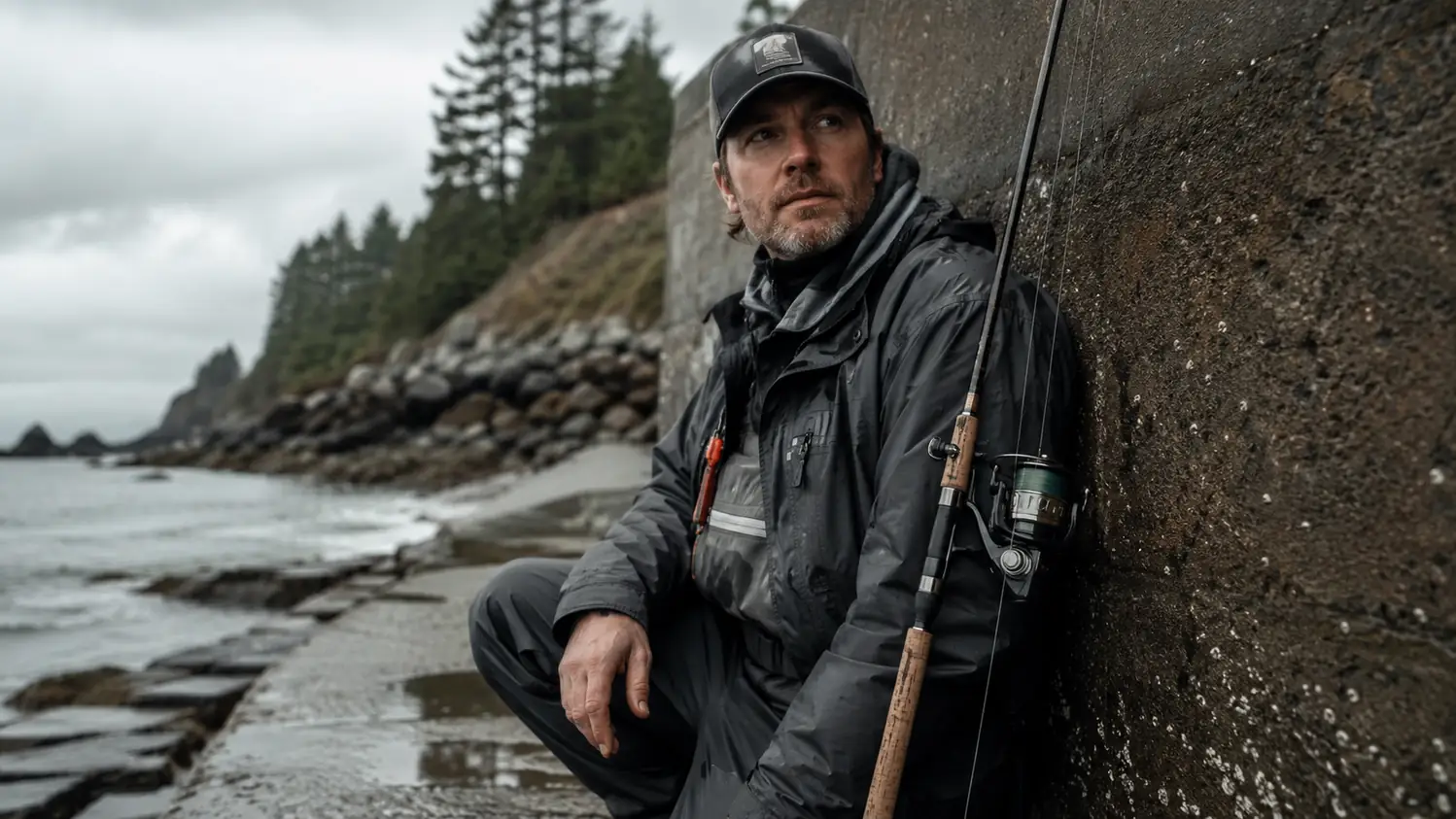
You are standing in the aisle trying to pick between the Ugly Stik Bigwater and the Penn Wrath, and both have the same problem working against them. Both boxes say saltwater. Both come as a whole rod and reel, ready to slap in the truck. Both sit close enough in price that money will not decide it for you. So you are left doing exactly what I did the season I finally stopped dragging my trout rod to the coast: you take the tippy-headed freshwater gear you already own, you snap a line on your second cast into the break, and you spend the rest of the afternoon picking frozen monofilament out of the surf while vowing to do this properly next time.
The short answer, after a spring and most of a summer fishing Westport sand, the jetties off the north end, and a couple of river mouths on the way home: the Bigwater is the backbone. It is the combo that shrugs off a heavier line class, bigger bait, and the kind of fish that hits at the end of a long hard cast over moving water. The Wrath is the smoother, lighter all-rounder, the one that feels alive in your hands after a full day and is honestly more fun when the target is perch and schoolie bass. One of them earns the permanent slot in my truck. The other comes along only when I already know the plan is small fish.
I did not test these on the lawn. I fished the Bigwater through a spring of surf and rock runs, and I put myself on the Wrath for the same kinds of days, same beaches, same weight range, so the comparison is apples to apples rather than one day a month apart. What follows is what held up, what flexed when it should not have, and which one I would honestly reach for tomorrow morning when the tide is making.
| Ugly Stik Bigwater | Penn Wrath | |
|---|---|---|
| Picked combo | Ugly Stik Bigwater | Penn Wrath |
| Price | A step up, still a budget buy | Usually the cheaper of the two |
| Rod blank | Graphite-fiberglass, stouter backbone | Graphite composite, lighter, faster tip |
| Reel smoothness | Entry-level reel, bigger line capacity | Smoother retrieve, 4+1 bearings |
| Line class | Heavier, works 20-30 lb comfortably | Lighter, 10-15 lb is its sweet spot |
| Best for | Surf, jetties, salmon, stripers | Light surf, perch, trout, schoolie bass |
| Drag | Heavier, handles a hard pull | Smooth but set lighter |
| All-day comfort | Heavier, you notice it in your elbow | Lighter, easier on the arm |
That table is the whole argument in one glance. The Wrath takes every row about feel and lightness. The Bigwater takes every row about backbone, line capacity, and the confidence that comes from knowing the blank is not going to fold the moment something real pulls on the other end. Neither is wrong. They are aimed at different thicknesses of fish, and figuring out which thickness you actually chase is the entire game.
One comparison that belongs in the box but never makes the spec sheet is how each one takes the salt. On a Washington coast trip, no rod gets a free pass from that. I treated both the same: a rinse in the truck, a careful wipe of the reel, reels dried rather than left soggy in the rod bag. The Bigwater's heavier, simpler reel shrugs off the routine with less drama, partly because there is less about it to get fouled. The Wrath's smoother reel feels nicer when it is clean and shows its age faster when you skip the rinse. Neither is a maintenance rod, but the Bigwater forgives a lazy week better, and that is worth a line in the tally.
About that salt rinse, since nobody will say it for you and it is the whole game on this coast. Every combo in this review goes into the truck salty and comes out only if you give it a rinse, and on the Washington shore that is not optional, it is how you keep a reel alive past a single season. I keep a spray bottle in the cab now. A quick rinse over the rod, the reel, and the guides, a towel wipe across the spool, and the reel set upright to dry instead of left to stew in the rod bag. Neither of these two is high-maintenance, but the simpler heavier reel on the Bigwater shakes off a skipped rinse week better, and after a wet fall of beach trips that forgiving character is worth more in the long run than any smoothness you feel on the bench.
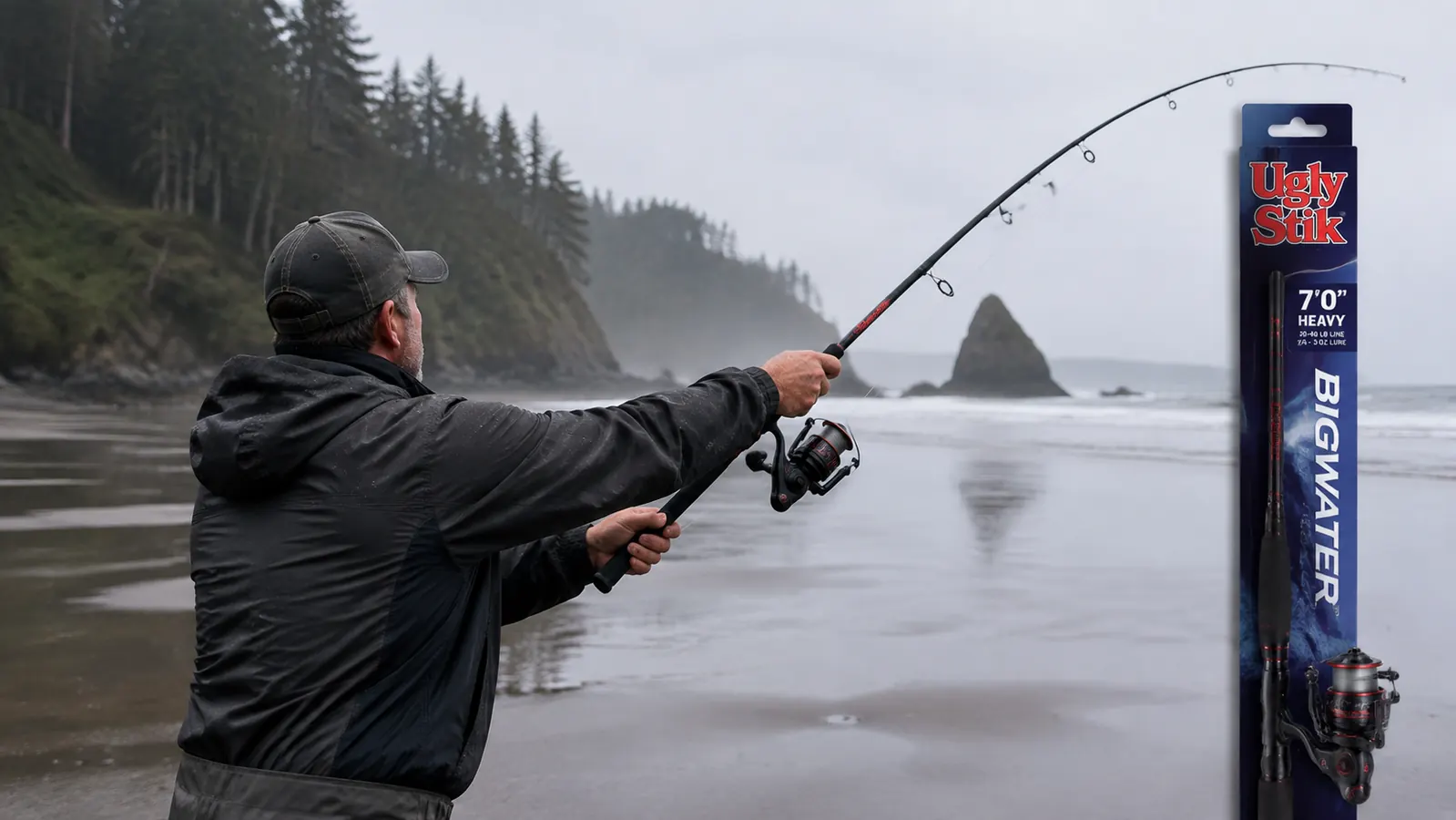
Where the Ugly Stik Bigwater Wins
The Bigwater wins on the days the weather lies to you, and that is most days on the Washington coast. The blank is the graphite-fiberglass construction Ugly Stik has been building for decades, and it is noticeably stouter than the Wrath's. What that buys you on the water is the freedom to cast a heavier weight, to fish a bigger piece of bait or a heavier lure, and to not baby the rod when it sits in the boat's rod holder hooked to something with real shoulders. Surf perch hit hard. An occasional salmon or striped bass hits harder. Neither one cares about finesse. They want to pull, and the Bigwater pulls back.
For a couple of the rockier outings I made this season the plan was stripped back to its simplest: walk the north jetty at slack water, drop a stiff bait rig straight down the face, and hang on. That is rockfish and ling cod fishing, and it is the kind of work that punishes a light blank in a hurry. You are not casting out into the surf, you are dropping into structure and feeling for bites through the line, and when something grabs you it grabs low and hard. The Bigwater's stouter tip lets you read that tick on the line and still have the backbone to winch a fish off the bottom before it ducks back under a rock. Around here the rocks win more fights than the anglers do, and the combo that tilts a few of those back in your favor earns its keep in the truck.
The reel that comes attached is not the selling point, and I will be honest about that up front because it is the most common criticism and it is fair. It is an entry-level reel, and it feels like one when you turn the handle compared to the Wrath's smoother gear. What the Bigwater does give you is line capacity on the heavy side, and that matters more in salt than people expect. When you are fishing 20 to 30 pound braid in moving water, with mussel-encrusted rocks on every side and a current that wants to sweep your bait, the extra room on the spool and the stouter backbone are the two reasons I reach for it over the freshwater rod without a second thought. You lose a fish because a rod folded under pressure and you remember it for years. The Bigwater has never handed me that lesson.
The backbone also changes how you set the hook and how you mend line in a slow current. With the stouter blank, a hook set carries cleanly through heavy braid instead of absorbing the strike in the flex of the rod tip. On the Wrath, that same strike soaks into the softer tip and you feel the connection is softer, which is fine for a small hook and a perch but maddening when you know there is a bigger hook in the water and you are not sure if it caught. Small difference, big consequences over a season.
One place the heavier gear truly shows up is the drag under a hard pull, and this is the part of the season of surf perch that sold me. Perch hit in short sharp bursts, and a good one will strip line in a couple of lunges, but the mistake a lot of us make is running the drag light to protect a thinner blank. With the Bigwater you can set the drag firm because the blank bends without giving you that white-knuckle instant where the rod tip folds and the line pops at the knots. I lost a keeper that way on the Wrath once, watching ten feet of line smoke off while I fumbled with the drag knob. On the Bigwater those same runs end with me lifting the fish up the face of the wave instead of hoping the reel gets there before the rod gives.
It also simply looks the part. Set the Bigwater up against the jetty and it reads as coastal gear rather than a freshwater rod that wandered off. That sounds like vanity, but there is a real confidence component to fishing, and feeling under-gunned has cost me more casts and more daylight than any mechanical failure ever did. For the surf, for the rock piles, for anything where you are not certain what is down there, the Bigwater is the confident choice, and confidence is half the fishing.
For the surf and the jetty, start with the backbone
If most of your coast trips end with line peeling off against something heavy, the Ugly Stik Bigwater is the combo to lean on. Heavier line class, stouter blank, room to grow into bigger targets.
Amazon See Today's Price on Amazon →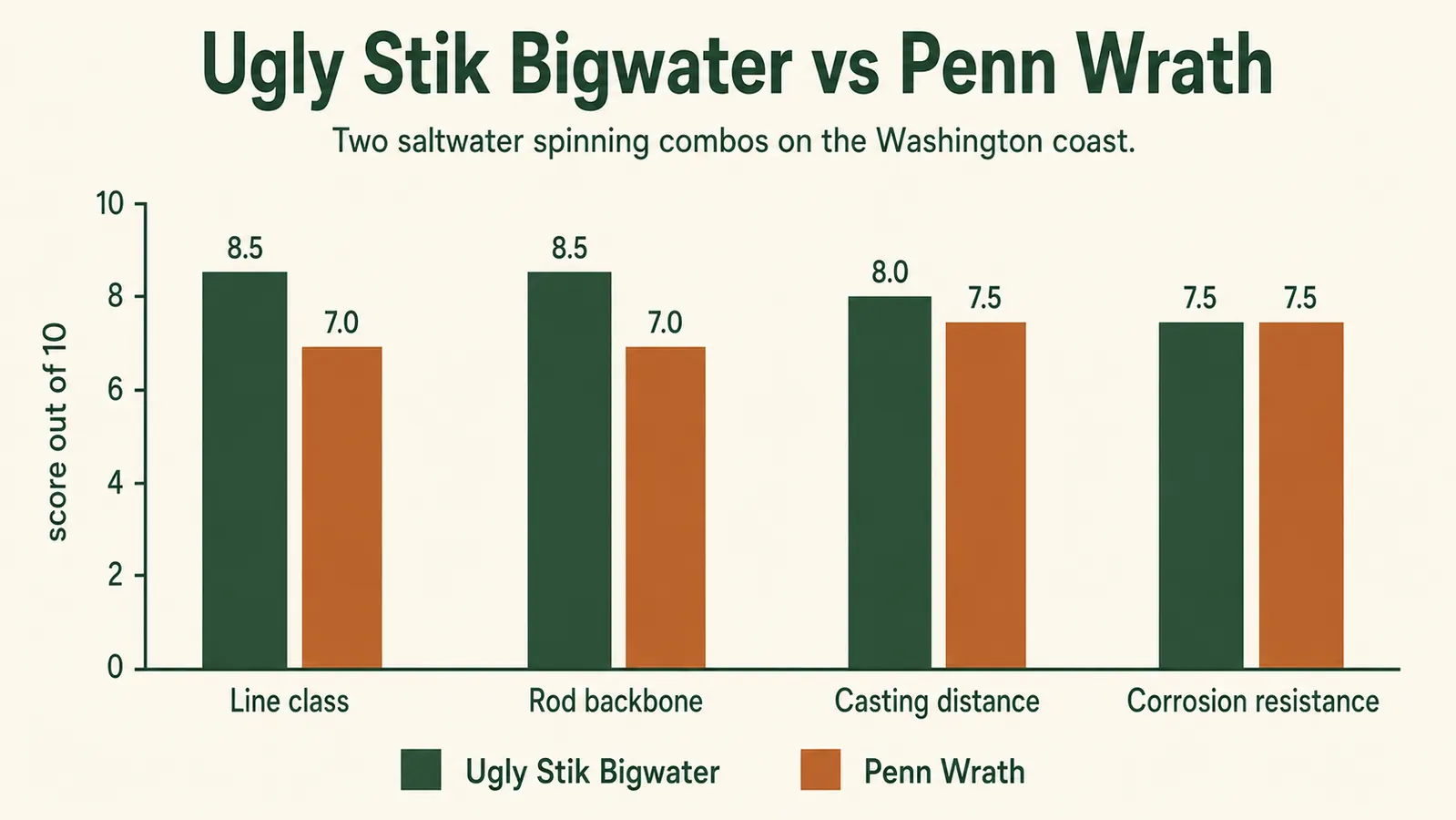
Where the Penn Wrath Wins
The Penn Wrath wins in the hand, and it is not close. The blank is lighter, the tip is faster, and the reel is genuinely smoother, with the kind of multi-ball-bearing retrieve that makes a slow afternoon during a lull feel like a step above anything the entry reels offer. On a slow tide day where most of my effort was casting and retrieving and recasting for perch and kelp and the occasional schoolie, the Wrath was the combo I wished was mine on the drive home. You notice the weight difference by the end of an afternoon. The Bigwater starts to feel like a pry bar against a tired wrist. The Wrath does not.
It also wins on price, and that matters more than some will admit out loud. For the angler who reads this and fishes the coast a few weekends a year, mostly for species that top out at a couple of pounds, the extra money for the Bigwater buys backbone they will never actually use. The Wrath handles 10 to 15 pound line smoothly and predictably, casts a light fixed sinker or a small jig with real accuracy, and the faster tip gives you a livelier feel on the bite. If your coast fishing is perch, schoolie bass, trout near the river mouths, and the lighter end of the surf, the Wrath is not the budget compromise. It is simply the right tool, at the right weight, at a price that does not sting.
Where the Wrath loses ground is the same place any lighter combo does, and it is worth saying plainly because it is the reason the two are not interchangeable. On the heaviest surf pushes, and around the barnacle-cut rocks of a real jetty, the lighter blank and the lighter drag are not in their element. Casting a heavy weight against a stiff onshore wind, the Wrath loads up hard and you can feel the limit of the backbone. Drag the lighter drag all the way down against a big fish in rough water and you are working two strikes against yourself. Know your target and the Wrath is a pleasure. Guess wrong about the size of what is out there and it is the first piece of gear you blame, and it will be partly your fault.
Who Should Buy Which
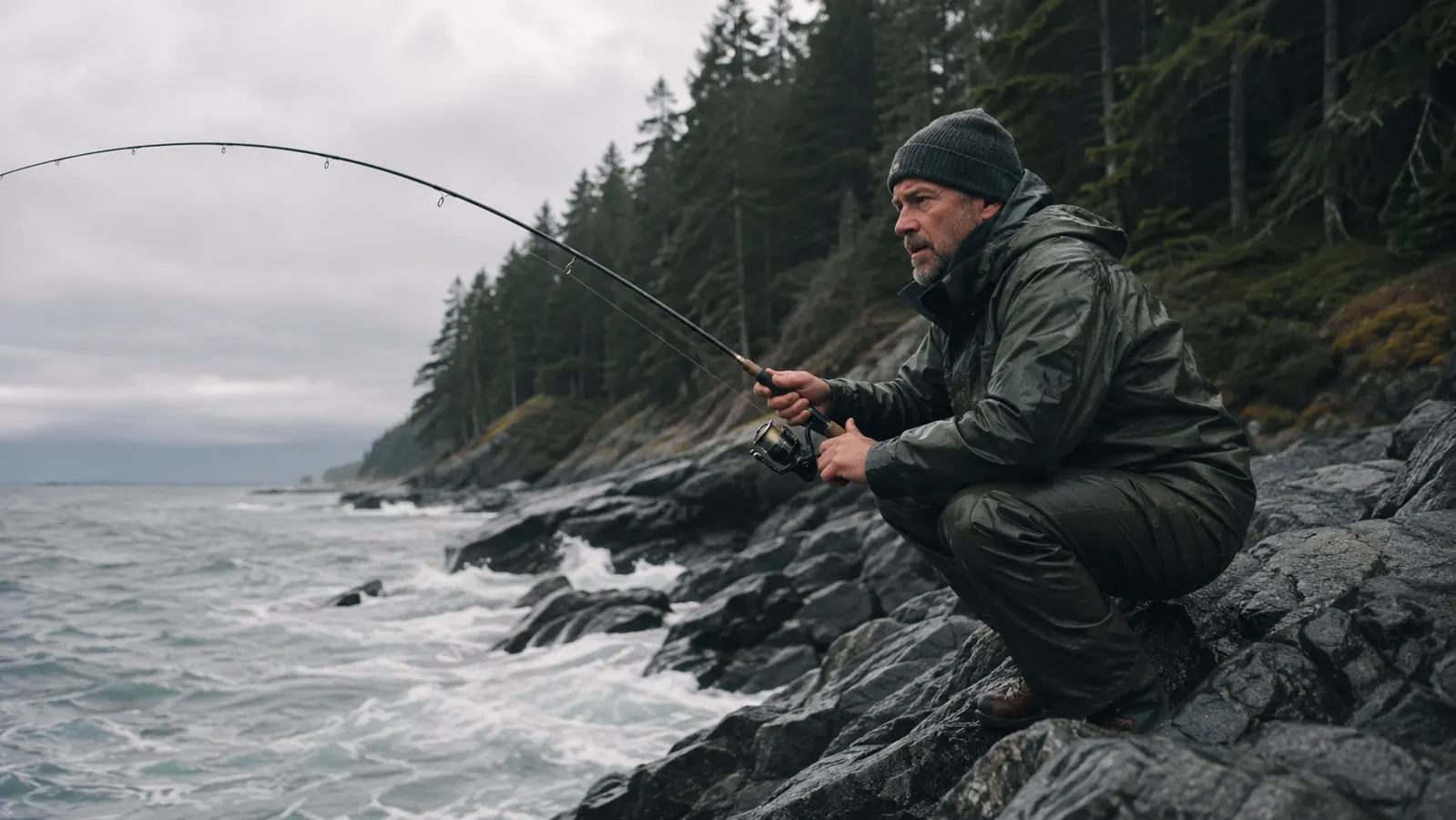
Buy the Ugly Stik Bigwater if your coast trips are built around the possibility of something big. Salmon on the beach, stripers off the jetties, an afternoon where you throw a heavier weight into rough green water and wait. Buy it if you fish twenty to thirty pound line, or if you are done with the meaty snap of a lighter blank giving way at the worst moment. The trade is real: it is heavier, and the attached reel is nothing to brag about, but it is the combo that never talks back when it has to work.
Buy the Penn Wrath if your fishing is lighter and faster. Perch, schoolie bass, trout at the river mouths, the light end of the surf where a few pounds is the ceiling. It is smoother, lighter, cheaper, and honestly more pleasant to fish all day. Buy it if you want a combo that disappears in your hands instead of announcing itself every time you lift it from the truck bed. Just keep your expectations off the heaviest breaks. For the heaviest duty on the Pacific coast, that is the Bigwater's job.
I own the Bigwater and I have borrowed a friend's Wrath often enough to know exactly what each one is for, and exactly where each one falls short. If your plan is general coastal fishing with real backbone at the center of it, the Bigwater earns the permanent slot in the truck and the Wrath stays home. If your plan is light fun, dropped weight, and the lowest entry price that still fishes properly, the Wrath is the honest pick and the Bigwater is overkill you will not enjoy carrying. Decide on the fish first, then the combo. That ends the debate and saves you a season of trial and error.
I lost a fish once because the rod folded under pressure and I remember it years later. The Bigwater has never handed me that lesson.
The bottom line on the coast
For surf, jetties, salmon, and stripers, the Ugly Stik Bigwater is the backbone you can count on. Start there and you will never wonder if your gear is up to the fish.
Amazon Check Today's Price on Amazon →