
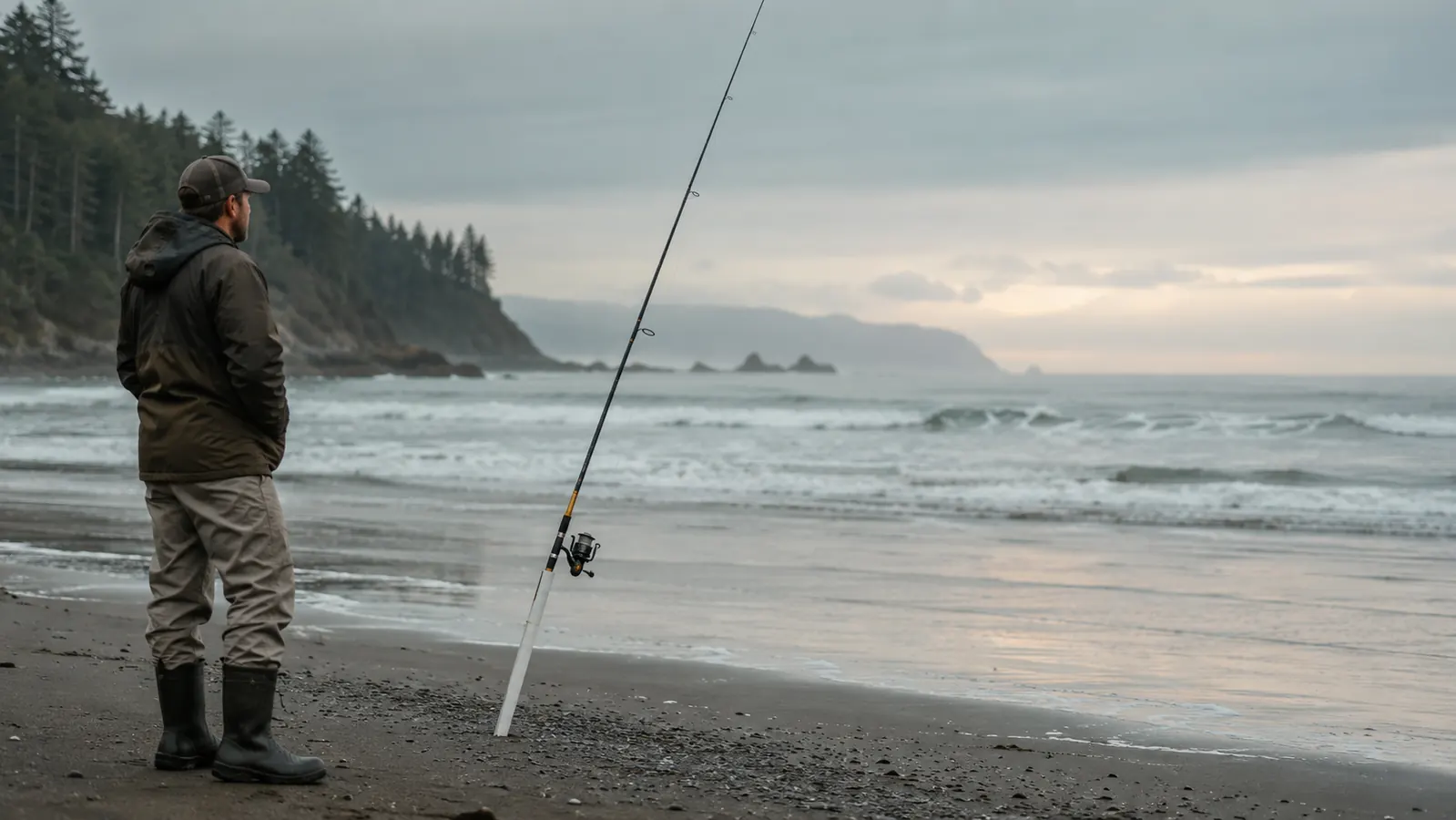
Most surf fishing failures on a Washington beach aren't about not catching anything. They're about the setup giving up before the fish ever gets a vote. I've walked hundreds of yards of gravel bar with a combo that was rigged wrong, line that was too heavy for the cast I needed, and a rig that rolled loose the second the surge hit. Every one of those was fixable at the kitchen table the night before, not on the beach at first light.
Here's the thing I've learned after enough seasons at the coast: surf fishing is won in the rigging, not in the casting. Get the line, the leader, and the terminal setup right, and casting far enough becomes easy. Get any one of them wrong, and you spend the morning cussing a tangle in the surf. This is the five-step setup I run on the Ugly Stik Bigwater spinning combo, the rig that's earned its spot in my truck for coastal duty, and it's the same system I'd walk you through on the sand. Here's each step, in the order it actually goes on.
Surf rigging is easier on a combo built for the salt
Every step from here depends on a rod and reel that can handle a 3-ounce weight plus a cast past the breakers, morning after morning of salt and sand. The Ugly Stik Bigwater spinning combo is the setup I reach for on the coast, because the rod has backbone and the reel comes ready for heavier line.
Amazon Check Today's Price on Amazon →Step 1: Match the Line to the Coast, Not the Catalog
The single most common wrong rig I see on the beach starts with line that's too heavy for the job. People load the spool with 30-pound mono they'd use for salmon, then wonder why they can't cast far enough to reach water. Surf casting is about distance, and distance is about line weight. The rule of thumb I keep in the truck is simple: the heavier the line, the shorter the cast, and the smaller the fish you're targeting, the lighter you can go.
On the Bigwater combo I run 20-pound braid as the main line. Braid is the right call in the surf for two reasons. It's thin for its strength, so it casts dramatically farther than mono of the same breaking strength, and it has almost no stretch, so you feel the light tap of a surf perch or a flounder picking up bait that mono would swallow. Twenty-pound braid is thin enough to really fly and strong enough for anything a Washington beach hands you, from stubborn surf perch up to a big fluke that runs a drag out.
If you're set on mono, that's fine, just know the trade. I'd go 15- to 20-pound mono and accept that you'll cap your distance a bit. The surf rigs I'll describe in a minute work identically on mono. What I wouldn't do is start the season on 30-pound mono and expect to reach the drop. The combo is built to throw heavier line than you actually need, and you should use exactly that freedom to go light enough to cast long.
Step 2: Spool the Reel So the Line Comes Off Clean
A spinning reel gets its whole reputation from one detail: line that comes off the spool in a tight, even lay. If the braid is loose or overfilled, you get wind knots, and a wind knot in the surf at first light is the fastest way to ruin a tide. So spooling right is the step people rush, and it's the one that bites back.
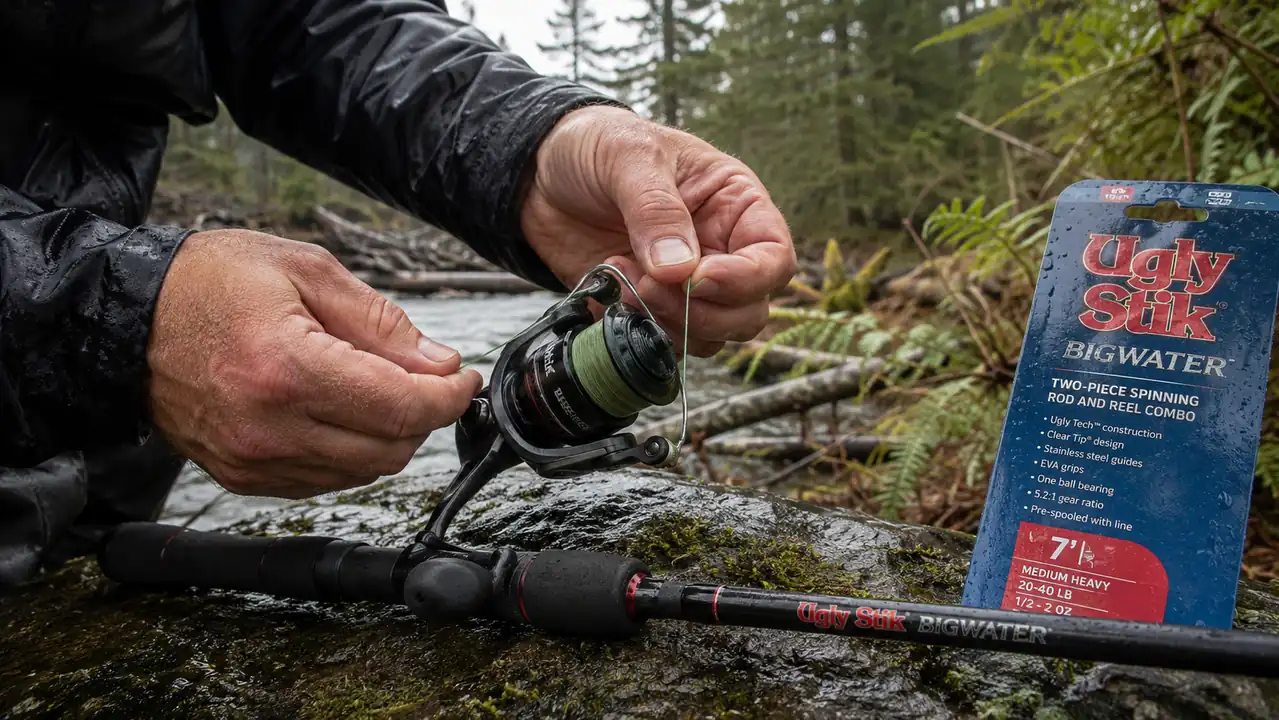
Here's the method that works for me every time. Have someone hold a pencil through the center of the line spool so it lays flat, or buy a line spooler, and keep light, even tension as the line goes on. Fill the spool so line sits right at the lip, about an eighth of an inch below the top, never over it. Then here's the trick that wins the surf: leave twenty or thirty yards of cheap mono backing under the braid, so the braid doesn't spin on the spool when a big fish pulls hard. The Bigwater's reel is sized to take this volume easily.
When the braid is loaded, wet a thumb and let your line out a few yards under pressure, then crank it back on evenly. I do this a couple of times before I ever wet a line. It seats the braid onto the spool so your first cast of the morning doesn't bury itself in a soft layer and refuse to release. Half an hour of fiddling with a spooling setup the night before saves you untangling a nest on the beach at dawn.
Step 3: Build a High-Low Rig That Holds in the Surge
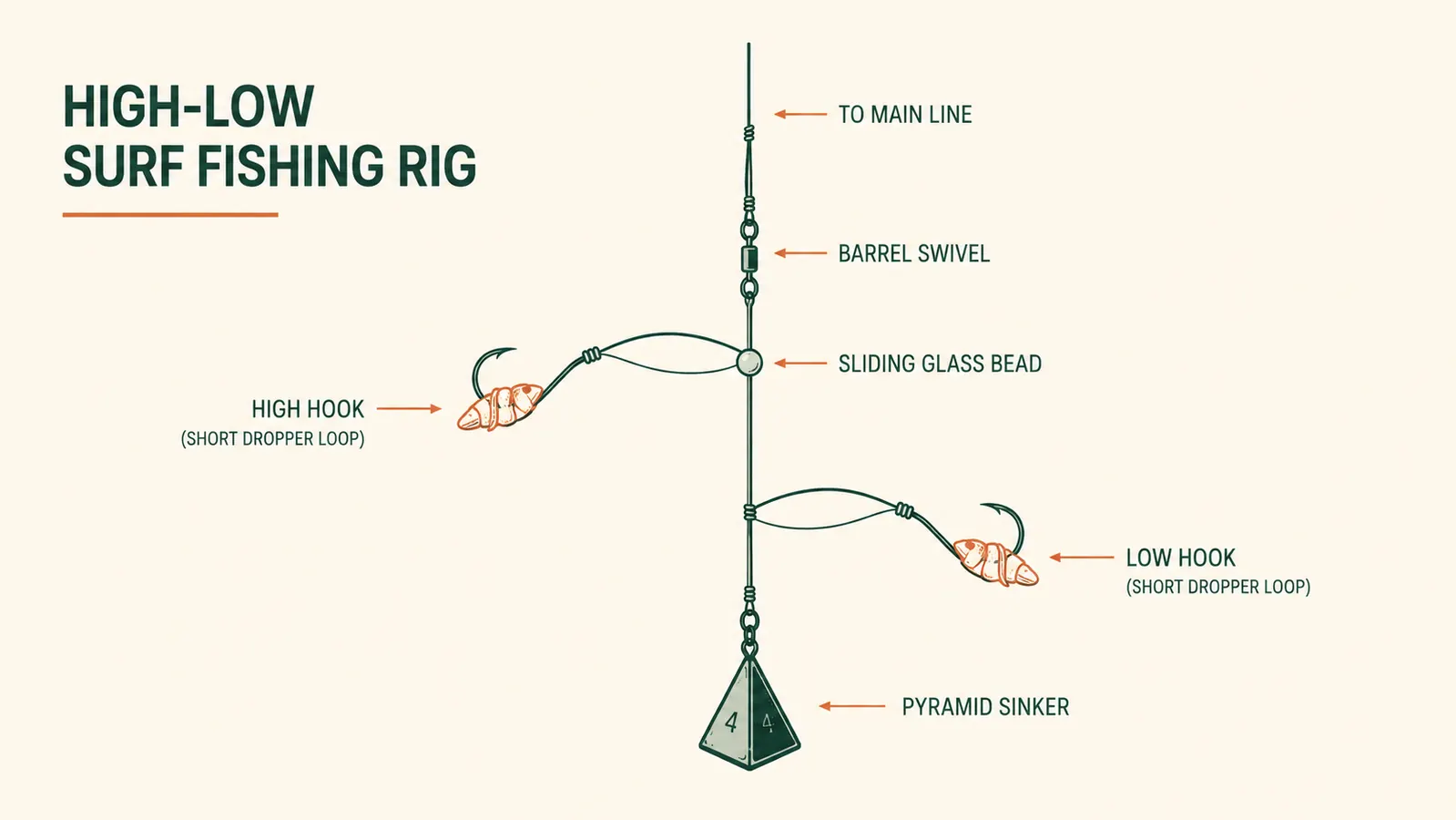
This is the heart of it, the rig itself. Surf fishing runs on the high-low rig, sometimes called a two-hook bottom rig, and once you've tied one you'll never fish bait any other way on the beach. It's two hooks on short droppers above a weight that pins the whole thing to the bottom, and it holds bait in the strike zone through the wash of each wave.
The build is simple, and it's the same every trip. Start with a length of leader, 30 to 40 pounds of mono, about two feet long. Tie a barrel swivel to the top end. Thread a sliding glass bead onto the line below the swivel, which protects your knot from the next piece. Then tie a bank or pyramid sinker to the bottom end, sized to the surf, usually 2 to 3 ounces on a normal Washington tide. Add your two short dropper loops with baited circle hooks off the main leader, one low, one a few inches higher. That's it, a working high-low rig.
The detail that matters: use a pyramid sinker, not a bell or flat bank. A pyramid digs into the sandy bottom and holds your bait in the surf, instead of rolling around and tangling the moment a wave hits. And tie the whole thing so the weight carries the cast, with the hooks riding above it. Get those two things right and the rig sits still and baited in moving water, which is exactly what surf fish are looking for.
Step 4: Tie the Leader to the Main Line and Go Tackle-Light
Between your 20-pound braid and the 40-pound leader sits the knot that has to hold the heaviest load of everything, cast after cast. The knot I trust here is the uni-to-uni, and if you only ever learn one fishing knot for the surf, this is the one. It joins two lines of different diameters cleanly, runs through your guides without snagging, and holds up to the shock of a long cast plus the surge.
Here's why I go heavier on the leader than the main line. Surf line rubs against sand, rock, and shell on every fetch, and that abrasion is the real enemy. A 40-pound mono or fluorocarbon leader absorbs that abuse that would fray your braid, and it's cheap to re-tie. The thin braid gives you the distance; the heavy leader gives you the toughness. They're each doing the half they're good at.
And keep the bite off the big hardware. I use a short mono or fluorocarbon leader section right down to the hook whenever I can, because surf fish in clear water can be line-shy. A fluorocarbon tip between the swivel and hook makes a rig notably less visible than one built entirely on braid. Two feet of fluorocarbon per rig is pennies, and it routinely means the difference between taps and bites.
Step 5: Read the Surf and Set the Cast's Timing
The rigging, rods, and knots get you ready, but the casting is where surf fishing actually happens, and it's mostly timing, not muscle. You're not trying to bomb the line to the horizon. You're trying to land just past the breaking waves, into the calm channel beyond, where the fish sit.
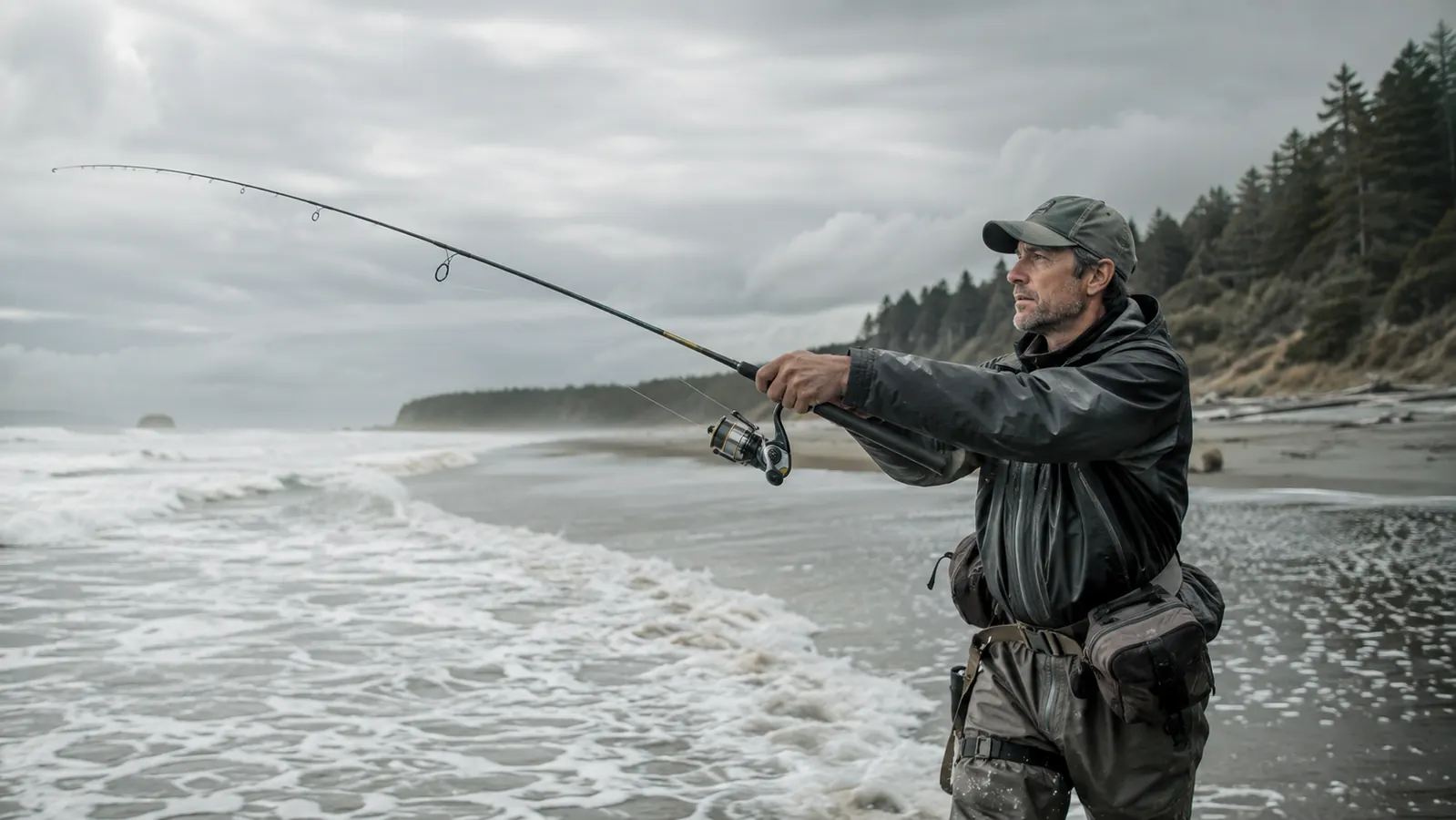
With a spinning combo the overhead bomb isn't the true long-cast technique anyway. The cast that goes the distance in the surf is the sidearm or pendulum, which lets the rod load through its full length instead of you muscling it. You're swinging the rod tip up into a loading arc, not whipping it. The Bigwater's longer rod gives you that extra foot or two of sweep that turns a good cast into a long one.
And time it to the water, not to your turn. Watch the waves for a minute before you cast. Cast on the calmest moment, right after a wave set has rolled through, not into a wall climbing toward you. Let the weight sail, feather the line with your finger as it goes out so the braid doesn't overspin, and set the rod in a sand spike on a slight angle. When you're rigged this way, the line comes tight, the bait finds the bottom, and your hands can finally warm up in your pockets while you wait. That patient part is the whole point of doing the rigging right.
A few details in the rig itself pay for themselves too. Use circle hooks rather than J hooks for surf bait fishing. A circle hook sets itself in the corner of the fish's mouth on the hookset, which means you can stop watching for the right moment and just start reeling on the pull. It also clears more of the small and under-sized fish you'll want to release unharmed. And when I cut bait, I leave it small, about thumb-size chunks, because a mouthful of bait in the surf washes out of the strike zone faster than it gets eaten, and it draws gulls down on your line.
What Else Helps
A few non-obvious things make the whole afternoon work better. Rinse the reel and rod with fresh water at the end of every saltwater trip, without fail. Salt and sand work into a spinning reel fast, and the Bigwater survives that abuse better than cheap combos, but every reel on the coast earns a fresh-water rinse. A sand spike or rod holder is not optional for surf fishing; holding the rod in hand in the surge is how baits wash in and tangles start. On the bigger tide, a longer, stiff rod casts heavier weights farther, which is why the Bigwater's length earns its keep.
Carry a spare pre-tied rig and a spare spool of leader. The fastest way to lose a tide is to watch a tangle unfold with no backup rig to hand. I keep two high-low rigs tied and coiled in the tackle box before I leave the house, and it's saved more mornings than I can count. Check your drag before, not after, a big fish runs it out. A drag that's seized or too loose, discovered mid-fight at the surf line, is the difference between a picture and a story about the one that got away.
If you want the longer story behind this setup, my full-season pressure test on the Ugly Stik Bigwater digs into how it handled salt, casting distance, and hard fights on Washington beaches, and the Bigwater versus Penn Wrath comparison runs the same surf through two competing combos to see which one earns the place in your truck.
Surf fishing is won in the rigging, not the casting. Get the line light, the rig high-low, and the leader heavy, and the casting gets easy all on its own.
The combo you rig the same way every trip
This whole system works on whatever spinning combo you already own. If you don't have a surf-ready setup yet, the Ugly Stik Bigwater is the rod and reel I reach for on the coast: backbone enough for a 3-ounce sinker, a real reel that spools heavy line clean, and the length that turns a decent cast into a long one.
Amazon Check Today's Price on Amazon →