
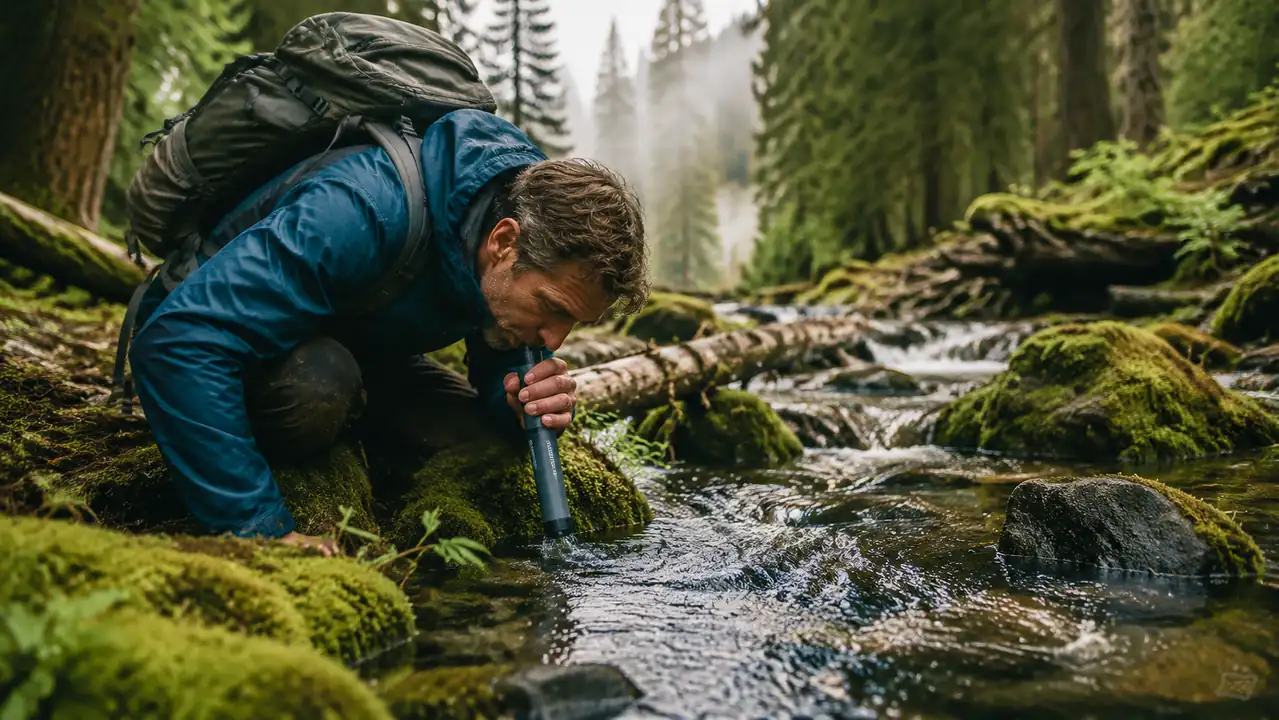
There is a specific moment that defines how a person manages water on the trail, and for years mine went like this. I would plan an entire route around the next reliable tap, hauling three or four liters out of the truck and then rationing it like trail mix, because I did not trust the streams and I did not carry anything to make them drinkable. That meant shorter loops, heavier loads, and a lot of dry-mouthed miles. Then on a wet October I finally picked up a LifeStraw Peak, mostly out of impatience, decided to give it a real season of Cascades hikes, and I stopped being the one in the group who was always two liters behind.
I want to be honest about why I chose this one, because it is probably the same reason you are reading. The LifeStraw is the water filter name you already know, the one that shows up in emergency kits and on every prepper list, and for a lot of people that made it feel like a novelty rather than a real piece of trail gear. I was skeptical of the whole category myself, so I set out to find out whether a filter straw is truly useful for a normal weekend hiker or just a heavier version of carrying a bottle. A season later, after somewhere around four dozen liters straight out of Pacific Northwest streams and lakes, I can tell you exactly where it earns its space and where it is merely okay.
The Quick Verdict
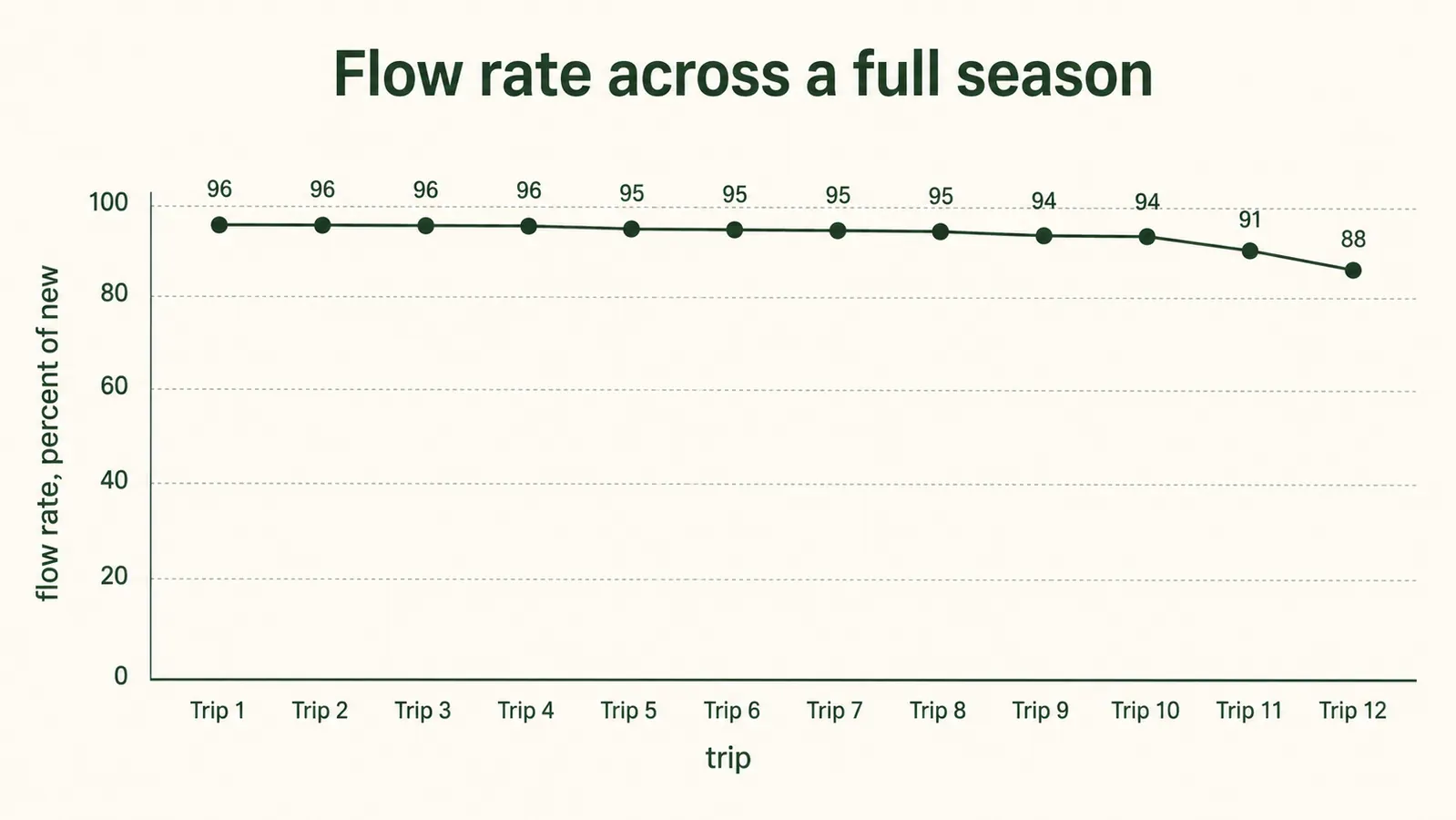
A lightweight, dependable way to drink straight from the source on the trail, with a flow rate that survived a whole season, even if you need to know its limits before you trust it as your only system.
Amazon Check Today's Price →Stop planning your whole hike around the next tap. See the current price.
The LifeStraw Peak is the filter I now carry on every day-hike and overnight because it lets the trail decide where I drink, not the nearest restroom. Check today's price on Amazon.
Amazon Check Today's Price on Amazon →How I've Used It
I did not buy this filter to admire it on a shelf. I live in northwest Washington, my weekends are built around getting into the Cascades, and that means a steady supply of creeks, seeps, and high lakes, often in the same categories of murky water you would rather not think about. So the Peak went out on every trip I did across the season. Cold shoulder-season creeks running fast and clear off the snow, low, slow-moving pools in the rain shadow that had picked up more than I would have liked, and turquoise alpine lakes at the snow line where the shore turned muddy brown just a few feet out.
My method is simple and unglamorous. I keep a note in my phone after every hike and I write down two things: whether I got enough clean water, and whether the filter made me regret the source I chose. No lab, no turbidity meter, just a notepad and a lot of soaked weekends. Across the season I drank exclusively from the Peak, and I never once had what I would call a bad glass of trail water. What follows is that note log, turned into something useful.
The Peak is the non-plumbed, standalone member of the LifeStraw family, a direct descendant of the classic emergency straw but built as a real daily-use filter rather than a kit novelty. The body is a smooth dark-gray 200-milliliter reservoir with a drinking mouthpiece on one end and a rigid intake tube on the other, and the whole thing weighs under four ounces handling the math for you. It filters to 0.2 microns, which catches the bacteria and protozoa that are the actual concern in most backcountry water, and it is rated for up to 1,000 liters before the cartridge needs replacing. The hollow-fiber membrane is the same family of tech that lives in pricier gravity filters, just wrapped in a format you can carry in a jacket pocket.
The Flow Rate Is What You Actually Feel
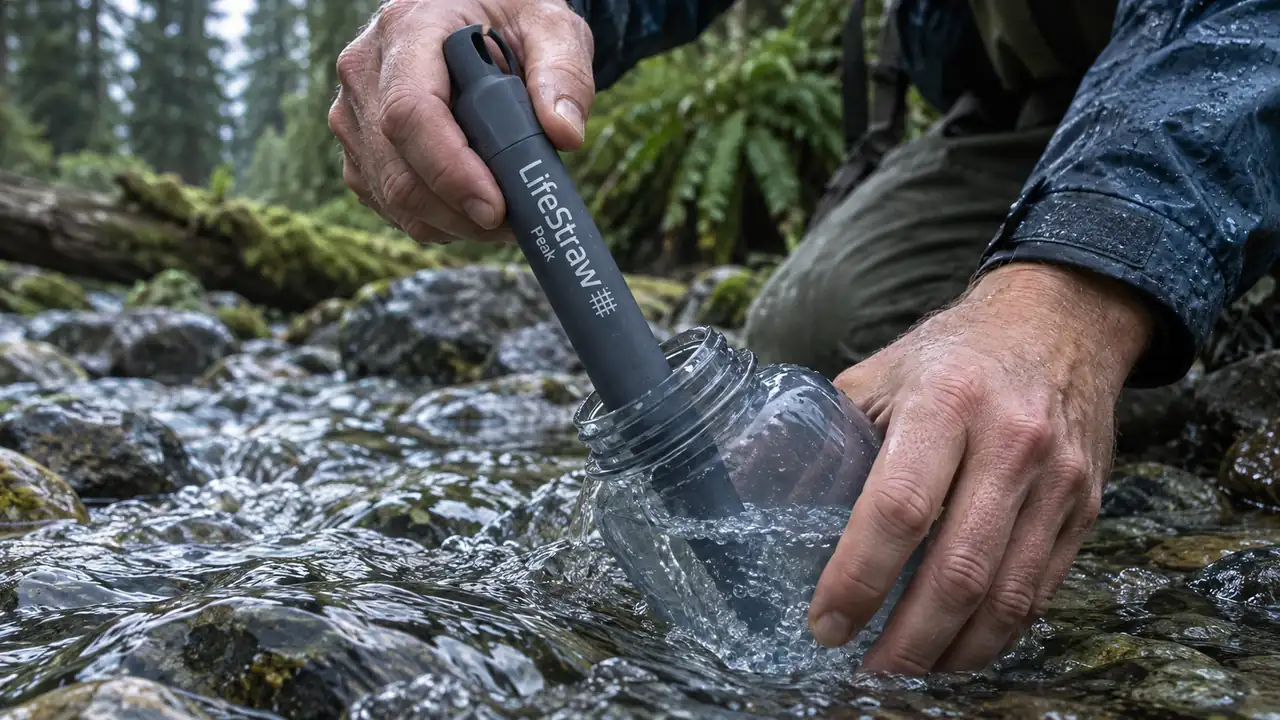
There is one spec that decides whether a filter is farm equipment or furniture, and it is not the micron rating, it is how hard you have to suck. A filter that feels like you are trying to pull a milkshake through a coffee stirrer gets abandoned after the first thirsty mile, no matter how good it is at its job. The Peak is a soft squeeze-and-drink design rather than a slog through a membrane, and that is the difference that kept me reaching for it instead of leaving it clipped to the pack as a decoration.
For a single hiker the flow is genuinely good. You squeeze the soft-sided reservoir to start the draw, then sip freely, and you get a steady stream that keeps up with a thirsty pace without that jaw-aching suction. Over a season that matters a lot, because filtering is the kind of chore you stop doing if it is unpleasant, and the Peak makes it quick enough that I actually did it rather than rationing. When I handed it to friends on the trail it was quietly the thing they all wanted to borrow.
I want to be precise about the limit, because more people need this than any praise. The Peak is a personal straw, not a group system. You are not filling a three-liter reservoir for the whole crew or doing camp chores with it. I used it alongside a foldable bottle and filtered directly into my mouth, then topped off my carry bottle at a fast source, and that fit my solo and two-person trips perfectly. But if you filter for four people around a fire or at a base camp, this is the wrong tool and you know it three sentences in. It is built to keep one person hydrated on the move, and it does that about as well as anything at its weight.
Taste, and the Truth About What a Filter Removes
The taste question is where a lot of fiber-straw reviews go soft, so let me give it straight. LifeStraw filters do not use carbon, which means they do not strip chemical taste the way a charcoal filter does, and they leave the mineral character of the water in. That is not a flaw, it is a description. The water comes out clean and safe, and on a cold Cascade creek it tastes like the mountain it came off of, which I happen to like. It will not make a stagnant puddle taste like bottled water, and no filter in this price class will.
Here is the part I insist on flagging because it is real and it is often buried. A 0.2-micron filter stops bacteria and protozoa like giardia and crypto, which are the real backcountry threats in the Pacific Northwest, and that is what a straw filter is for. It does not remove viruses, and it does not pull out heavy metals or dissolved chemical runoff. In most North American backcountry that is not a meaningful gap, because viral contamination in mountain streams is rare and usually comes with human sewage downstream of developed areas. But if I were drinking from a source near ranching country, mine tailings, or any suspect lowland water, I would use a purifier or treat it chemically, not a straw filter. Knowing that boundary is the difference between a smart gear choice and a false sense of security.
Durability and the Backflush Habit
The honest long-term test of any filter is what happens to the flow as the membrane loads up with silt and organic matter, and this is where I watched the Peak closely across the season. By the end of it, on the murkiest sources, I could feel the draw beginning to slow, which is exactly when most people toss a filter and call it worn out. The Peak's fix for that is backflushing: you force clean water back through the mouthpiece to push trapped particles out of the membrane, and it restores most of the flow. Done this way, the rated 1,000 liters is not a fantasy, it is the reason the cartridge outlasts a season like the one I put on it.
I actually enjoyed that this forced me into a clean habit, because it is the maintenance that keeps a filter honest. I backflushed after any trip where the water was cloudy, and I did a final flush and air-dry before putting it away, and that is the whole ritual. The cap on the mouthpiece keeps the business end clean between uses, and the body has held up to being clipped to packs, dropped on talus, and shoved into the door pocket of the truck in a hurry. Nothing cracked, nothing leaked, and the reservoir stayed pliable in cool weather, which is more than I can say for hard-sided filters I have owned.
There is also the simple peace-of-mind math that only became obvious once I trusted it. I stopped hauling three heavy liters out of the truck on every outing, and that shed real weight from my shoulders before the trail even started. On a five-mile loop I now carry one small bottle and the filter, top off from the first cold creek I cross, and never think about running dry. That trade, dropping carried weight in exchange for a four-ounce filter, is the quiet reason this thing has stayed in my pack longer than some boots.

Where It Is Merely Okay
I promised the honest part, and here it is. There is no carbon, so it will not scrub chemical or metallic taste, which matters if your water sources run through agriculture or old mining country. The 200-milliliter reservoir is small enough that a big thirsty drinker will draw it down fast, and while it refills quickly from a fast stream, it is not a hands-free fill like a gravity bag with a wide mouth. And out of the box you need to know the technique, because a person who has never used a squeeze filter will hit a dead end the first time on how to get the draw started.
It is also firmly a one-person tool, which I keep coming back to because it is the most common reason a buyer feels cheated. If you picture yourself filtering for a group at camp, this is the wrong frame of mind. It is also not a pump and not a gravity system, so it will not batch-purify a large volume for cooking or refilling several bottles at once. None of this is a defect in what the Peak is trying to be. It is a lightweight personal straw, it is superb at that, and it stops being the right answer the moment your water job grows past one mouth at a time.
Pros and Cons
What I Liked
- Genuinely good flow rate that survived a full season of use
- Weighs under four ounces and fits in a jacket pocket
- Filters bacteria and protozoa, the real backcountry threats
- Backflush keeps the flow strong and stretches the cartridge to 1,000 liters
- One-person speed beats rationing water and hauling extra weight
Where It Falls Short
- No carbon, so it does not strip chemical or metallic taste
- Strictly a personal straw, not a group or gravity system
- Small 200-milliliter reservoir means frequent draws and refills
- Does not remove viruses or heavy metals, know your sources
Who This Is For
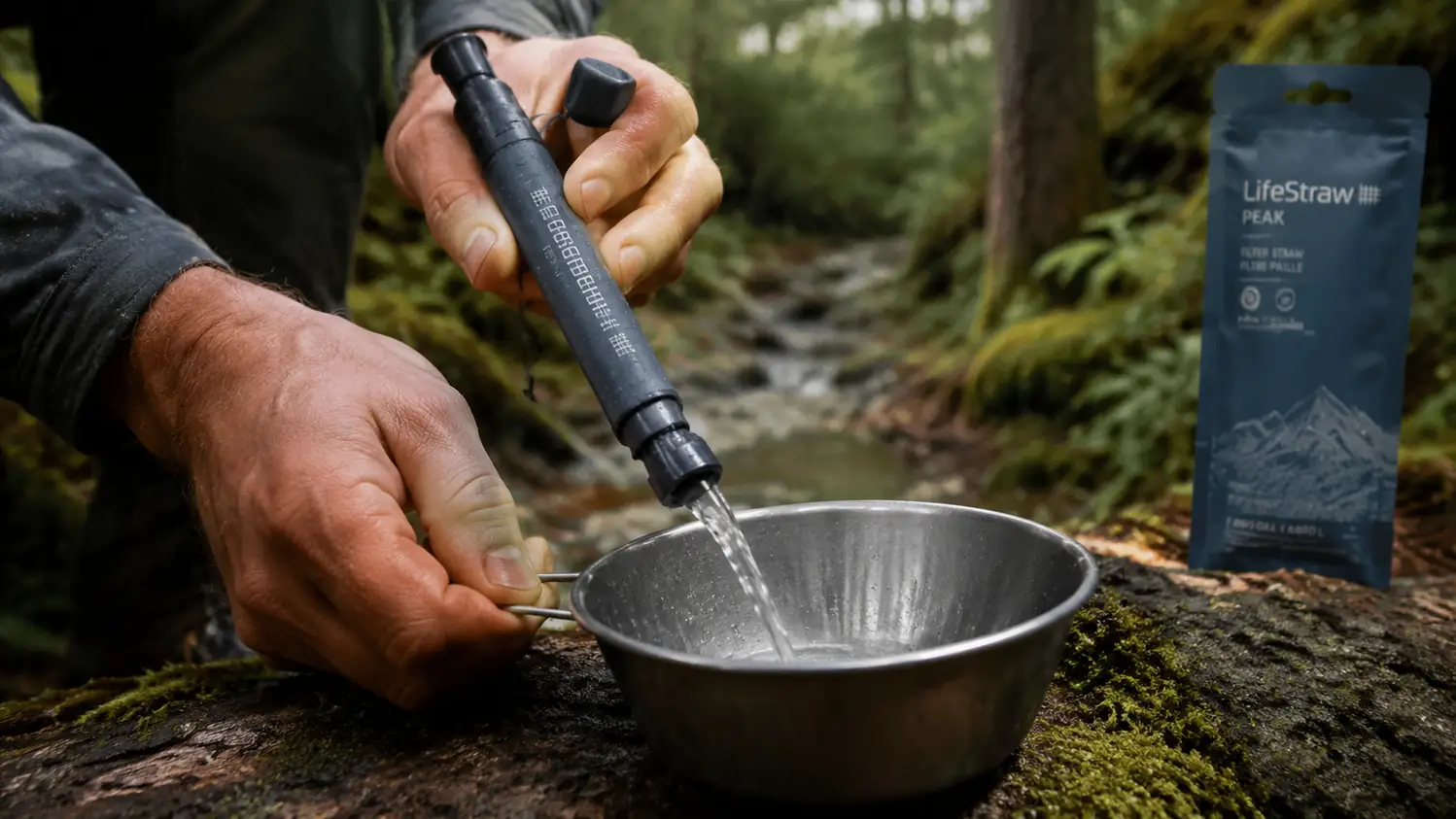
The LifeStraw Peak is for the Pacific Northwest hiker who wants to stop planning the whole route around the next tap and instead drink straight from the streams they are walking beside. If you are a solo or two-person day-hiker or weekend backpacker, and your water job fits one mouth at a time, this is a near-ideal fit. It is the right choice for the ultralight-leaning hiker who wants a few ounces of peace of mind they can carry in a pocket, and for anyone who wants a dependable backup filter that does not take up a fourth of their pack. For that person, it quietly becomes the most-used piece of gear in the whole kit.
Who Should Skip It
Give it a pass if you routinely filter for a group, if you like the hands-free convenience of a gravity bag filling a reservoir while you set up camp, or if your trips put you on sources where you need to neutralize viruses or filter out heavy metals, because this straw will not do those jobs. And if you are a flavor-purist who only drinks water that tastes like nothing, the lack of carbon will matter to you, though for most of us the mountain-mineral character of a clean Cascade creek is the whole point. But if you carry a pack solo or with one partner and you are tired of rationing, the Peak may be the smallest, most sensible addition you make to your water system all year.
A season in, it still comes on every trip. See the current price.
One light filter that lets the trail decide where you drink beats carrying four liters out of fear. The LifeStraw Peak has earned its permanent spot in my pack. Check today's price on Amazon before your next hike.
Amazon Check Today's Price on Amazon →