

Here is the honest thing nobody says in the five-star reviews: the Ugly Stik Bigwater gets all its attention for the rod, and the rod genuinely deserves it, but the reel that ships in the box is the part that will quietly decide whether you love this combo or start shopping again. I did not figure that out on the first trip. I figured it out about three trips in, once the novelty of an unbreakable blank wore off and I was left holding a setup that made me think hard about what I actually wanted from a coastal rig.
I fish the north Washington coast, surf perch off the gravel bars in the spring and rockfish and ling off the jetties through the summer, usually with my feet on wet basalt and a gust off the Pacific moving my line around. I have owned the Bigwater for a season now, and I am going to tell you what the marketing does not: the blank really is tough, and that is the whole game. But it is heavy, the stock reel is the weakest part of the package, and there are specific kinds of fishing where you should walk away and buy something else entirely. The caveats are real, and you deserve to hear them.
The Quick Verdict
A legendary, genuinely hard-to-break rod blank held back by a workhorse reel that will not win any smoothness awards. Buy it for the rod and the value, understand the weight and the reel limits going in, and this is an excellent coastal beater.
Amazon Check Today's Price →Want the unbreakable blank, and willing to treat the reel as a spare? Here is the current price.
If you already know the Bigwater is a great rod with a budget reel, and you are okay with that trade, this is still one of the best durability-per-dollar combos on the coast. See today's price on Amazon.
Amazon Check Today's Price on Amazon →How I've Used It
I did not unbox this thing in a living room and decide it was great from the recliner. It lived in the bed of my truck for a season, got rained on, got sand in the reel, got knocked over on the jetty, and went out with me on most of the half a dozen trips a month I manage between the coast and the house. Winter surf perch, spring gravel bars, summer rockfish off the jetties, a few evenings tossing heavier bait for whatever wanted it. It is not a garage queen and I did not treat it that way.
The honest framing of this review is different from the one I would give a rod I adored end to end. The Bigwater is the rare combo where I have to stop and separate the blank from the rest of the package, because they are not equal. The rod is near the top of its class for abuse tolerance. The reel is somewhere above a toy and well below a serious saltwater reel. People who rave about this combo are, more often than not, people who have already accepted that gap, and the people who return it are people who were not expecting it. My job here is to make sure you know which one you are going to be.
The spec sheet is easy to find, so I will keep it short: a two-piece spinning rod that comes in a few lengths, paired with a spinning reel, built around the famous Ugly Stik construction, a fiberglass-heavy build with a graphite layer that gives it backbone without the brittleness of a pure rod. It is aimed at saltwater and heavy freshwater work, surf perch and rockfish and catfish and salmon all live in its lane, and the price undercuts a comparable graphite rod before you even count the reel. That value is real. What is also real, and quieter, is everything in the next few sections.
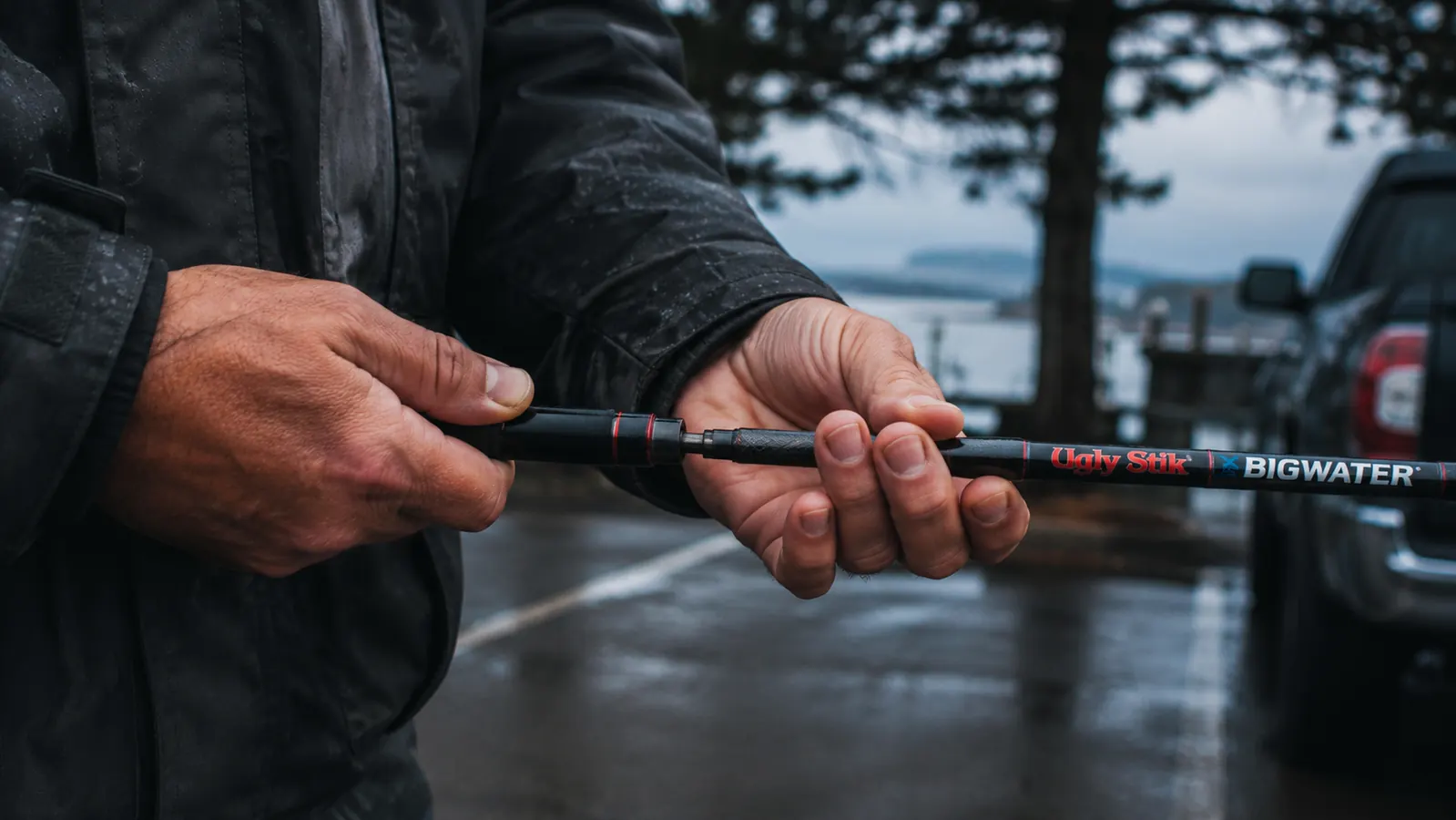
The Two-Piece Joint Sets the First Impression
Before you catch anything, you have to assemble the rod, and that is where the first honest caveat lives. The Bigwater is a two-piece rod, which is a practical choice because a seven-footer does not fit in a car well otherwise, but the joint is not invisible. It is a spigot ferrule where you seat the two halves together, and on mine it required a firm twist to feel solid, and it still has a faint flex point right at the join that you can feel on a hard cast. It is not a weak spot, mine never came loose or snapped, but if you are used to a one-piece rod with a clean parabolic bend, you will notice the joint is there.
The practical part is that you get used to it and it stops mattering within a trip. The setting of the ferrule is the kind of thing you do once and never think about again, and the abusability of the two-piece design is a real benefit, because a rod that breaks down flat rides safer in a truck bed and through brush than a long one-piece ever does. But if you are a perfectionist about rod action, or you plan to do a lot of casting with heavy weights, know that the joint flex is part of the personality. It is the first small thing the glamour shots never show you, and it sets up the theme of this honest review: fine, just not the way you imagined.
The Rod's Sensitivity Is the Honest Achilles Heel
Here is the thing the endless praise for this blank tends to skate past. The Ugly Stik construction is about toughness, and toughness and sensitivity are trades, not free bonuses. A high-modulus graphite rod telegraphs every tap and every texture change on the bottom, and the Bigwater simply does not do that. It is a softer, blunter, heavier-feeling rod. For surf perch and rockfish, where the bite is usually a solid thump, this is a non-issue, and honestly the trade is worth it. But if your fishing depends on feeling the subtle tick of a light take, or you want to work a lure delicately and feel what it is doing down there, this blank will frustrate you.
I noticed it most on the days I was fishing lighter presentations off the rocks. With a heavier surf rig, the rod is as capable as anything, you load it up and fire it out past the breakers and that is the whole point. Drop down to a lighter lure and a finesse presentation, though, and the rod's soft tip and heavy feel leave you guessing at the bottom. If you are the kind of angler who wants one rod that does everything, from heavy surf to light finesse, the Bigwater is not that rod. It is a specialist meant for one job, slinging weight in the surf and muscling a fish away from the rocks, and the sooner you accept that, the happier you will be.
The Stock Reel Is the Combo's Real Weak Point
Now the caveat that matters most, and the one I wish someone had spelled out for me before I bought it. The reel that comes attached to the Bigwater is a workhorse, nothing more. It casts, it retrieves, it has a drag that did not fail me, and that is genuinely the bar it clears. But it is not smooth, the anti-reverse has a little play that you will feel on the first slow retrieve, and the drag, once you set it, is not exactly fine-grained. For the price of the whole combo it is a reasonable reel, and against everything I expected it survived a season of salt with a freshwater rinse after each trip. But it is the part of the package a serious angler will eventually outgrow.
People who love this combo tend to frame it one of two ways, and you should know which camp you are about to join. Some people buy it, fish it for a season, catch fish, and are perfectly satisfied, because for that price a combo that works is a win. Other people, and I understand them completely, buy the Bigwater for the rod and then put a better reel on the blank before the second season, because the blank is the part worth keeping and the reel is the part worth replacing. That is not a reason to avoid the combo, it is a reason to know what you are signing up for. The rod is the long-term asset. The reel is the spare.
There is one thing that surprised me in the right direction, so I will say it plainly. The drag, for a reel at this price, held line out against a decent coastal run without the violent stick that loses you a fish at the net. It is not a premium drag with a silky smooth start, but it is predictable, and for a first coastal combo that is the quality that actually keeps you landing fish rather than cursing the water. So the reel is not a disaster, let me be clear about that. It is a serviceable reel that does its job, and the honest caveat is simply that it is the weakest link in an otherwise strong package and you should plan around it.
What I Liked
- The Ugly Stik blank is genuinely, famously hard to break
- Deep-loading action casts heavy surf rigs a long way
- Two-piece design is easy to transport and tough in the field
- Stock reel survived a full salt season with a basic rinse
- Excellent durability-per-dollar for a first coastal combo
Where It Falls Short
- Rod is heavy and tip-feels soft, with limited bite sensitivity
- Stock reel is a workhorse, not smooth, and lacks fine drag control
- Two-piece ferrule has a visible flex point on hard casts
- Not a one-rod-does-everything setup, it is a surf and jetty specialist
The stock reel is the weakest link, and once you accept that and treat the blank as the real investment, this combo becomes exactly what its reputation promised.
What Nobody Tells You About the Weight
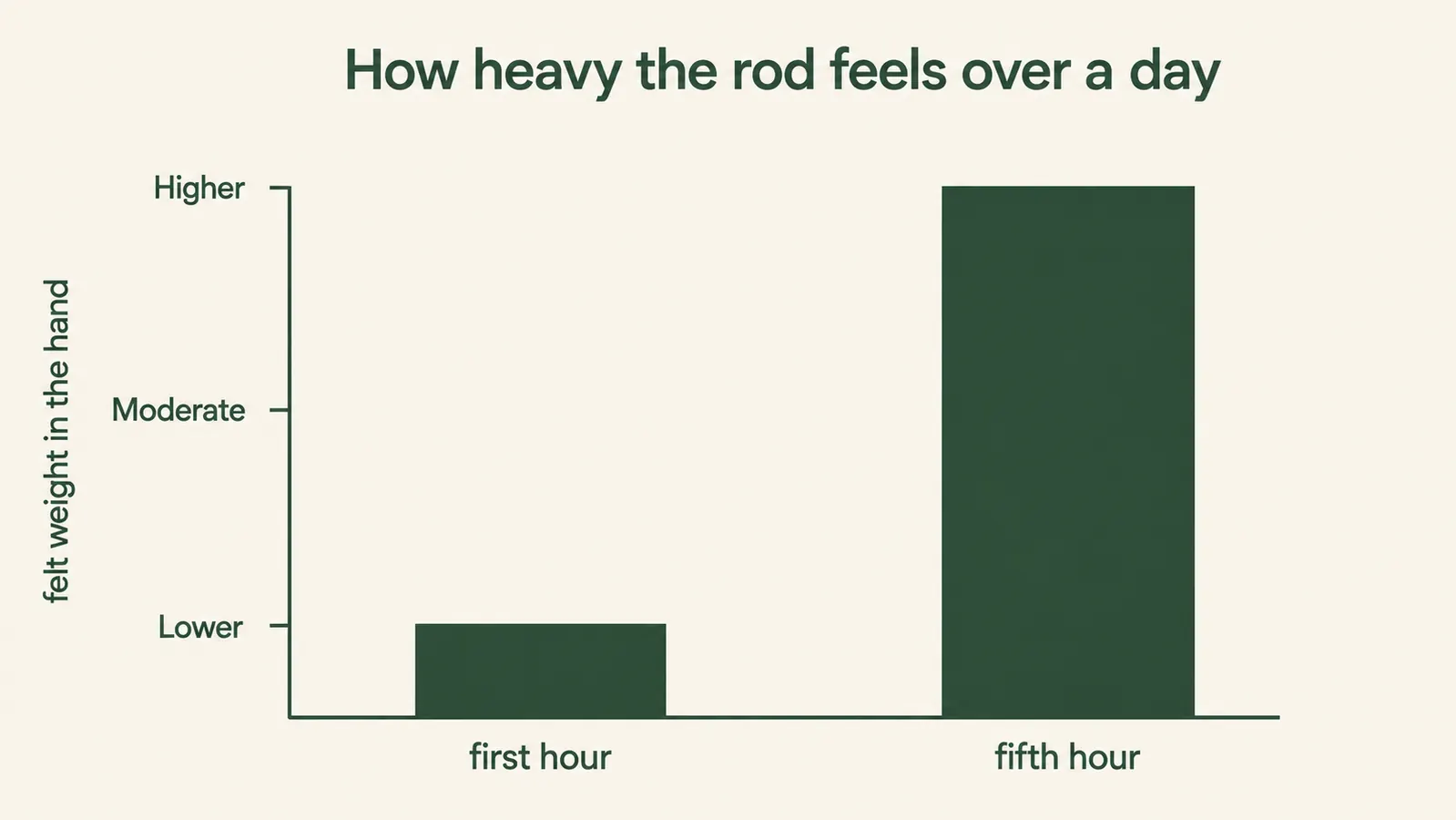
Here is a caveat the product photos absolutely never convey, because you cannot photograph weight. The Bigwater is a heavy rod in the hand, and it gets heavier the longer you hold it. The fiberglass-heavy construction that makes it indestructible is also what makes it heavy, and after a few hours of casting and holding it off the rocks, your forearm will mention it to you. It is not an ultralight stream rod and it does not want you to pretend otherwise. For the standing-still-and-soaking-a-bait style of surf session, the weight is a non-issue. For the walk-and-cast-all-afternoon approach, you will feel it, and that is the honest trade.
The weight works in your favor in one specific way, and it is worth naming. That heft is what lets the rod load up and launch a heavy pyramid sinker and a bait out past the breakers without you having to muscle it. There is a reason surf anglers tolerate heavier rods, it is not laziness, it is that the weight is storing energy for the cast. So the heaviness is both the rod's weakness in the hand and the source of its casting power. Keep that in mind when you read the complaints, and when you read the praise. The same feature is doing both jobs, and whether you call it heavy or powerful depends on how long you have been holding the rod.
Salt Care Is a Routine, Not an Event
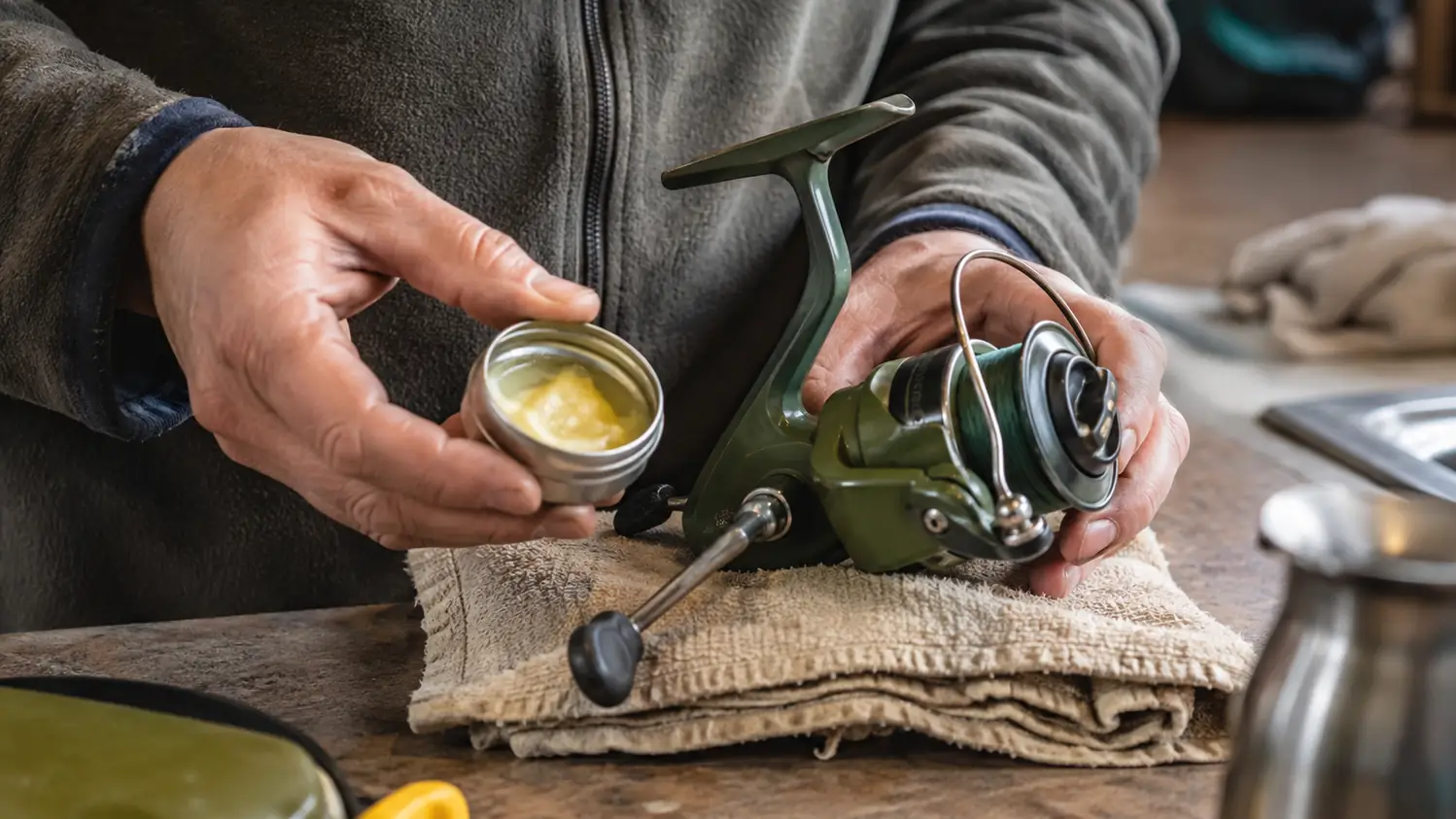
The honest thing about any coastal combo is that the salt is coming for it, and the Bigwater is no different even with its unbreakable reputation. The blank itself shrugs off saltwater completely, corrosion is simply not how a fiberglass-heavy rod fails. But the hardware, the reel, the guides, the drag, all of it will corrode if you leave it. A freshwater rinse at the tap after every salt trip, thirty seconds of work, kept my reel smooth and my guides clean for a full season. Skip the rinse for a string of trips and the cheap components will seize up just as fast as they would on a pricier setup. The salt does not care what you paid, and it does not care about the legend.
A couple of maintenance touches go a long way and are the difference between a combo that lasts and one that dies early. I rinse the reel, let it dry, and once a month I open it up enough to add a dab of grease. I check the line guides for a rough spot from sand, because a grooved guide is what quietly ends a coastal rig by cutting line on the cast. Do those small things and the Bigwater will be genuinely hard to kill, which is honestly its whole appeal. Do nothing and even an unbreakable rod will let you down, because the reel will corrode and seize while the blank sits there mocking you for neglecting it. The abuse tolerance only applies to the rod, not to your habits.
Who This Is For
The Ugly Stik Bigwater is for the weekend angler on the Pacific Northwest coast who is tired of snapping cheap rods or replacing a corroded combo every season, and who wants one rig they can throw in the truck and not worry about. If you fish surf perch, rockfish, ling, or salmon from the beaches and jetties with heavier rigs, this is a genuinely great match. It is the ideal first coastal combo for someone who does not want to drop a fortune on graphite and a separate salt reel, and it is a reliable backup for the angler who already owns the expensive setup but wants something the rocks and the sand will not destroy. For exactly that person, this is hard to beat for the money.
Who Should Skip It
Pass on the Bigwater if you need one sensitive rod for finesse presentations, where you feel every tap through the tip, because the soft, heavy blank will mute the signal and frustrate you. Skip it if you refuse to rinse a reel after salt, because no cheap combo survives neglect and this one is no exception. And if you expect the stock reel to run silky and smooth with fine drag control straight out of the box, you will be disappointed, that is not what this reel is. But if you understand it is a tough rod with a budget reel, and you want one combo that casts heavy gear far and survives the rocks and the salt, the Bigwater is the rare rig that lives up to the story. The caveats are real, and knowing them ahead of time is exactly what turns a disappointing surprise into a smart buy.
A great blank with a budget reel, honestly priced. Decide for yourself.
If the caveats here sound like trade-offs you can live with, the Bigwater is a coastal combo that genuinely holds up for the money. Check today's price on Amazon and see if it is the beater your truck is missing.
Amazon Check Today's Price on Amazon →