
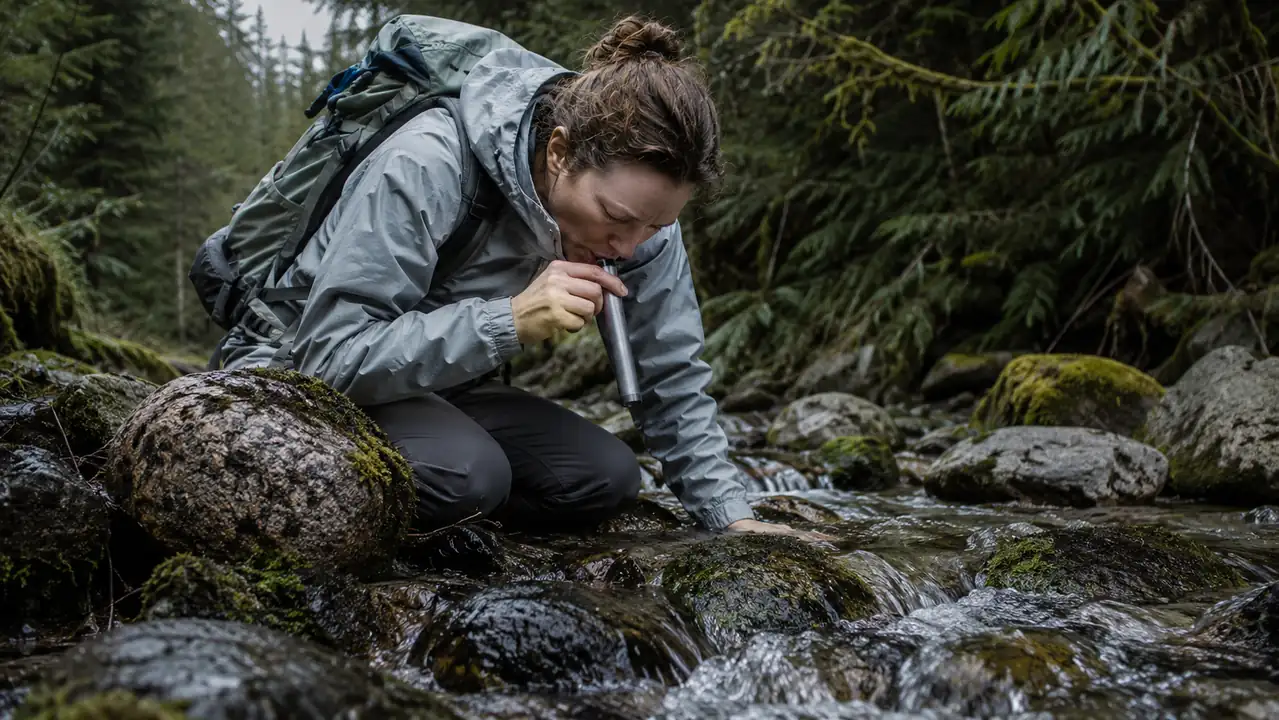
Every hiker hits the moment eventually: the sun is up, the bottle is half empty, and the trail runs right along a stream so clear you can count the rocks on the bottom. Your mouth is dry, the water looks perfect, and every instinct says lean down and drink. That instinct is how people end up sick on the side of a ridge a day later, and I've seen it happen to fit, experienced hikers who knew better.
A filter straw fixes that decision for good. It turns a stream you can't trust into water you can, without a pump, without waiting out a chemical tablet, and without hauling a full day's supply on your back. I've carried a LifeStraw Peak through a season of trail hikes in the Cascades and the coast, and I've drunk straight from streams, lakes, and snowmelt creeks that would have had me nervous a year ago. But a straw only works if you use it correctly. Sucking from the wrong source, wrong spot, or wrong end is how you defeat the whole point. Here is the order I do it in.
The filter straw I carry on every trail
You can run this whole system on one lightweight straw you'll still be using next season. The LifeStraw Peak is the filter that goes in my pack for every hike and campout, because it is small enough to forget and dependable enough to drink straight from a stream without thinking twice.
Amazon Check Today's Price on Amazon →Step 1: Find Moving Water, Not a Stagnant Pool
The single biggest mistake people make with a filter straw is trusting water that never moves. A clear-looking pond or a quiet backwater can look clean while holding a perfectly good colony of bacteria and parasites sitting in warm, still water. A filter can only remove so much, and giving it dirty still water to start means you are asking a small straw to do a job best done by a proper treatment, and you are doing it in the worst possible conditions. Here is what I try to keep in mind: I'd rather walk a few extra minutes to a faster, cleaner source than drink from the easiest pool in sight. The stream that looks like a swimming hole is rarely the stream you want in your bottle, and the reward for patience is a filter that works harder and a hike that doesn't end at a latrine.
Look for moving water. A stream that runs clear and brisk over rocks, a creek rushing downhill, a spring bubbling up from the ground. Moving water is almost always better than still water, because flow means it has less time to sit and grow things. That does not make it sterile, no trail water ever is, but it gives your filter a far better starting point. If the only water around is a stagnant pool, your honest options are to keep hiking to the next source or treat it with more than a straw. Your filter is a workhorse, not a miracle.
Snowmelt creeks high in the Cascades might look like the purest water on earth, and they are often the best you will find, but the water itself says nothing until you filter it. Treat every source the same: move if you can, filter regardless, and never let a pretty view talk you into skipping the one step that keeps you healthy.
Step 2: Pick the Right Spot Before You Dip
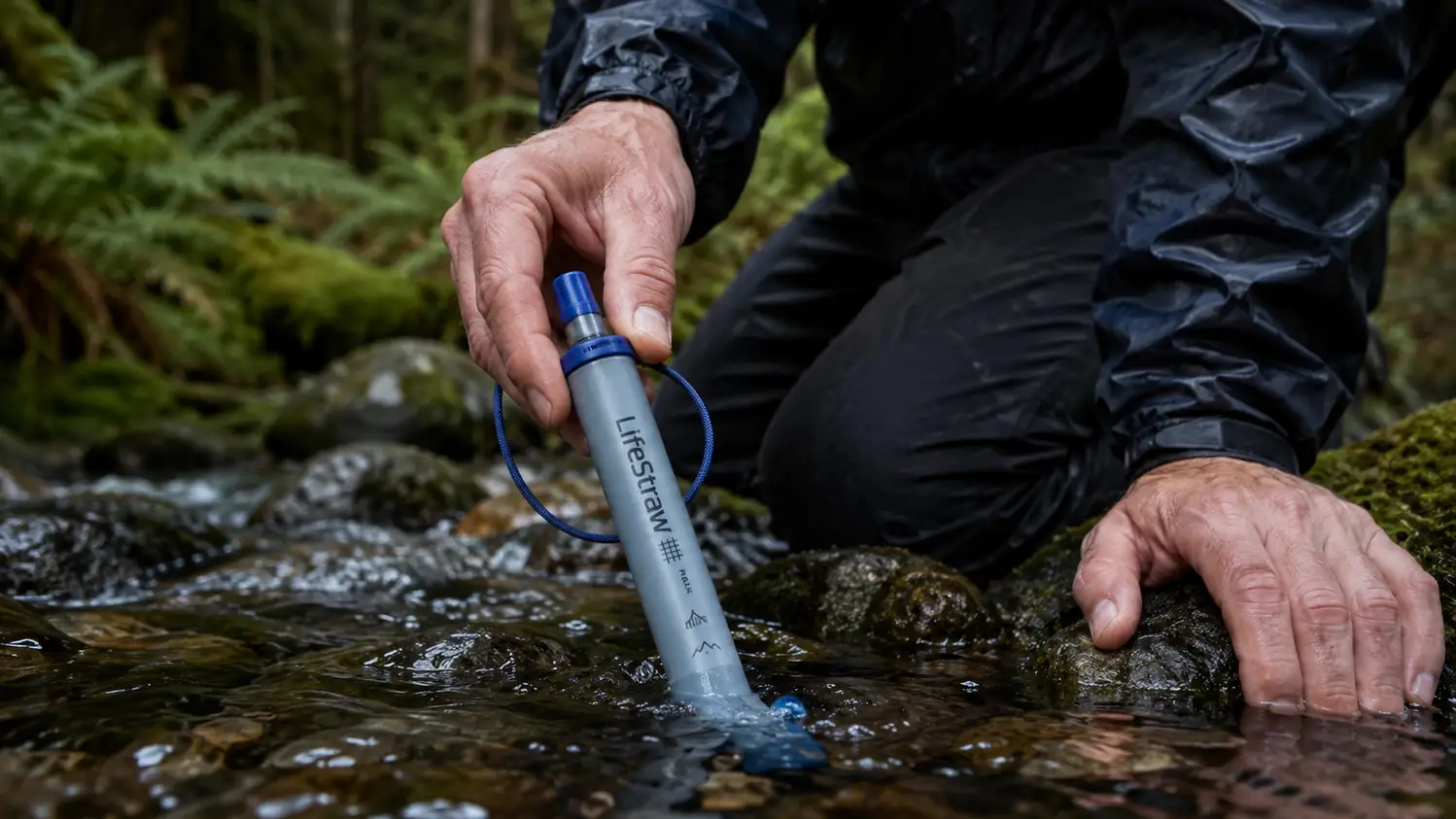
Where you take the water matters almost as much as which body of water you choose. Walk upstream of any crossing, campsite, or trail junction, and stay well away from anything that could wash into the stream, like a muddy bank, a game trail, or a patch of water with a lot of silt stirred up. The cleanest intake is clear, flowing water away from the edges where a hiker, a horse, or a startled deer has been stirring the mud.
If the stream is low and the banks are muddy, kneel on a firm spot and reach the straw out to the fastest clear water, rather than dipping it into the cloudy edge. You want the clearest part of the flow, not the convenient part. A few seconds of reaching keeps a lot of silt and grit from ever getting into the filter, and that matters because sediment is what plugs a filter long before bacteria do. The less junk you pull in, the longer the straw keeps its flow rate.
The Peak's flexible intake cap is made for this. Bend it, aim it into the clearest water you can reach, and hold it there steady. Get into the habit of choosing your spot deliberately every single time, even when you are tired and thirsty. That habit is what the people who never get sick share, and it takes about ten seconds.
Step 3: Get the Right End in the Water
It sounds too silly to need saying, but a filter straw has two ends and only one of them goes in the water, so check before you dip. The longer hollow tube is the drinking end, that goes in your mouth. The shorter, capped end, the intake, goes in the stream. If you can't tell them apart because you're fumbling with cold, wet, tired hands, look for the flexible mouthcap and the little filter detail, and take the two seconds to be sure.
On the Peak series there's a cap you can keep on the intake between drinks to keep dirt and dust out, and you want to take it off before you drink, not fight it loose with wet fingers halfway through. I keep mine off while I'm drinking and only snap it back on when I'm done and stowing the straw. The mouthpiece end stays clean with the cap, so the part that touches your lips isn't dragging through stream-bottom grit.
Getting the ends right is the difference between a refreshing drink and a mouthful of unfiltered stream water that defeats the entire purpose. It takes one second to be sure, and you will never get it wrong twice.
Step 4: Sip Slow, Keep It Submerged, and Don't Sip Air
Once the intake is in the clear water, the actual drinking is a skill, not a race. A filter is not a normal straw. You are pulling water through a tight membrane, so it moves slower, and forcing it is how you suck in a mouthful of air, how you get water up the mouthpiece before you're ready, and how you wear yourself out. The trick is to sip slow and steady and let the filter do the work.
Keep the intake fully submerged the whole time. The moment it breaks the surface, you suck air instead of water, and you get that sputtering choke of a mouthful of nothing. Ease the straw down a little deeper so the intake stays under, then sip at a relaxed, steady rhythm. When you pause to breathe, lift the mouthpiece out of your mouth but leave the intake in the water, so you can pick up where you left off cleanly instead of resubmerging and stirring up silt.
A common question is how much water you can actually pull this way. The Peak's flow rate sits comfortably above a lazy drip, but it is still a filter, not a free-flowing bottle, so it rewards a patient sip. My habit is to drink my fill there at the source, two or three settled, steady drinks with the intake kept under, and keep the bottle in my pack for the dry stretches in between. That is what the straw is built for, hydrating you on the spot, and treating it like a pump for hauling a week of water is the way you end up frustrated and short of breath. Slow, steady sips, intake covered the whole way down, and you get clean, cold water without the sputter.
Step 5: Backflush, Dry, and Store It Right
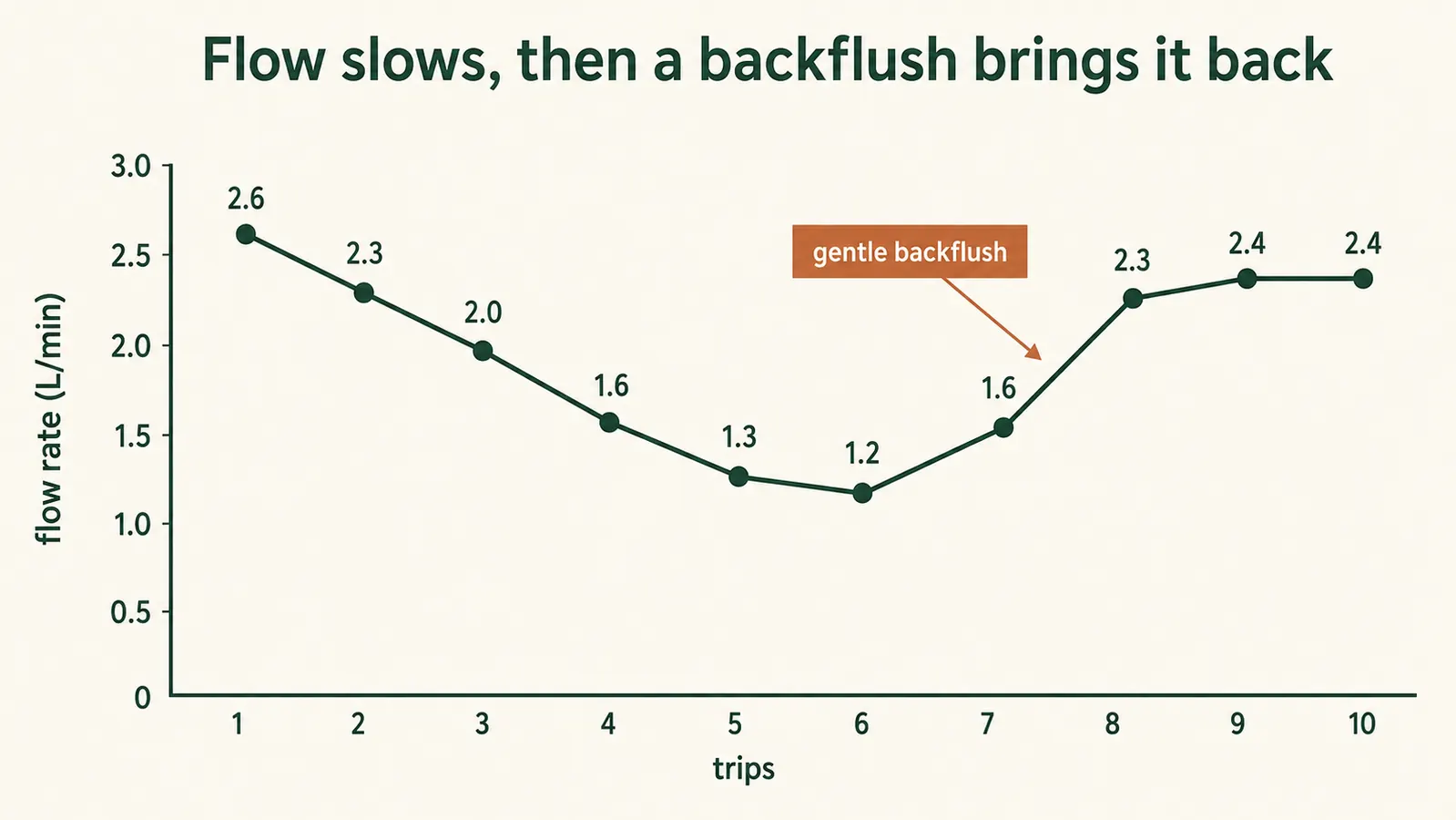
The way a filter straw dies is by getting clogged and then getting stored wet, and both are preventable. Over a season, fine sediment works its way into the membrane and the flow slows to a trickle. That is not the end of the filter. It is the signal to backflush, meaning you reverse the flow and push clean water back out the way it came in, which clears the lodged grit and restores the draw. Do this sooner rather than later, because a filter that has fully clogged is far harder to bring back than one you maintain as it slows.
After a trip, dry the straw thoroughly before you store it. A damp filter left sealed in a pack is a place for the very things it's supposed to keep out to grow, and nobody wants a straw that tastes of mildew on the first hike of spring. Rinse it, let it dry completely, store the cap on the intake, and keep it somewhere it won't get crushed or coated in trail dust. A handful of minutes of care at the trailhead is what separates a filter that's still fast next season from one that tastes wrong the whole year.
Think of the straw the way you think of a good knife or a rain shell. It is a tool that earns its small place in your pack by being maintained. Give it clean water, a backflush when it slows, and a dry place to sleep, and it will keep filtering for years. That dependability is exactly why the Peak has stayed a permanent part of my kit.
What Else Helps
A few extras make the whole hydration system run smoother than the steps alone. Carry a spare bottle you can fill downstream, because a straw is excellent at the stream but awkward for dry stretches of trail, so having a bottle in your pack means you aren't forced to find a source just to wet your throat between streams. The Peak doubles as an inline filter for a bottle or hydration bladder, which turns one small straw into the filter for your whole system.
Know the difference between a filter and a purifier before you overthink it. A good filter like the Peak removes protozoa and the bacteria you most often meet in trail streams in the lower 48, which covers the overwhelming share of what a hiker runs into on an ordinary Cascade or coast creek. It filters down to a fraction of a micron, and it stands up to the long seasons of Pacific Northwest water a lot better than gear half its weight. If you are heading somewhere remote with real viral risk, or you are treating water for a young child or someone with a fragile immune system, look up the right method for that water. For the streams and lakes I hike, a filter straw is the light, fast, dependable answer, and it is what I reach for on every single trip.
The people who get sick drinking from streams aren't the ones who forgot a filter. They're the ones who trusted clear water and skipped the two minutes, and the spot check, and the slow steady sip. Ten seconds of choosing the source beats a full day of wishing you had.
The filter straw behind every drink in this guide
Every step here assumes one thing, a filter you trust when you're thirsty and tired and the stream looks perfect. The LifeStraw Peak has been that filter for me through a season of Cascade and coast hikes, small enough to forget and dependable enough to drink straight from the source. A backflush when it slows, a dry place to sleep, and years of clean water along the trail.
Amazon Check Today's Price on Amazon →