
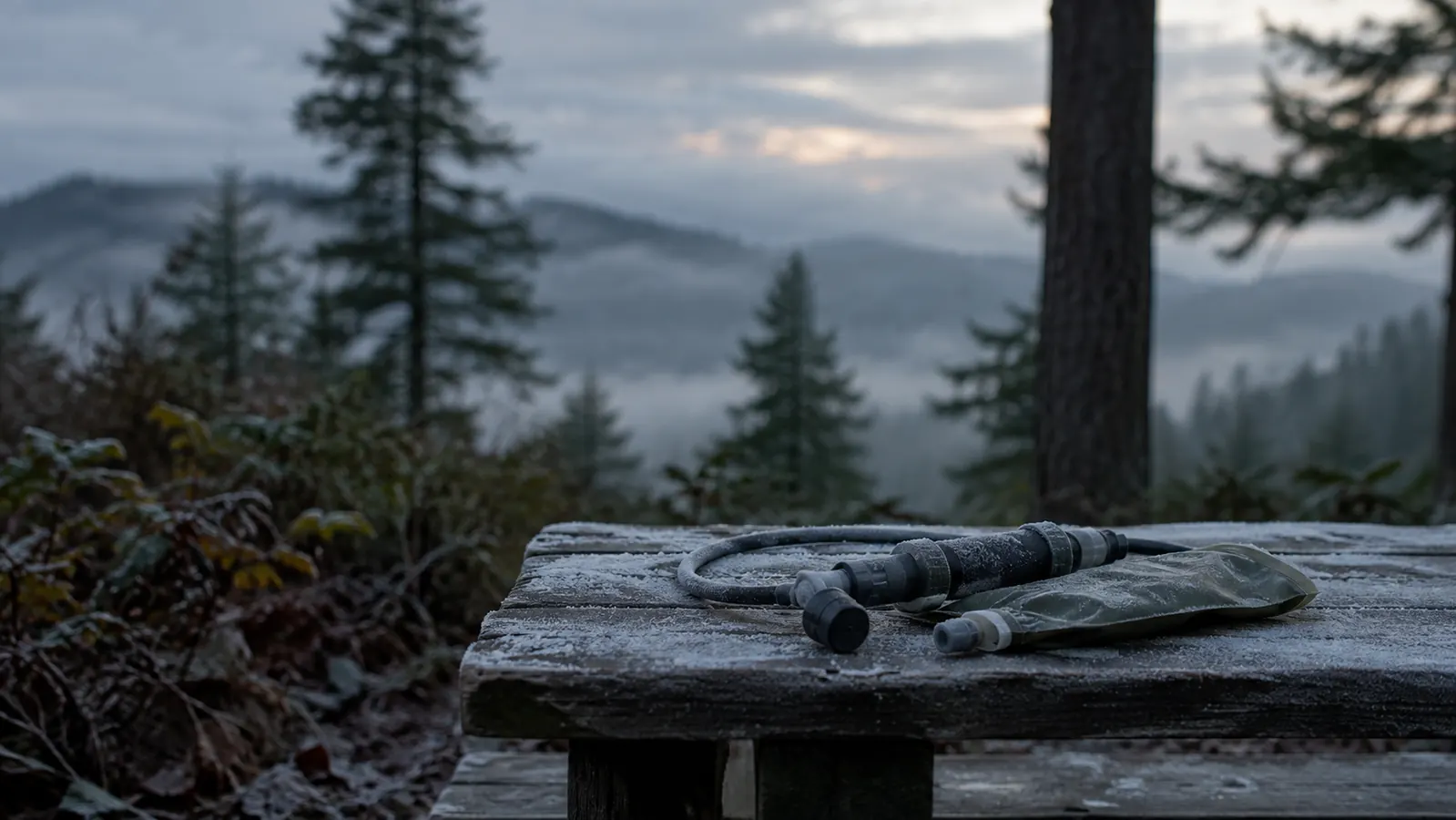
I nearly killed my filter on the second weekend I owned it, and the killer was not a river or a cliff. It was a car. I left the LifeStraw Peak in the door pocket through a cold November snap, twenty-eight degrees by morning, and when I reached for the gray flask it sat there in a shell of frost up to the intake tube. I thawed it and drank carefully for the rest of that trip. Only later did I learn that freezing water inside its membrane is the classic way these filters die. The listing photos do not show that, and the product page does not lead with it. If you own one long enough, you will have to know it.
Since that moment I have carried the Peak through a full year of Northwest trips, feeding it from creeks gone milky with glacier silt, from lowland runs the color of tea, and from high lakes that turn to mud a step off the shore. I have also finally given myself the honest review I wanted before buying. The summary up front: it is a genuinely good filter for one specific kind of hiker. It is also a tool with real rules, and the part of the story the brochure skips is where this review lives.
The Quick Verdict
A genuinely good solo filter for the hiker willing to keep three small rules: keep it warm in winter, feed it the clearest water you can find, and dry it before it goes into storage. Break any of the three and the Peak stops being a bargain and becomes an expensive straw.
Amazon Check Today's Price →Still the filter that goes on every trip, caveats and all. See today's price.
Nothing in this review talks you out of the Peak, because I still pack one every weekend. What it does instead is hand you the rules that keep a filter alive. Check today's price on Amazon, then read the rest and decide with both eyes open.
Amazon Check Today's Price on Amazon →How I've Used It
I live in northwest Washington, and my loops run from the cold white rivers of the Cascades to the low muddy creeks of the coast, which in practice means I filter for one person, a liter or two at a time, usually alone or with my partner. That is the exact use the LifeStraw Peak was designed for, and it is also why the caveats below hit the way they do. None of them would matter to a hiker who visits a clear spring twice a summer. They have mattered to someone who filters as often as I do.
My method is the note-taking of an ordinary hobbyist, not a laboratory. After every trip I write down two things: whether I ever hesitated to drink, and how hard the draw felt on the water I gave it. Those are the only instruments I trust. On every stop I am also watching for three quiet things, the frost line, the silt line, and the routine, and the three of them are the real subject of this review.
I want to be plain about the kind of testimony this is. I am not a wilderness guide and I do not carry a turbidity meter. I am a person who spent a lot of wet weekends with a small gray straw, a working memory, and the patience to write things down. That is enough for an honest and useful review, and it is what the marketing is short of.
Freezing Is the One Way I Almost Killed It
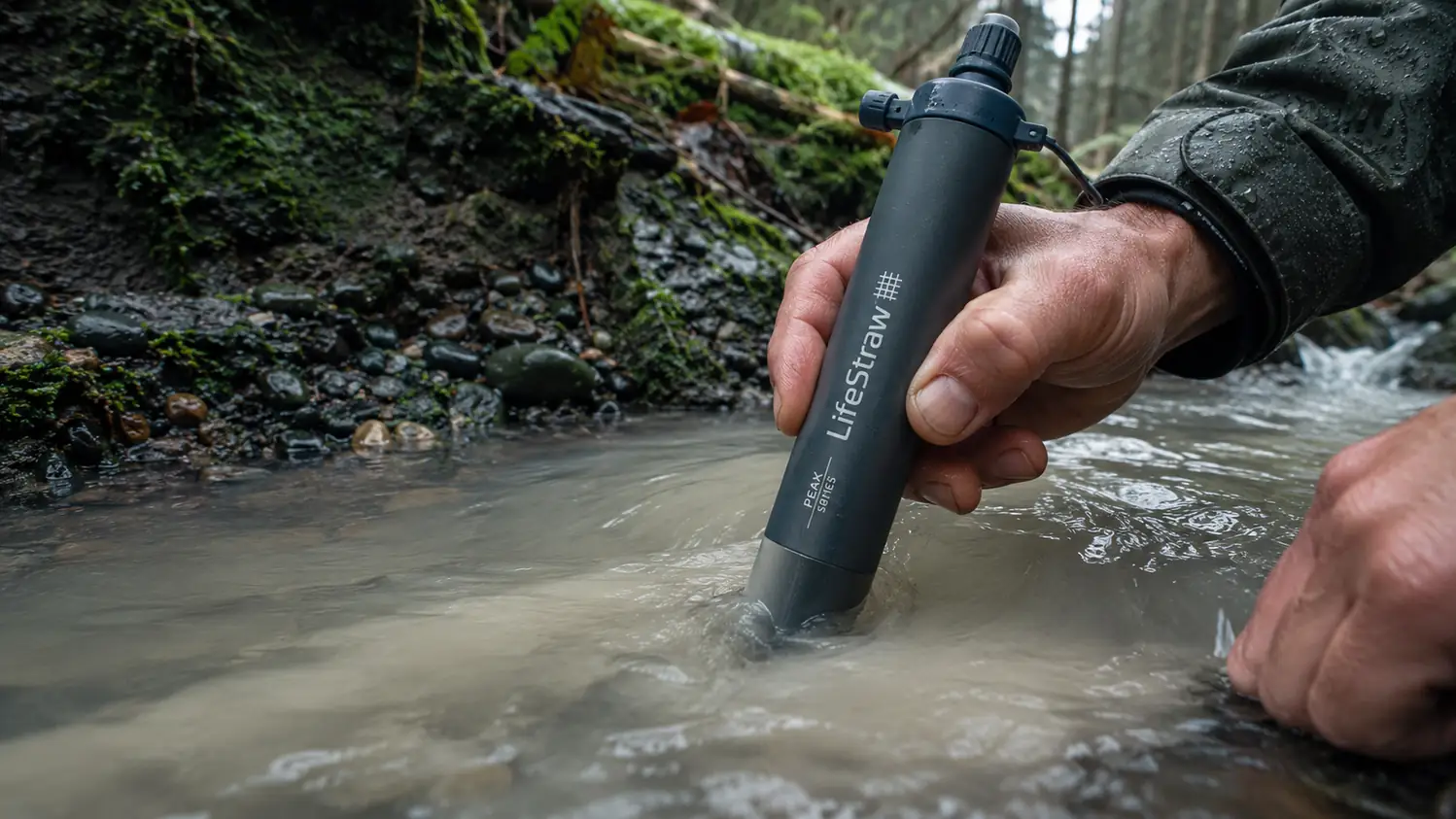
Here is the honest mechanics in one paragraph. The Peak filters through hollow-fiber membranes: dense bundles of microscopic walls that trap bacteria and protozoa at a fraction of the width of a human hair. Those fibers are the whole point of the tool and its only real weak spot. If water freezes inside them, the ice expands and cracks the walls, and from then on the filter passes water the way a broken sieve passes flour. It still looks clean, it still passes, and it is no longer filtering anything. You cannot see the failure, which is exactly why the warning lives in the fine print.
The freeze warning is real, and it is buried. It sits in the numbered pages of the instructions and in the small print of the listing, because nobody sells a heroic photo of a filter being kept warm. Meanwhile the buyers who get stung are exactly the intended customers: the weekend hiker who leaves the filter in the car between trips, who stores it in the garage kit, who shrugs after a hard freeze and finds the next trip a disappointment.
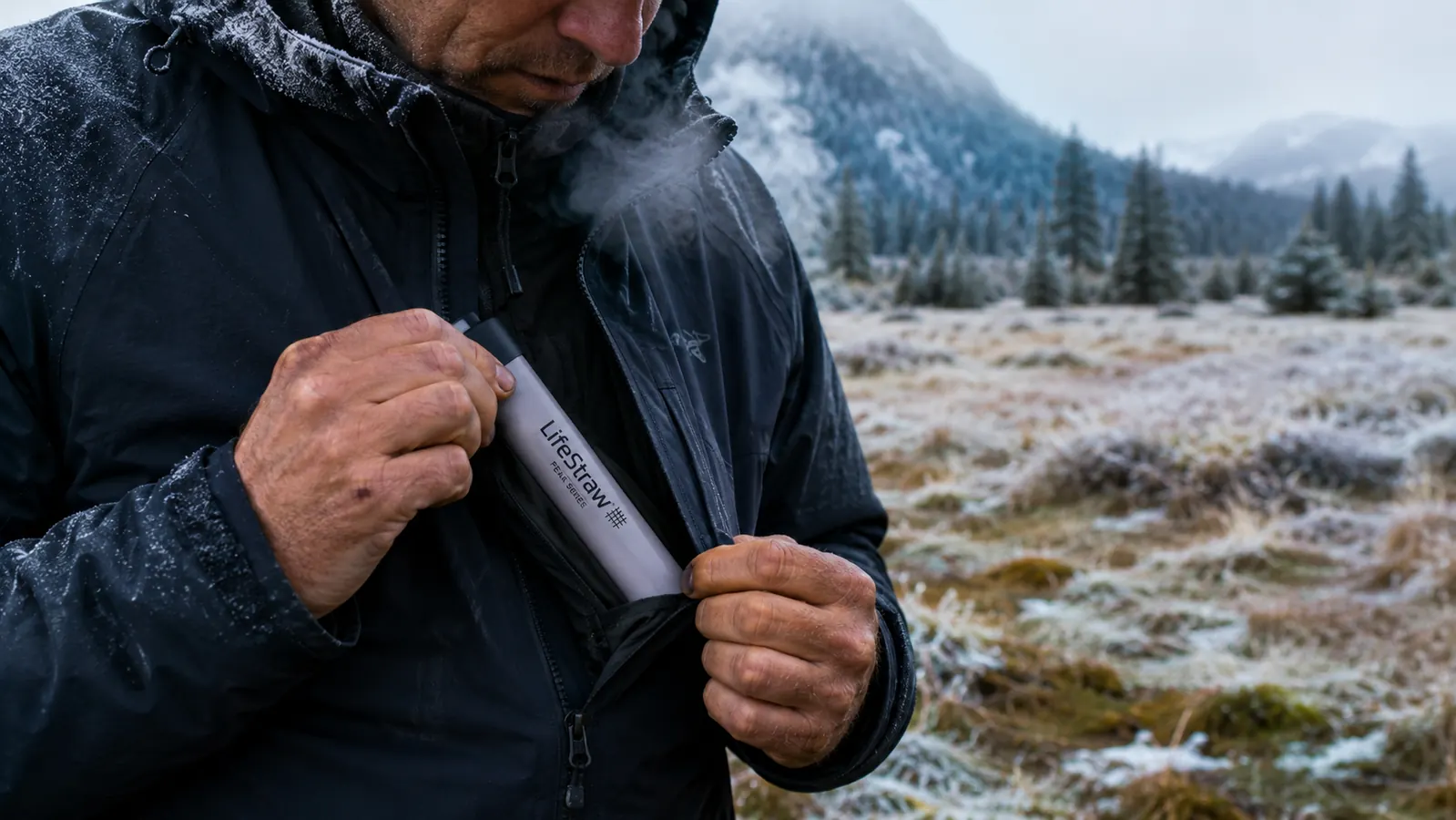
My winter rule is embarrassingly simple and costs nothing. The filter does not spend a cold night in the car. On cold trips it rides inside a jacket pocket or in the foot of the sleeping bag, warm to the touch all night. And on the rare night I cannot keep it warm, I drain it, cap both ends, and let it ride empty so there is nothing inside to expand. It is smaller and safer than almost anything else you carry, except it has exactly one sworn enemy, and that enemy is twenty-eight degrees.
The moment that got me was the silence. A frozen membrane does not crack loudly and it does not warn you. It keeps passing water and looking perfect, and you simply stop being filtered without a way to see the change until the one drink you mind.
Silt Is the Slow Second Death
The second truth is the one the marketing works hardest to hide: the water in the photo is always clear, cold, and glistening. The water in front of me is often not. In the deep melt of July the mountain creeks in my range run the color of milky coffee, packed with fine rock flour ground off the glacier. The lowland stream in September is the color of strong tea. The Peak filters every one of those, but nothing comes free, and the fee you pay is measured in the pull.
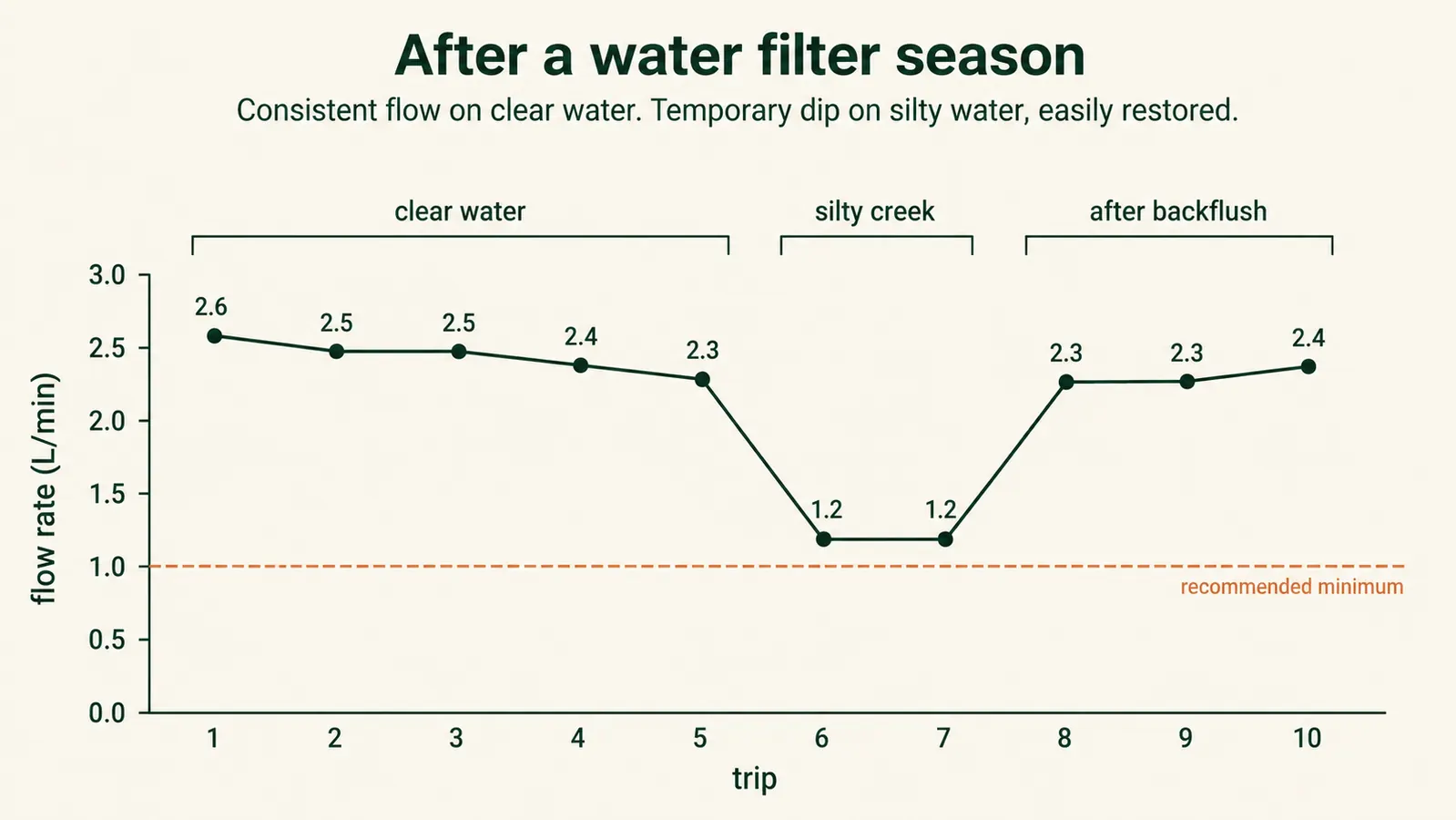
Flow is where the honest complaint appears. In clear, fast water the Peak is an easy steady sip, draw, swallow, repeat, and your jaw forgets it is working. In milky water the same filter visibly slows, and on the worst afternoon I felt the resistance in my cheeks halfway through the second mouthful. That is not a defect unique to this straw, every hollow-fiber filter in this price class loads its membrane with grit. It is simply never in the product photo, because the Peak hits the silt wall exactly like its cousins.
The fix is technique, and it feels quietly smug. I let murky water settle in a cup before I dip, I put the intake into the top of the clearest current instead of the mud line, and when the draw inevitably slows I backwash the fibers with clean water, never the turbid stuff I just poured. Backwashing with the dirty creek just pushes grit deeper into the fibers. If the source is silty you have to be the smarter one: settle, aim, and backflush clean. Every one of those keeps the filter fast and your jaw quiet.
The Care Routine Nobody Hands You With the Box
The third caveat is not about the water, it is about the winter in the drawer. A hollow fiber is a fine home for things you do not want to drink, and a filter that is stored wet, capped, and dark will grow exactly what it is meant to stop. Long-time owners know the smell, the first sip of May that tastes like a cellar. The guides call it a maintenance failure. The marketing calls it nothing, because it does not fit the story.
So here is the dull routine that has kept my filter going. At the end of each wet trip: squeeze clean water back through the mouth, shake out the flask, and let the whole thing dry fully with the cap off. Before storage, one final pass so nothing sits damp. If the mouthpiece has touched the ground at a stream, I rinse it before the next drink, because the end that goes in my mouth is the one piece of gear on the trail that I refuse to share. It is three minutes a month, and it is all of the longevity.
Let me say the honest sentence out loud: this is a tool for people who enjoy a small ritual with their gear. If you like tools that tolerate complete neglect, the Peak will not be that for you. It is not demanding, it just wants a little attention. Every short, bitter note about these filters comes from somebody who skipped it. The filter is not the cheap part of the system. The care is.
Where the Product Photos and the Trail Disagree
The listing shows a hiker leaning over a perfect pool with the sun at his back. The real position of the Peak is different: knees on a mud bank, one hand propping you up, the other holding the intake steady in a current. The price of a light tool is that you hunch. That is not wrong, it is just the physical reality of the whole category, and it is the buyer kneeling in the wet cuff who feels most cheated when the brochure leaves the stretch out.
The second discrepancy is the one the survival marketing slips past the safety label on the box. The Peak is sold as emergency, ultralight, and daily all at once, and that triple promise sets a trap. A survival filter you stuff into a kit and never touch will be the first thing in that kit to die, from freezing, from mildew, or from simple neglect. The Peak is not a buy it and bury it object. It is a daily tool that happens to be emergency capable, and the way you keep the emergency alive is to use it often. That shift in thinking is the most important idea in this piece.
And the honest part about limits: the filter covers exactly what it covers. It stops bacteria and protozoa, which in the backcountry of the lower 48 is what matters on most trails. It is not a virus purifier and not a tap-level device, so when a source sits near cattle or people and feels dubious, I treat it as a red flag and go find better water. Know that line, respect it, and the Peak wins the two hundred thirsty afternoons a year when you are drinking from the safe end of the mountain.
The Filters I Put on the Same Shelf, and Why I Kept the Peak
To make a clean comparison I spent a parallel season with the Katadyn BeFree, the main competitor in this size of pack. The honest short version, and the full head-to-head is in the comparison article linked below: the BeFree fills a fast soft bottle and it is the better pick for people who like the squeeze and for filling more than one mouth. But on the silty creeks that slowed my Peak, that same cartridge backed up noticeably, and its soft bottle is the fragile part of the kit. The Peak kept a longer rated life through the same water, and the sturdier tool won my pack.
I also borrowed a hand pump for a stretch of trips. It is a stronger tool on a stiff creek, self-priming and not freeze fragile, but it weighs more than the whole Peak and takes up real space. On my short solo loops the weight cost is not worth the broad-mouth confidence. The honest conclusion is the same either way: pick the tool that matches how often you actually filter, and build the routine around it. For my light, lonesome, creek-to-creek style, the Peak is the fit.
Pros and Cons
What I Liked
- Genuinely good steady flow in clear water with an easy draw
- A real hollow-fiber filter rated for about a thousand liters
- Under four ounces with the flask, it vanishes in a pocket
- Backflushing with clean water restores the flow after silt
- Survives drops, talus, and a winter of proper care
Where It Falls Short
- Freezing the stored water kills the membrane, and the warning sits in the fine print
- Silty or glacier-milk water slows the draw and needs technique
- Stored wet it grows mildew, so a drying routine is not optional
- Firmly a solo tool: about one cup per load, one drink at a time
- A freeze or clog failure is impossible to confirm by looks alone
Who This Is For
This filter is for the hiker who moves alone or with one partner, who filters a couple of liters a trip, and who needs water right now at the bank of the creek more than it needs a gravity bag. If that is you, and you are willing to add three words to your mental model, cold, silt, dry, then the LifeStraw Peak is arguably the best few dollars of water insurance available. It is also the pick for the Pacific Northwest generalist who wants one light tool across every season instead of one narrow sport. For people who like gear with a small daily story, the Peak does not disappoint.
Who Should Skip It
Hold off if you will not do the care. If the filter will live in the truck all winter, or if drying it before storage feels like housework, buy purifying tablets instead. If you filter for a group, four people around the stove, the slow single-cup draws stack up and you want the fast soft bottle of the BeFree instead. If your water plan is mud every trip and you will not pre-filter, a pump is the more honest answer. And if, after all this, the idea of a tool with a memory still does not appeal, this is not the filter for you. But if you carry the right mental model cold, silt, dry the Peak is a keeper for many seasons.
The last honest word: it is a great filter if you keep the three rules.
I have filtered through two seasons with this straw, survived a near freeze, and never bought anything in its place. The advice I would give a friend over the kitchen table is simple: keep it, feed it, dry it, and it will never give you a moment of trouble. Check today's price when you are ready.
Amazon Check Today's Price on Amazon →